
Teeth whiteningWhat is it?
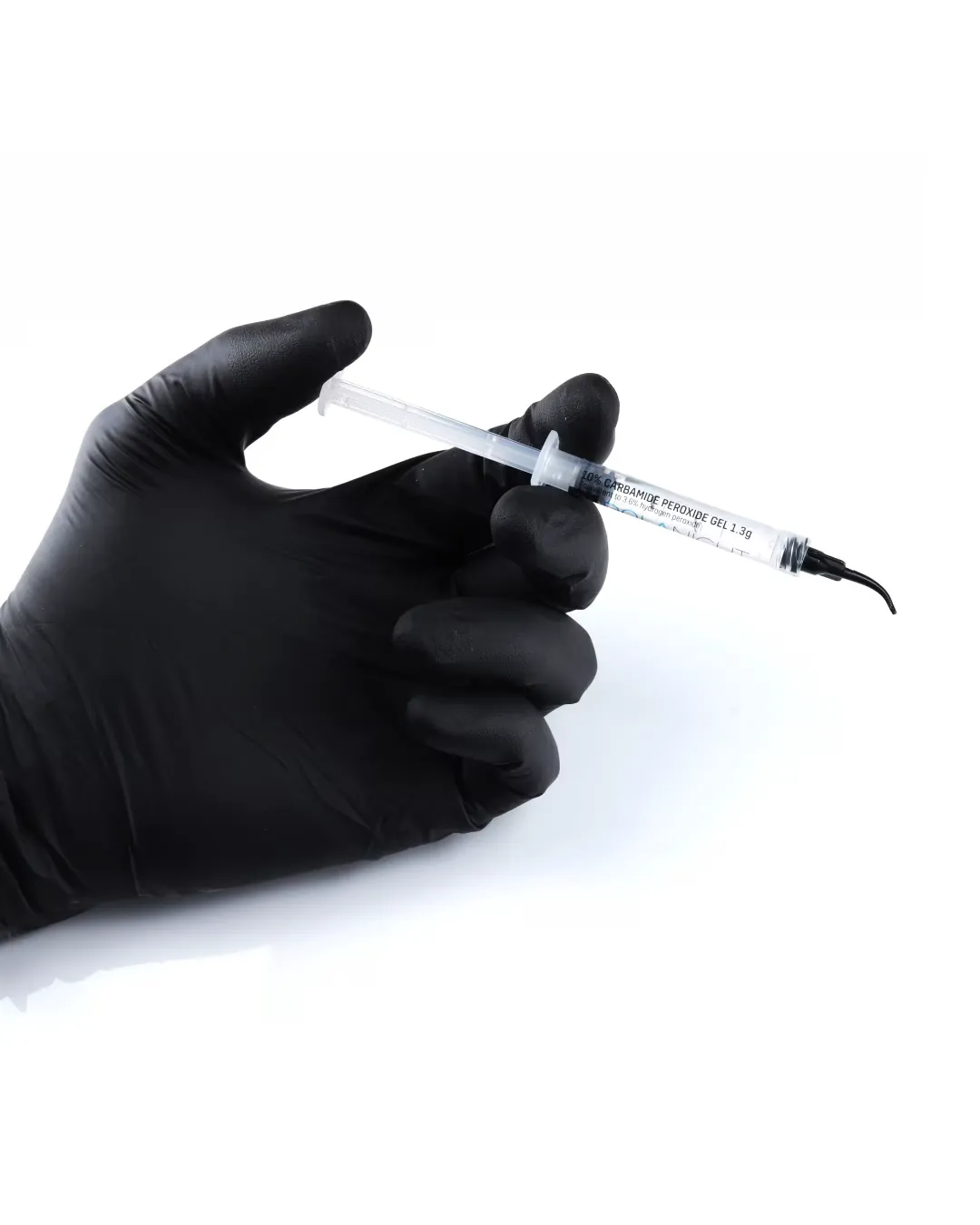
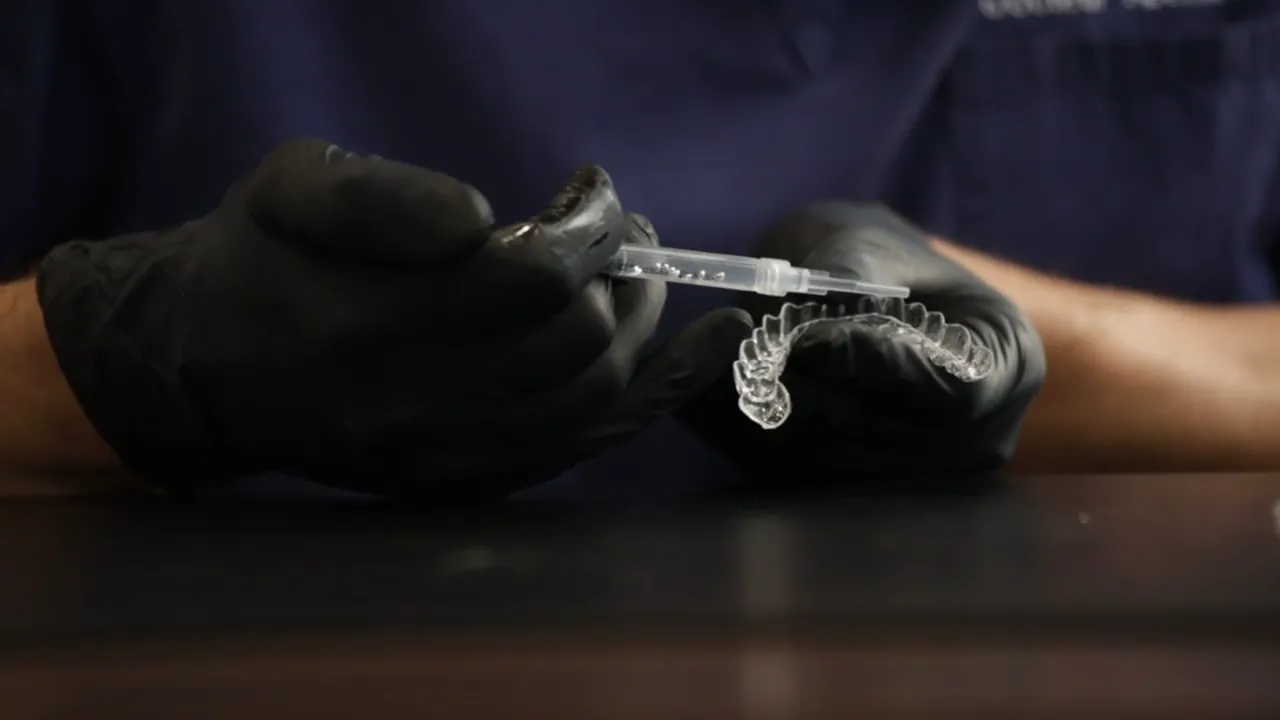
Teeth whitening, sometimes called tooth bleaching in everyday language, is a medical procedure that gradually lightens the shade of the teeth through the controlled action of an active gel, without altering the structure of the enamel.
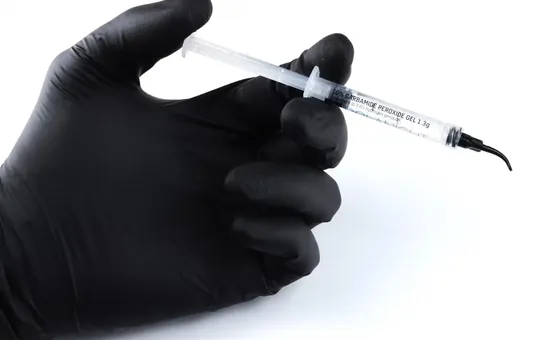
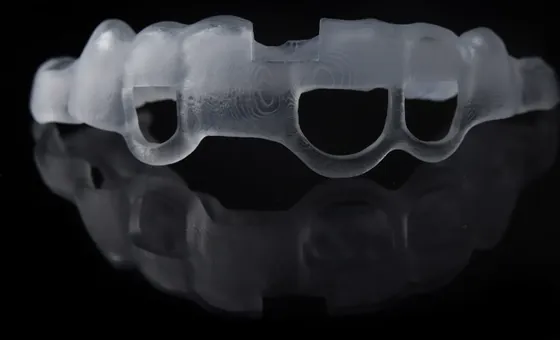
At the practice in Levallois-Perret (92300), Dr Bruno Abehassera favours an at-home protocol, using custom-made trays worn every night with a gel at a suitable concentration. The treatment relies on a targeted oxidation reaction on the pigments responsible for the discolouration, without abrasion or surface polishing.
How long it takes depends on the initial shade: about 2 to 3 weeks for simple cases, and up to several months for long-standing discolouration or discolouration from within the tooth (root-treated teeth, trauma). This gradual, controlled approach encourages a stable, lasting result while respecting the tooth tissue — unlike consumer products, which are often abrasive.
IndicationsWhen should you consider whitening?
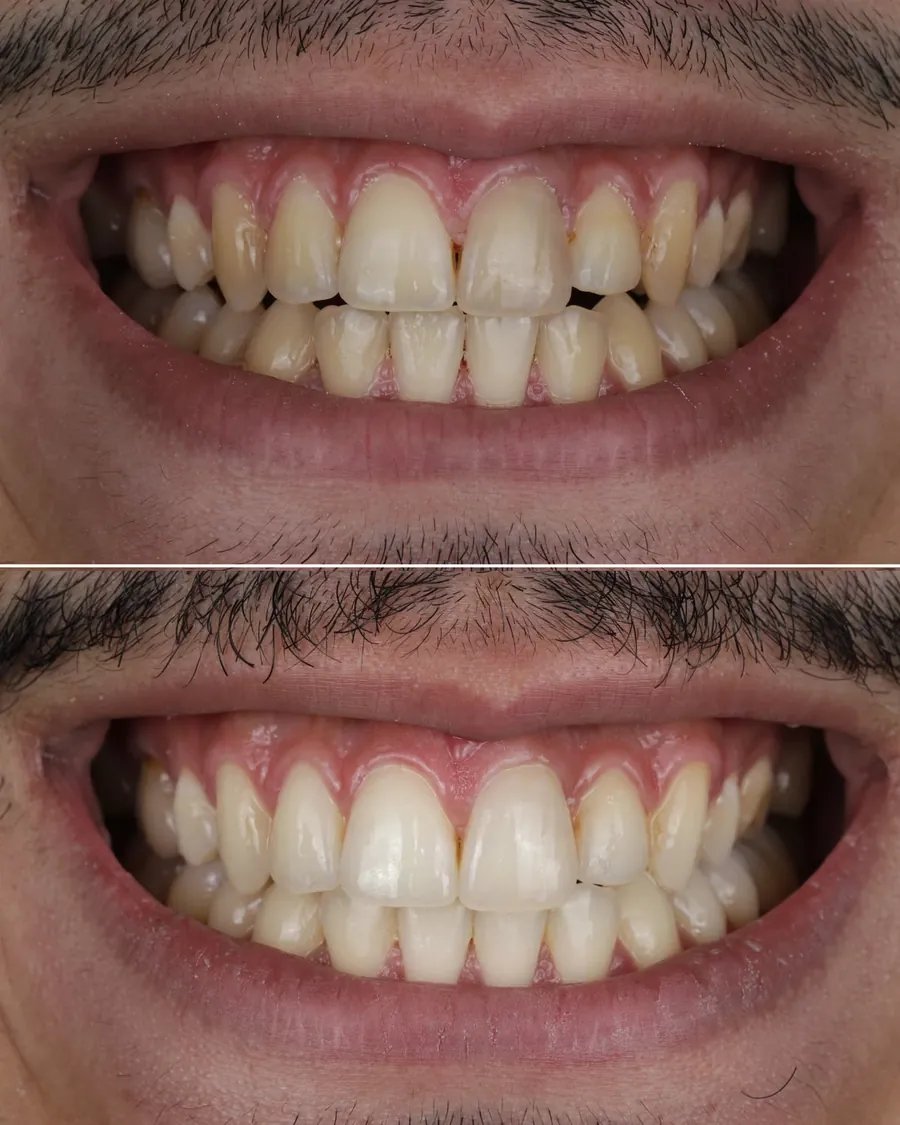
Acquired staining
Teeth gradually discoloured by external pigments (coffee, tea, tobacco, red wine) that build up and then spread into the enamel. The most common indication for at-home whitening.
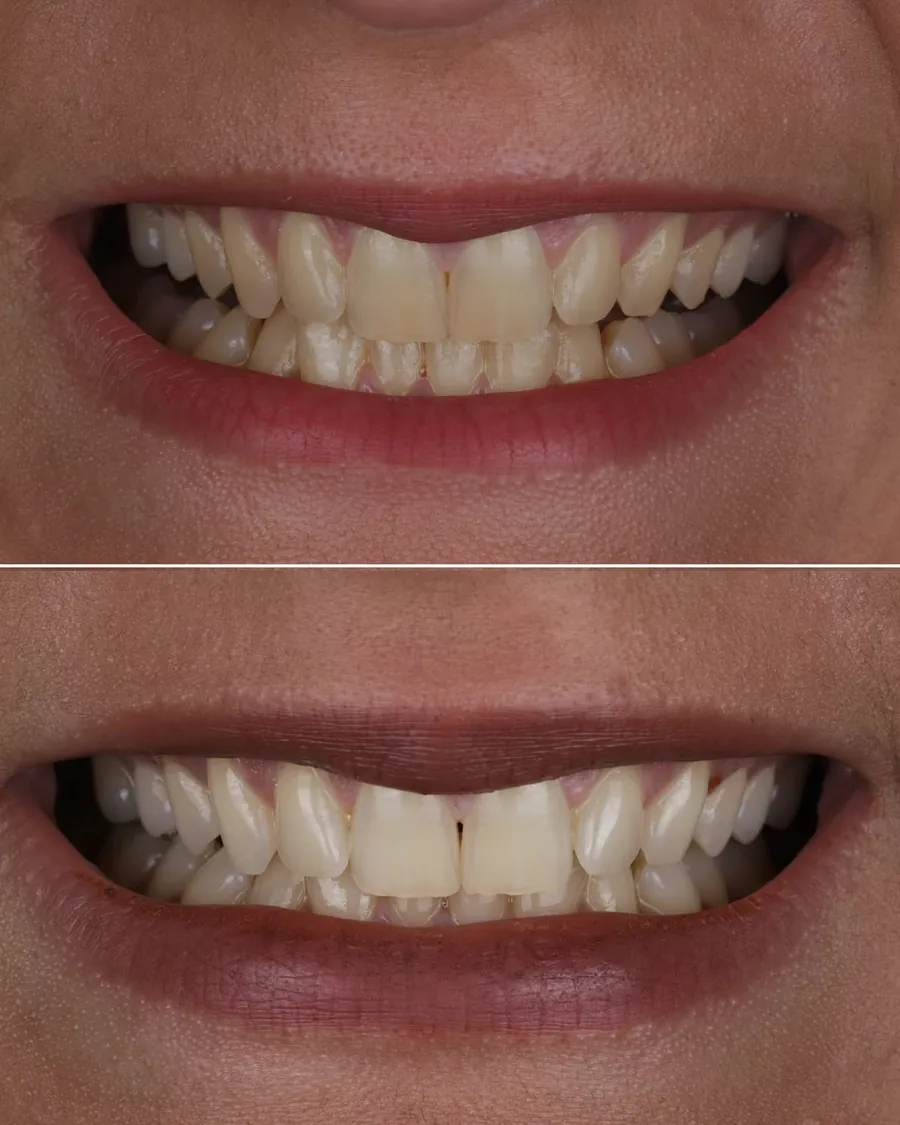
Natural ageing
Over time, the enamel becomes thinner and lets the dentine, which is naturally darker, show through. This visible dentine gives the teeth a deeper, yellowish or orange shade.
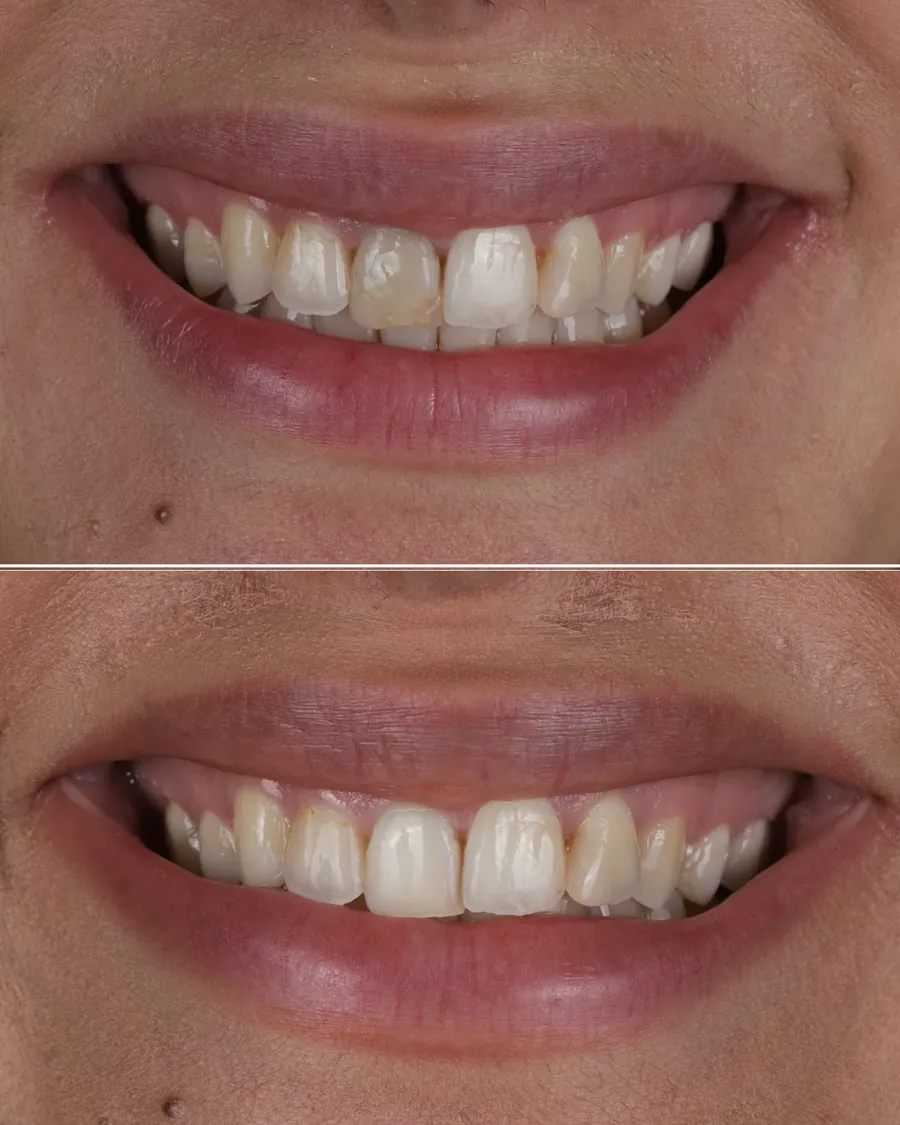
Root-treated teeth
When a tooth has darkened after a knock, the death of the pulp or root canal treatment. An internal whitening technique (walking bleach) is then preferred, tooth by tooth.
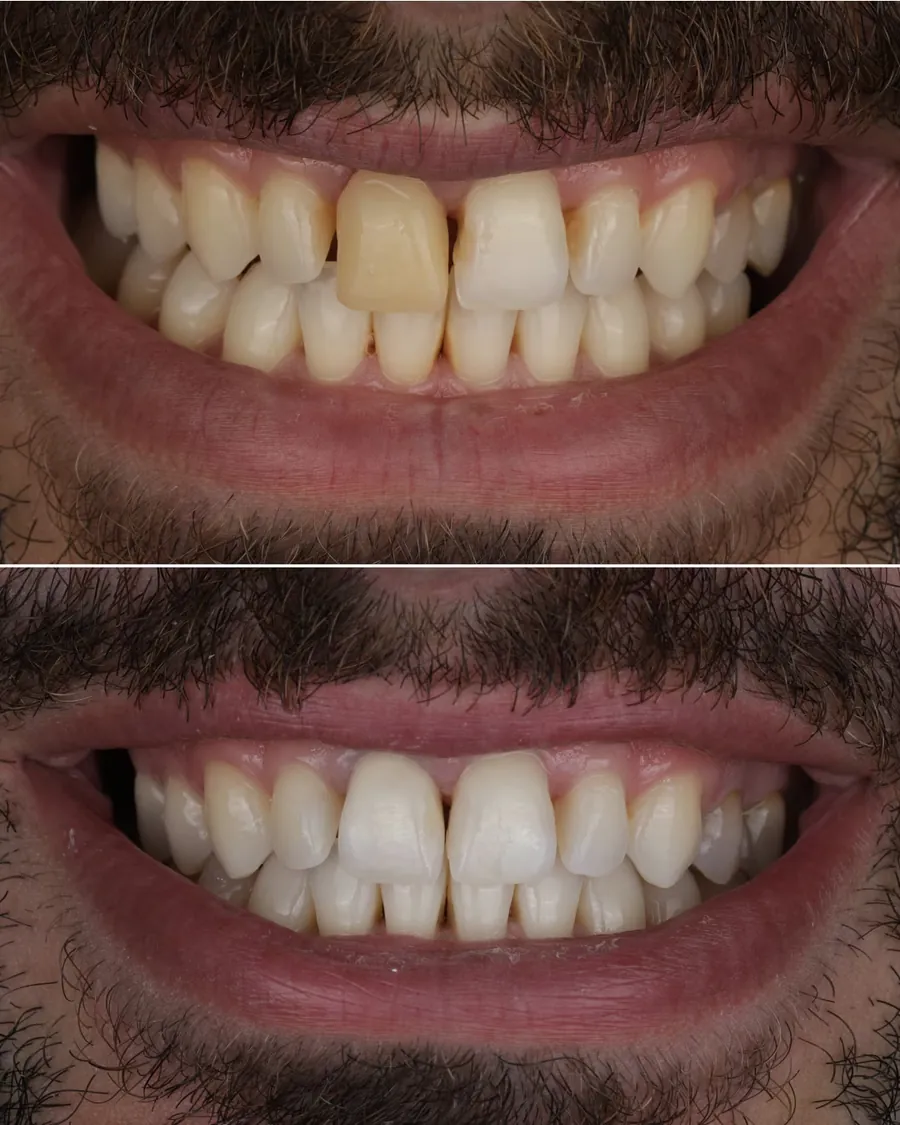
Aesthetic project
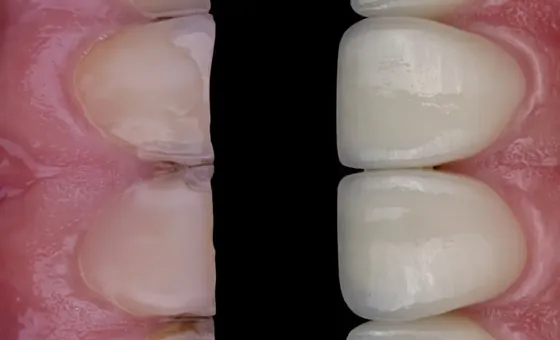
Before placing veneers or layered composite bonding on the front teeth. Whitening beforehand evens out the base shade and helps ensure a natural result on the neighbouring untreated teeth.
Treatment philosophyA considered treatment, planned over time
Teeth whitening is part of a gentle, considered medical approach, favouring gradual action rather than an immediate effect. The aim is not to make the teeth artificially white, but to lighten their shade while respecting the structure of the tooth.
The protocol relies on a controlled chemical reaction that acts on the pigments responsible for the discolouration, without abrasion or damage to the enamel. This medical approach stands in contrast to consumer products, which are often abrasive and simply polish the tooth surface.
Depending on the indication, whitening can be external, for acquired staining, or internal, particularly after trauma or root canal treatment. This rigour aims for a natural, even and lasting result, while respecting the tooth tissue.
At home or in the chairWhy did we choose at-home whitening?
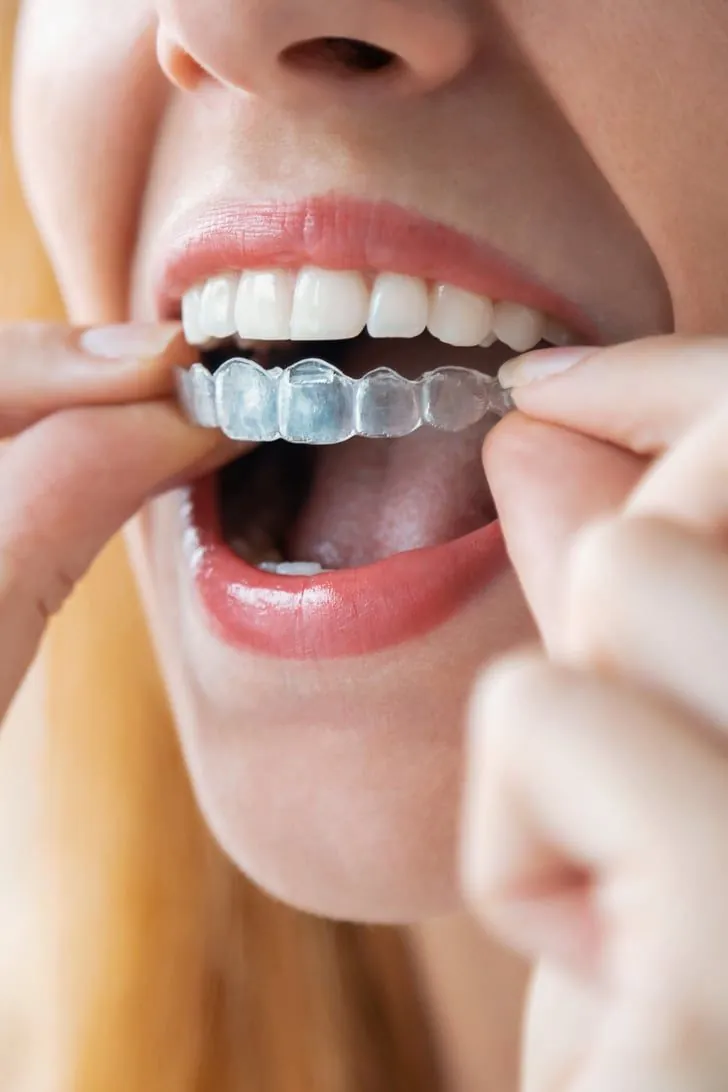
Many patients come to the consultation convinced that successful whitening comes down to a single in-chair bleaching session under an LED lamp. The clinical reality is more nuanced. At-home whitening, using custom-made trays worn every night for two to three weeks, gives a more stable result, is kinder to the tooth tissue, and is considerably more comfortable after treatment.
Our practice in Levallois-Perret has chosen to offer at-home whitening only. This protocol, based on low-concentration carbamide peroxide, offers, according to the current literature, the best balance of benefit, comfort and durability. The promise of instant whitening in one session remains appealing, but it often hides a quick colour rebound and prolonged sensitivity. During the aesthetic consultation, Dr Bruno Abehassera assesses the initial shade, your sensitivity profile and whether whitening fits in with a broader project of veneers or layered composite bonding.
Already having sensitive teeth does not rule out whitening: the at-home protocol adapts, with a low-strength gel and gradual wear.
← Swipe to compare →
| Criterion | At-home | In the chair (in-office) |
|---|---|---|
| Active agent | 10% carbamide peroxide | 35-40% hydrogen peroxide |
| Length of protocol | 2 to 3 weeks, custom-made trays worn at night | 1 to 2 sessions of 1 h to 1 h 30, with cheek retractors and a lamp |
| Post-operative sensitivity | Mild and temporary, disappears within 24 to 48 h | Frequent, sometimes marked, lasts several days |
| Stress on the pulp | Low — concentration below the threshold for significant penetration | Documented — high concentrations reach the pulp chamber within minutes |
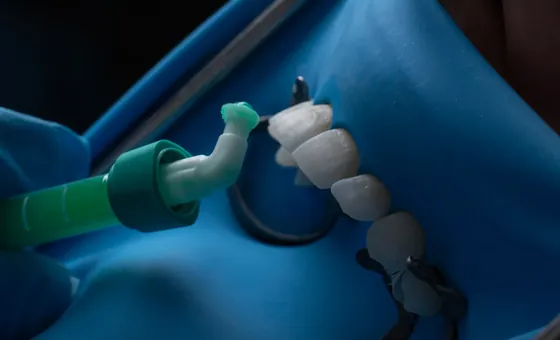
| Stability of the result | Gradual, even, lasting over time | Marked immediate effect, quick colour rebound after the session |
| Patient involvement | The patient takes an active part and controls the pace | The patient is passive and kept still for a long time |
Clinical casesExamples of treatments performed
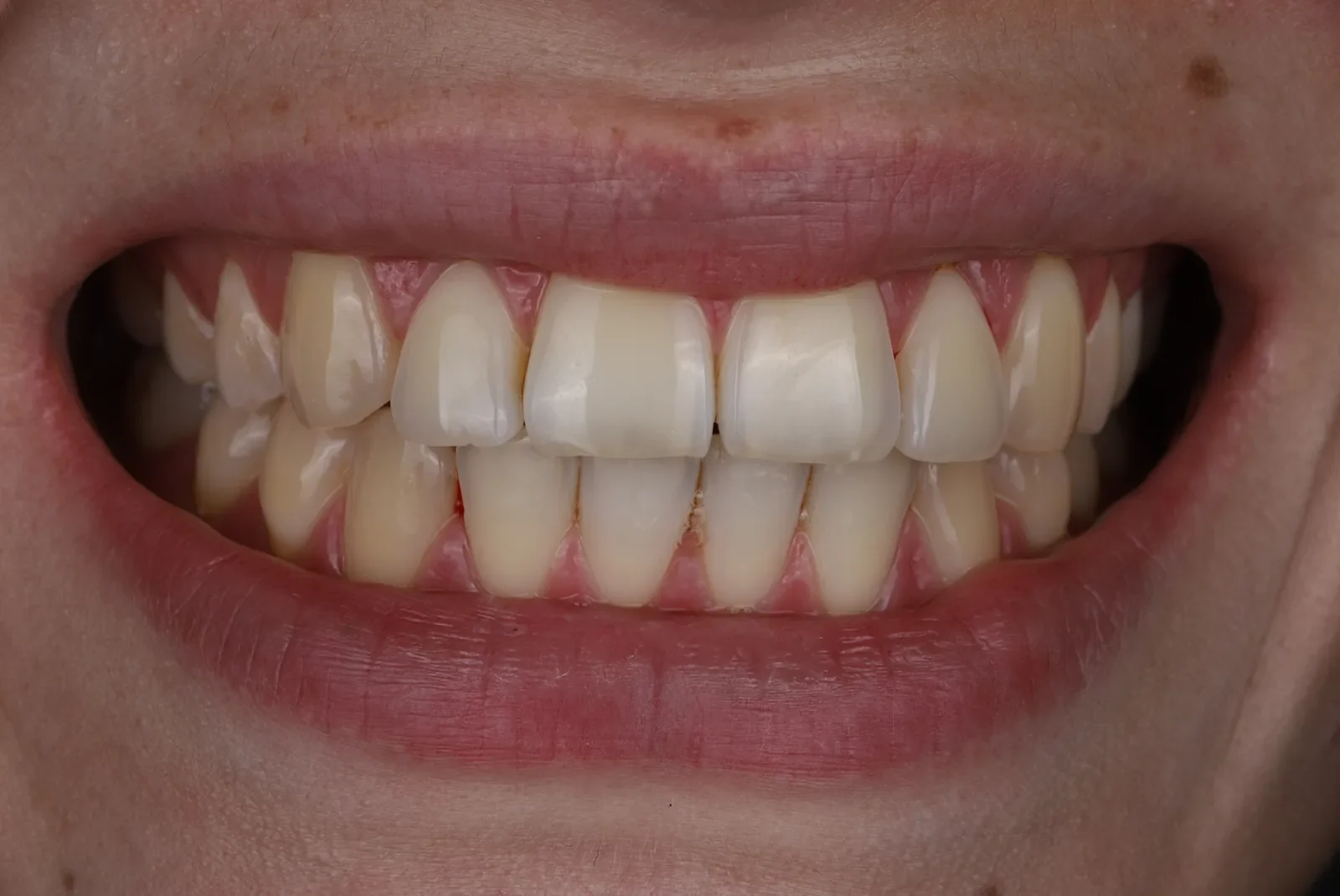
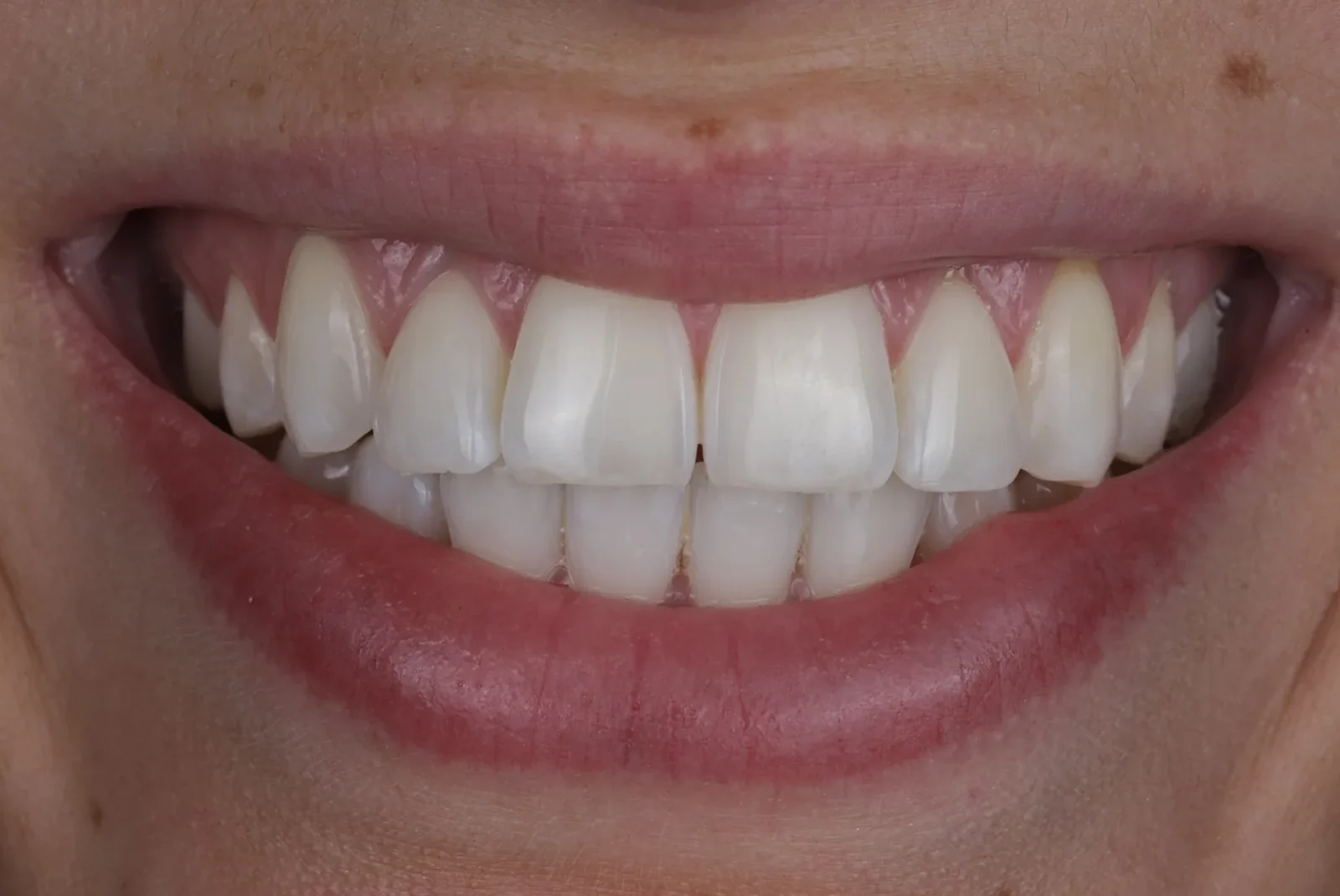 BeforeAfter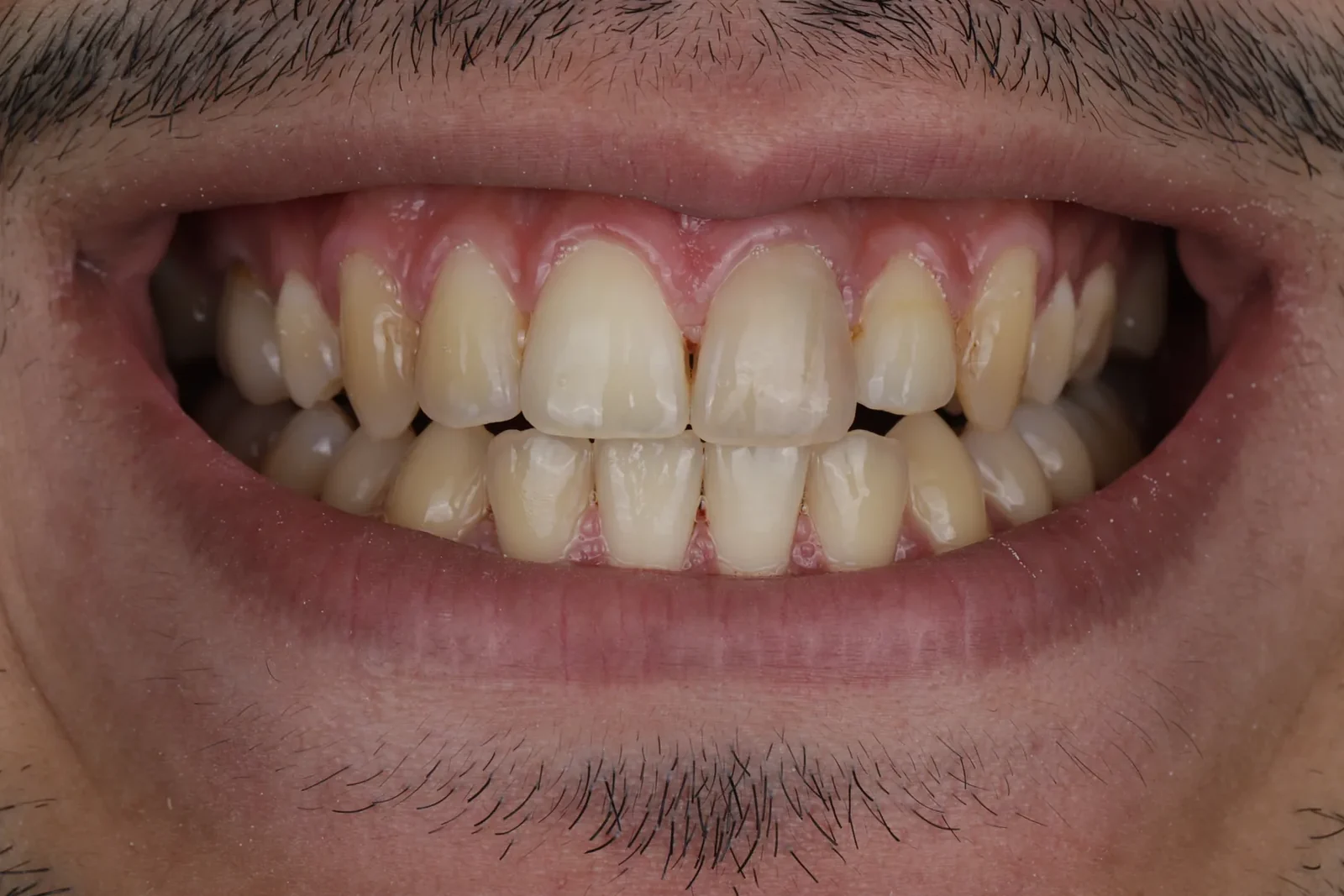
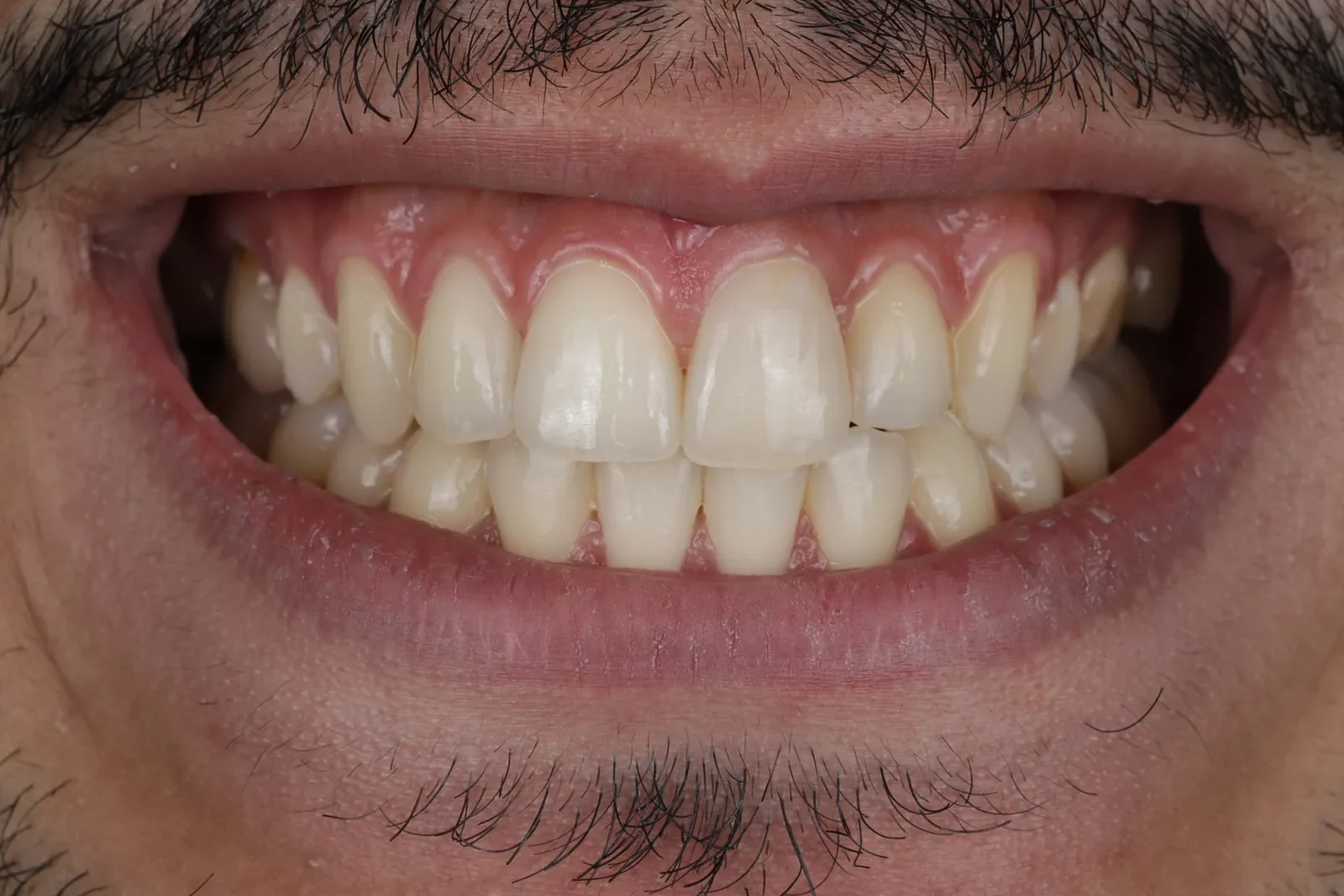 BeforeAfter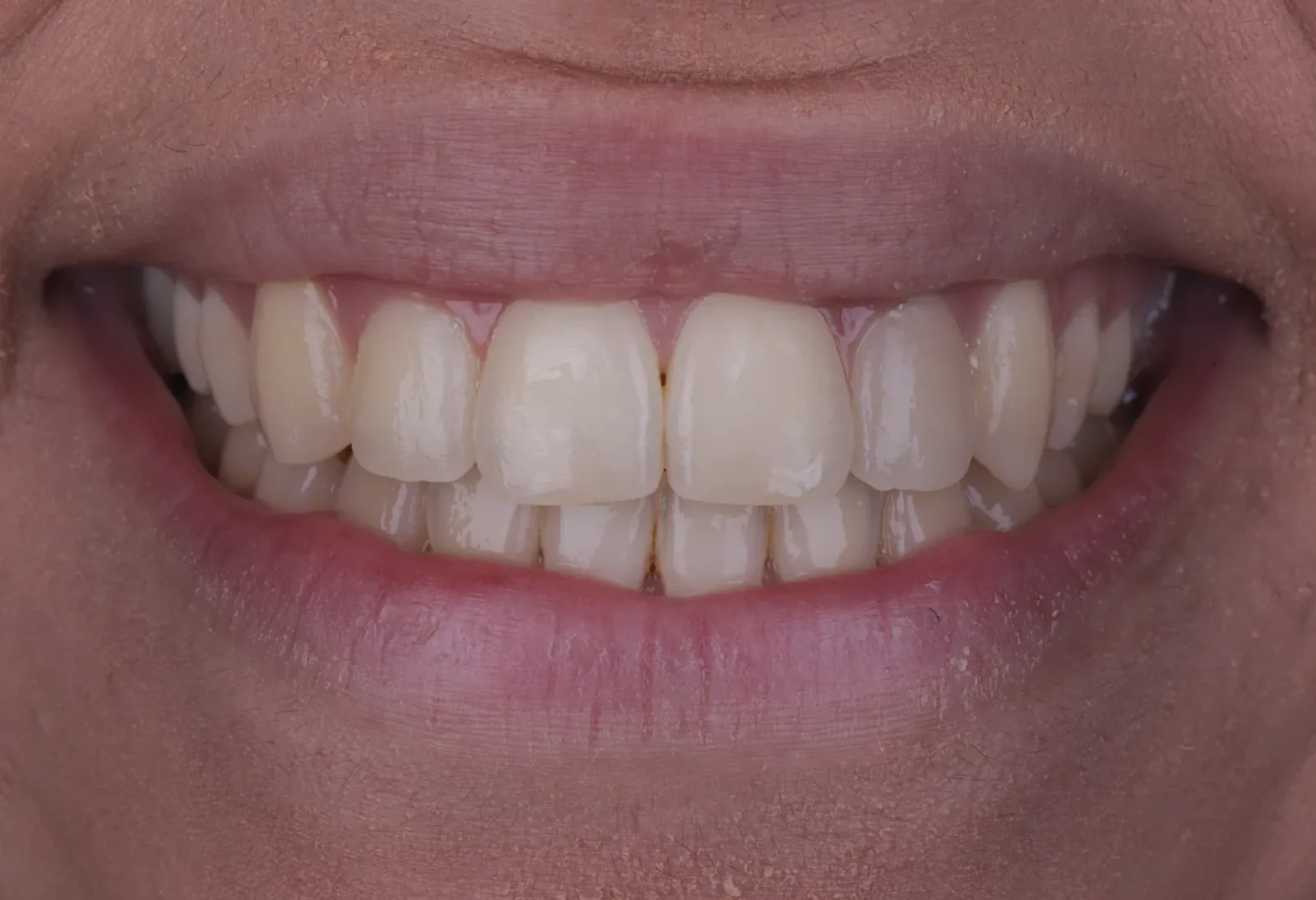
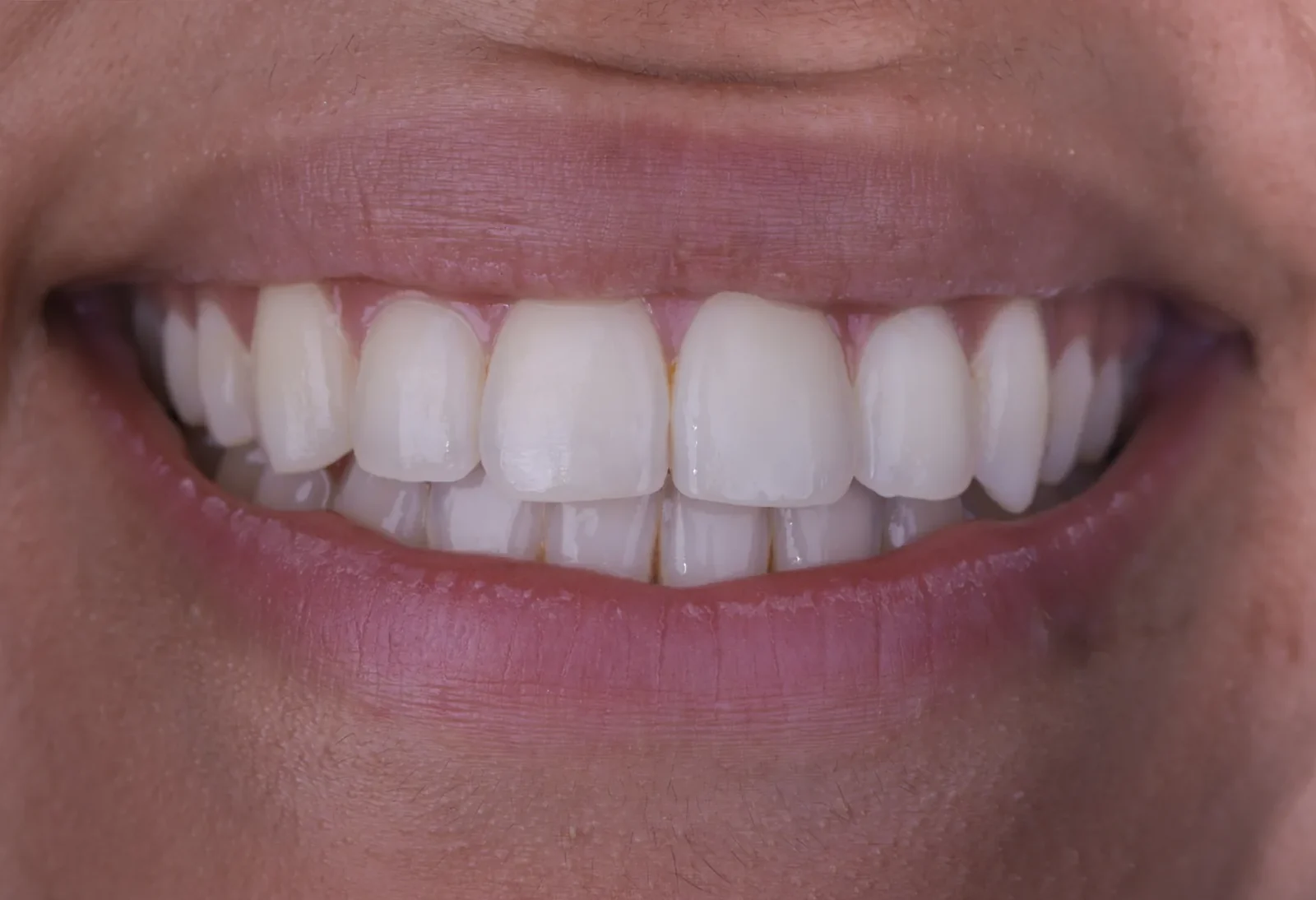 BeforeAfter
Cost and coverageUnderstanding the fees for teeth whitening
At the practice in Levallois-Perret (92300), Dr Bruno Abehassera applies transparent pricing for at-home teeth whitening.
Because teeth whitening is considered a cosmetic dental procedure, it is not covered by French national health insurance (Sécurité sociale). Some top-up health insurance plans (mutuelles) include a cosmetic dentistry allowance: check the conditions with your provider.
The protocol offered is exclusively at-home: custom-made trays are made at the practice from digital impressions, and the patient applies the whitening product at home following a personalised protocol. For stubborn discolouration, or when a more lasting transformation of the smile is sought, the consultation may turn towards porcelain veneers.
| Service | Indicative fee |
|---|---|
| At-home whitening — custom-made trays and whitening product | €600 |
| Product refill — 7 additional syringes | €350 |
Every treatment starts with a prior clinical assessment: examination of the initial shade, calibrated clinical photographs and a check that there are no contraindications. This step determines how predictable the result is and makes it possible to plan ahead for any sensitivity. No protocol is provided without this prior approval.
These amounts are given for information only. A detailed quote is provided at the initial consultation, specifying the protocol chosen and, where relevant, allowing you to send it to your top-up insurer for review.
A practice in Levallois-Perretclose to west Paris and the Hauts-de-Seine
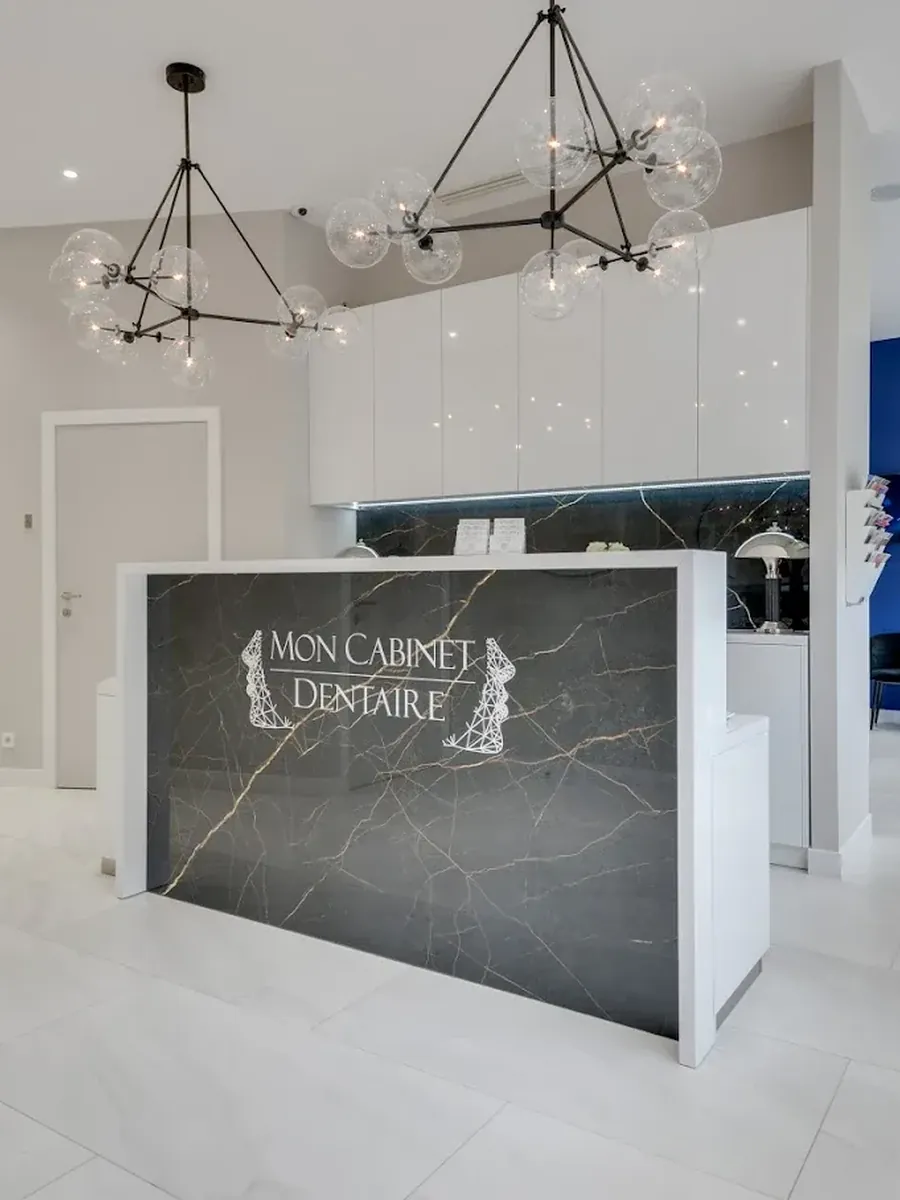
Mon Cabinet Dentaire, where Dr Bruno Abehassera practises, is located at 119 rue du Président Wilson, Levallois-Perret (92300), in the heart of the Hauts-de-Seine. Patients come from all over the Paris area for personalised, gradual teeth whitening, with a conservative approach that respects the enamel.
Many patients come to the practice from Neuilly-sur-Seine, the 17th arrondissement of Paris, the 16th arrondissement of Paris, Asnières, Clichy or Courbevoie. Being close makes it easier to reach the practice for an at-home whitening protocol, which involves several short appointments: initial impressions, fitting of the custom-made trays, a mid-treatment check-up and a final review.
The practice is easy to reach from:
- Levallois-Perret (metro line 3, Pont de Levallois station)
- Neuilly-sur-Seine (5 to 10 minutes by car)
- Paris 17th, Paris 16th (10 to 20 minutes)
- Asnières, Clichy, Courbevoie and La Défense (10 to 20 minutes)
Appointments for a consultation can be booked directly online via Doctolib or by phone on +33 1 42 67 05 04. Consultations can be held in English. The initial consultation is an opportunity to assess the indications precisely, discuss the whitening protocol suited to you and provide a detailed quote. No commitment is asked of you at this stage.
Frequently asked questionsWhat patients ask me most often
What exactly does at-home teeth whitening involve?
At-home teeth whitening gradually lightens the natural shade of the teeth using a professional-quality active gel (usually based on low-concentration carbamide peroxide), applied every night in custom-made trays produced by a laboratory from the patient's impressions. Unlike whitening done in the chair in a single session, the at-home approach relies on controlled exposure time rather than concentration: the patient wears the trays for several hours a night over a few weeks, which allows a gradual, deep and lasting action. At Dr Bruno Abehassera's practice in Levallois-Perret, this supervised medical approach is favoured for its safety and for the stability of its results over time.
How does teeth whitening work?
Teeth whitening relies on a chemical oxidation reaction within the enamel and dentine. The whitening agents (carbamide peroxide or hydrogen peroxide) release oxygen radicals that can penetrate the tooth structure and break down the pigment molecules responsible for the discolouration (chromophores). These pigment molecules then become smaller, and so less visible to the naked eye, which results in a gradual lightening of the shade. It is in no way an abrasive mechanism, nor a polishing of the tooth surface (unlike some mechanical methods such as charcoal, bicarbonate or strips sold without a prescription). The action takes place in depth, within the tooth material itself.
Does whitening damage the teeth?
No, when the treatment follows a gentle, gradual medical protocol under the supervision of a dentist. Controlled whitening causes neither wear of the enamel nor loss of tooth structure, unlike abrasive mechanical methods that work by polishing the surface (and end up weakening the enamel in the long term). The oxidising agents used at the practice comply with European standards (concentration regulated by Directive 2011/84/EU) and their chemical action is entirely reversible at a structural level. At Dr Bruno Abehassera's practice in Levallois-Perret, the prior assessment makes sure there are no contraindications (untreated decay, cracks, sensitivity whose cause has not been identified) before the protocol begins.
Why choose gentle, gradual whitening rather than in-chair whitening?
Several clinical reasons justify this choice. First, safety: the highly concentrated products used in the chair are now strictly regulated by European legislation, and even banned in some contexts because of their potential side effects (marked sensitivity, gum irritation). Second, real effectiveness: the whitening mechanism depends on how long the oxygen radicals act within the tooth material; a single, brief exposure, even at a high concentration, has limited and short-lived effectiveness. Conversely, repeated exposure at a low concentration (every night, over several weeks) allows a deeper, better-controlled action that is considerably more stable over time. Third, comfort: the at-home protocol makes it possible to slow down, pause or adjust the treatment at any time according to the patient's sensitivity, which is not possible with an in-office protocol.
How long does whitening treatment take?
The length of treatment varies according to the initial shade, the type of discolouration (external or internal) and the patient's aesthetic goal. As a guide:
- About 2 weeks in simple situations (mild to moderate discolouration, structurally sound teeth)
- 3 to 6 weeks for more marked or long-standing discolouration
- Several months in complex cases (root-treated teeth, tetracycline staining, old trauma)
At Dr Bruno Abehassera's practice in Levallois-Perret, the exact length of the protocol is estimated at the initial consultation, after a clinical examination and a discussion of the aesthetic goals. Treatment can be paused or extended depending on how the shade changes and on the patient's comfort.
Can whitening cause tooth sensitivity?
Yes, temporary and reversible sensitivity may appear during treatment, mainly to cold or air. It is usually mild and brief. At the practice, it is anticipated and managed by adjusting the protocol: a low-strength gel, gradual wear during the day before full nights, nights spaced out, and a remineralising paste combining CPP-ACP and fluoride, during and after treatment. Already having sensitive teeth does not rule out whitening: the protocol is simply adapted. At Dr Bruno Abehassera's practice in Levallois-Perret, follow-up is provided throughout the protocol. Sensitivity linked to the gel generally fades within a few days of stopping or spacing out the sessions.
How does the whitening protocol work day to day?
Treatment relies on wearing custom-made trays at night, with the whitening gel spread in a thin layer by the patient just before going to bed. The typical sequence at Dr Bruno Abehassera's practice includes:
- Initial consultation: clinical examination, photographs, assessment of the reference shade, confirmation of the indication
- Impressions (digital or conventional) so the laboratory can make the custom-made trays
- Fitting of the trays and handover of the active gel kit, with a demonstration of how to use them and personalised advice
- Mid-treatment check-up to assess progress and adjust the frequency or length of wear if necessary
- Final review once the target shade has been reached, with comparative photographs and recommendations to keep the results stable
The length and frequency of wear are set precisely at the start, then adjusted according to how you feel and how the shade changes. The patient stays in control of the treatment at every step.
Do I need to change my diet during treatment?
There is no strict "white diet" to follow for the whole treatment. The main rule concerns the hour after removing the trays in the morning: during this time, the enamel is more permeable to pigments because of its exposure to the oxidising gel, and it is best to avoid strongly colouring foods (coffee, tea, red wine, red berries, curry, beetroot, dark fizzy drinks). After that hour, you can eat normally again. Smoking is particularly discouraged throughout the protocol, as it encourages stubborn residual stains and can compromise the stability of the final result.
Why whiten your teeth before aesthetic restorations (composite bonding, veneers)?
Teeth whitening is often the first step in a comprehensive aesthetic project. Whitening before restorations (layered composite bonding, porcelain veneers) makes it possible to set a lighter, more stable base shade, on which later restorations can be made in a more natural and lasting way. Restorative materials (porcelain, composite) do not lighten once in the mouth: their shade is fixed when they are made. If a veneer or composite is placed on a dark tooth and the neighbouring teeth are whitened afterwards, the result is a colour imbalance that is difficult to correct. At Dr Bruno Abehassera's practice in Levallois-Perret, prior whitening is always discussed at the consultation when veneers or layered composite bonding are being considered, so that the treatment steps follow the best possible order.
What can be done about very dark teeth, or teeth that respond poorly to standard whitening?
Some teeth, particularly after trauma, root canal treatment (carried out some time ago), tetracycline staining or long-standing discolouration, may respond only partially to standard at-home whitening. In these cases, specific protocols can be offered at the practice: internal whitening (the "walking bleach" technique on a root-treated tooth, in which the gel is placed directly inside the pulp chamber), a protocol extended over several months, or a combination of approaches (external + internal whitening). When whitening alone cannot reach the aesthetic goal, alternatives can be considered: layered composite bonding or porcelain veneers. This step-by-step approach follows a rigorous therapeutic gradient, always favouring the most conservative solution before considering more invasive options.
How much does teeth whitening cost?
The fee for teeth whitening varies according to several clinical factors: the initial shade of the teeth, the number of arches to be treated (one or both), whether the discolouration is external or internal, and the length of protocol needed to reach a stable result. At Dr Bruno Abehassera's practice in Levallois-Perret, each treatment is given a personalised quote at the consultation, after a full analysis of the smile and a discussion of the aesthetic project with the patient. As whitening is a cosmetic procedure not covered by French national health insurance, nor by most top-up insurance plans, the cost reflects the use of professional-quality active gels, custom-made trays produced by a laboratory, and clinical follow-up throughout treatment. The fee shown above is indicative: the exact amount is confirmed in a personalised quote after a clinical examination, and no commitment is asked of you at the initial consultation.
What is the difference between whitening at the practice and consumer kits?
Whitening carried out by the practice follows a supervised medical approach: a prior clinical examination, an active gel at a suitable concentration (regulated by European Directive 2011/84/EU), custom-made trays produced by a laboratory from the patient's impressions, and clinical follow-up throughout the protocol. Kits sold in pharmacies, supermarkets or online rely on gels with a very low concentration (a legal limit of 0.1% hydrogen peroxide for over-the-counter sale) and standard trays that are not adapted to each person's mouth, which limits both their effectiveness and their comfort. Some abrasive products (charcoal, high-dose bicarbonate) work by polishing the surface rather than genuinely lightening the underlying shade, and can weaken the enamel over time. At Dr Bruno Abehassera's practice in Levallois-Perret, the protocol aims for a lasting lightening of the tooth's intrinsic shade, under medical supervision from start to finish.
Written by Dr Bruno Abehassera, dental surgeon · Updated