
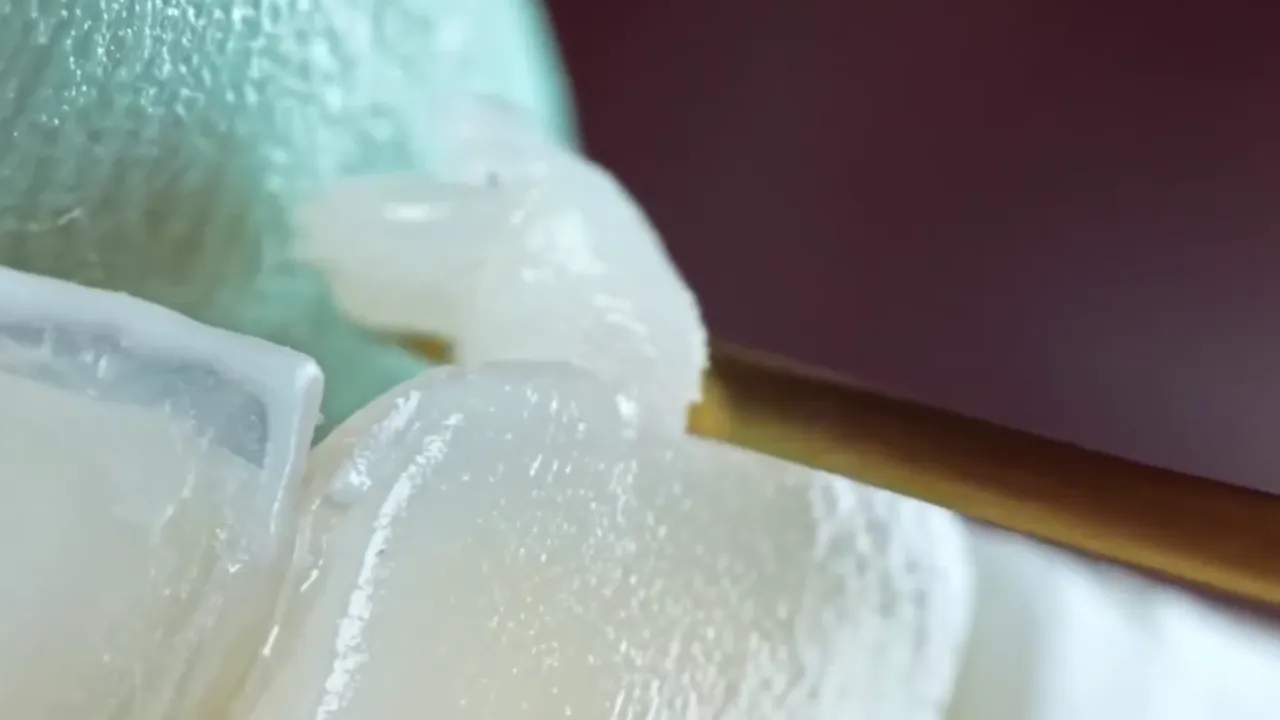
LayeringWhat is it?
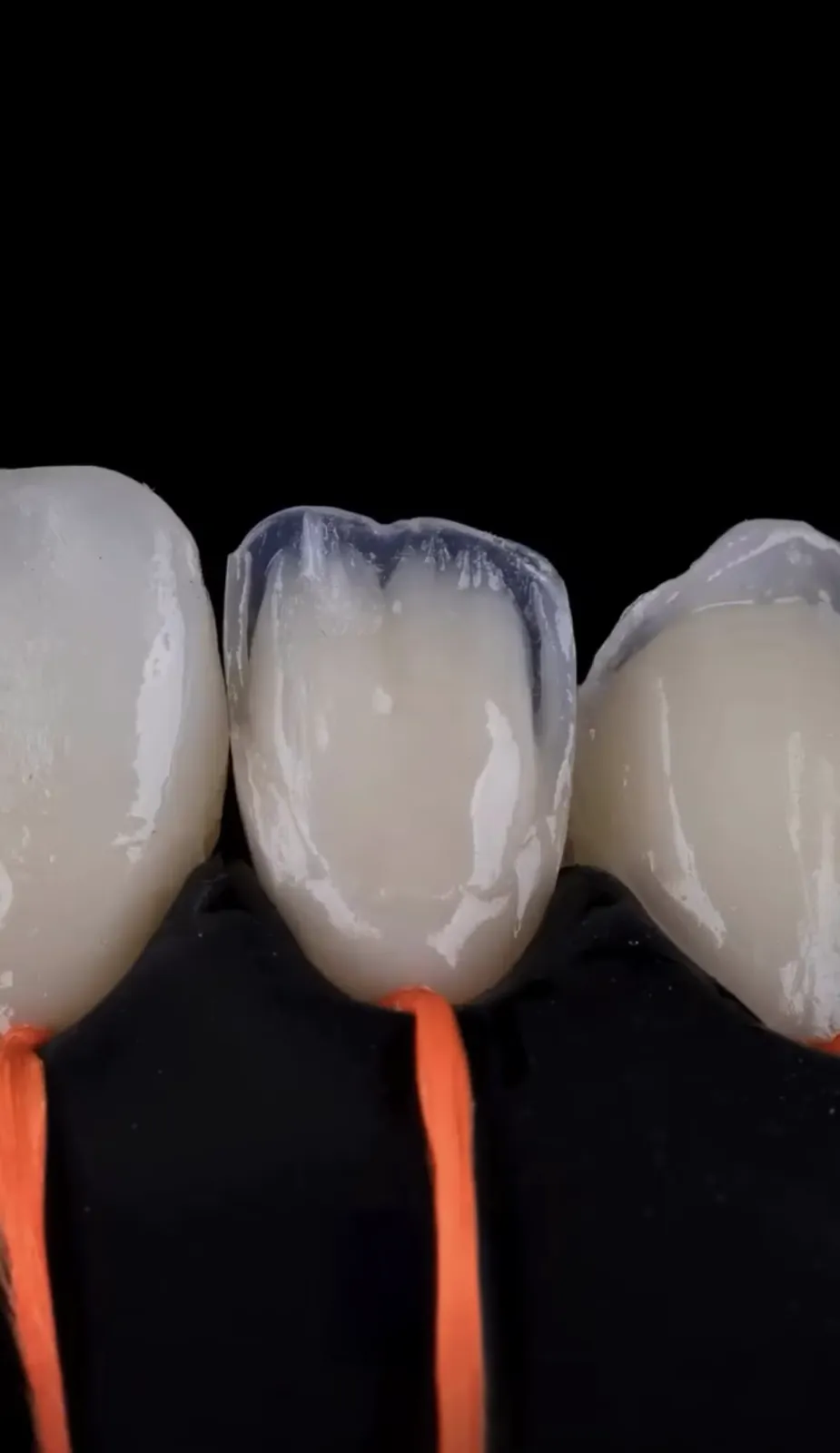
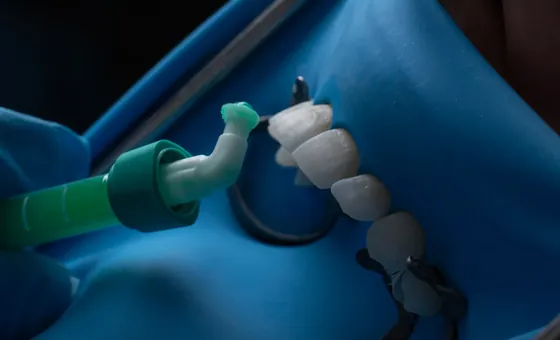
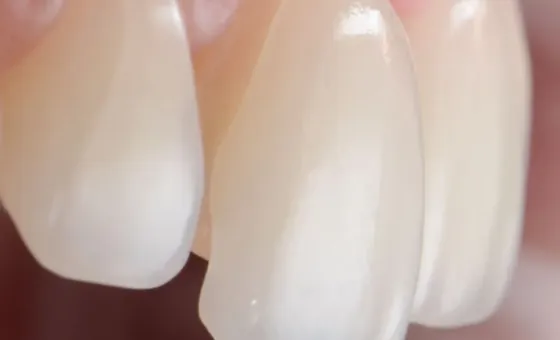
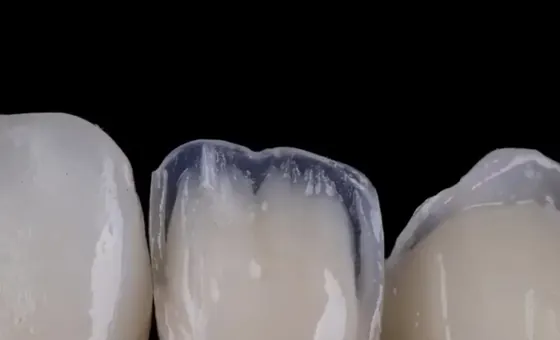
Layered composite bonding, sometimes also called a composite veneer in everyday language, is a direct restoration technique in which the tooth is rebuilt layer by layer with resins selected to reproduce the dentine, the enamel and the natural areas of translucency.
Dr Bruno Abehassera carries out these restorations at the practice in Levallois-Perret (92300) with an additive approach. Material is added rather than removed, which preserves healthy tooth tissue. In most cases, this technique makes it possible to correct the tooth without drilling it down.
The appointment usually lasts 1 to 2 hours per tooth, depending on the complexity of the case. Layered composite is a conservative and reversible alternative to the porcelain veneer. It has the advantage of being repairable and adjustable over time, which makes it a relevant option for localised corrections or corrections that may evolve.
IndicationsWhen should you consider composite bonding?
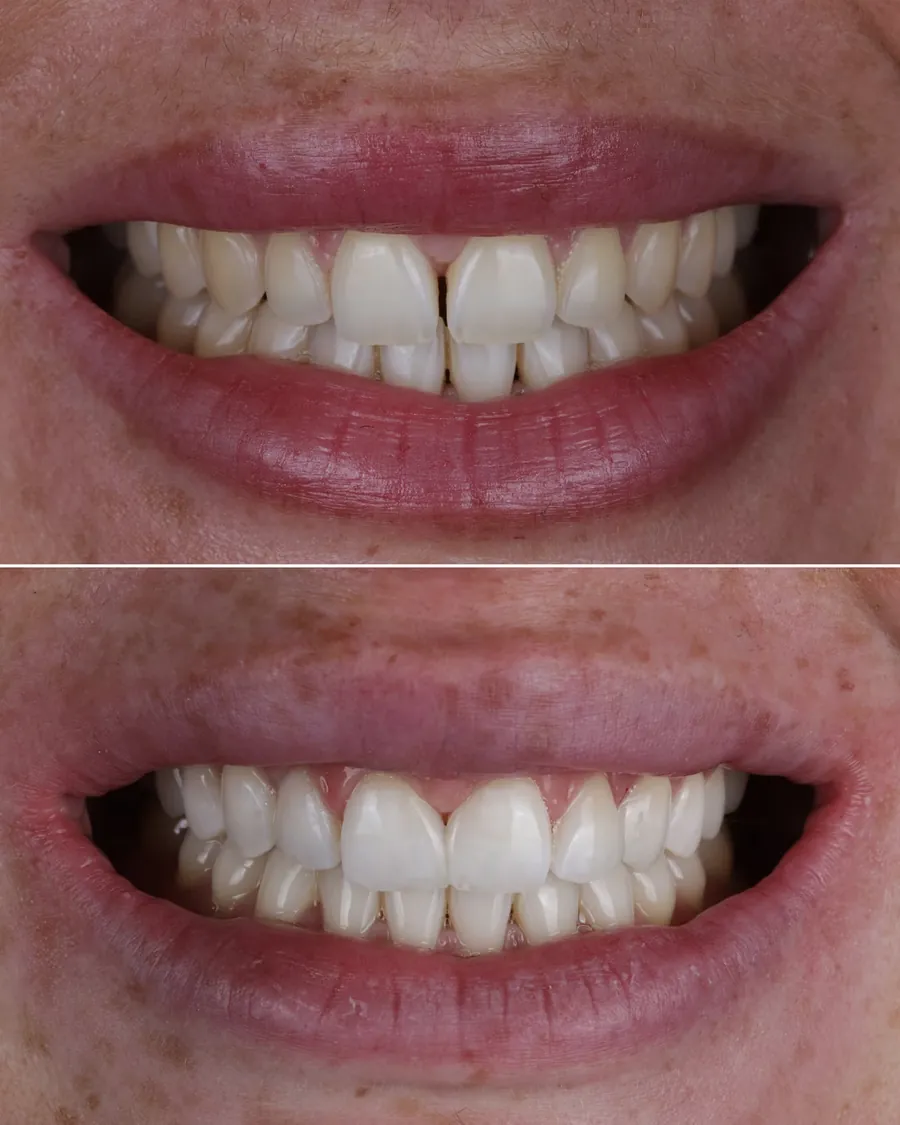
Gaps and black triangles
Spaces between the teeth (gaps, also called diastemas, or black triangles) that can upset the harmony of the smile. Layered composite closes them without invasive preparation, while respecting the natural shade of the teeth.
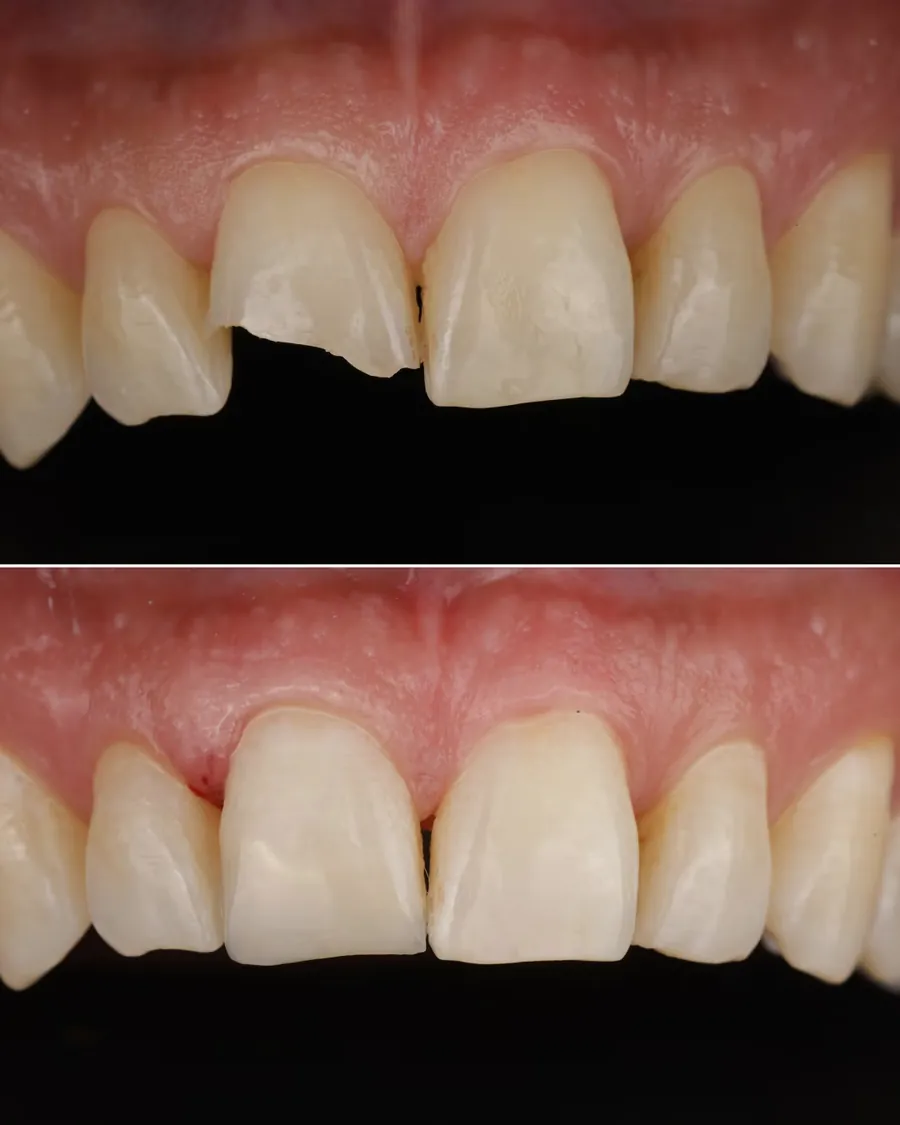
Tissue loss
Crown fractures or loss of tooth structure, often caused by a knock or by wear. The layering technique rebuilds the tooth by reproducing dentine and enamel, for a very natural-looking result.
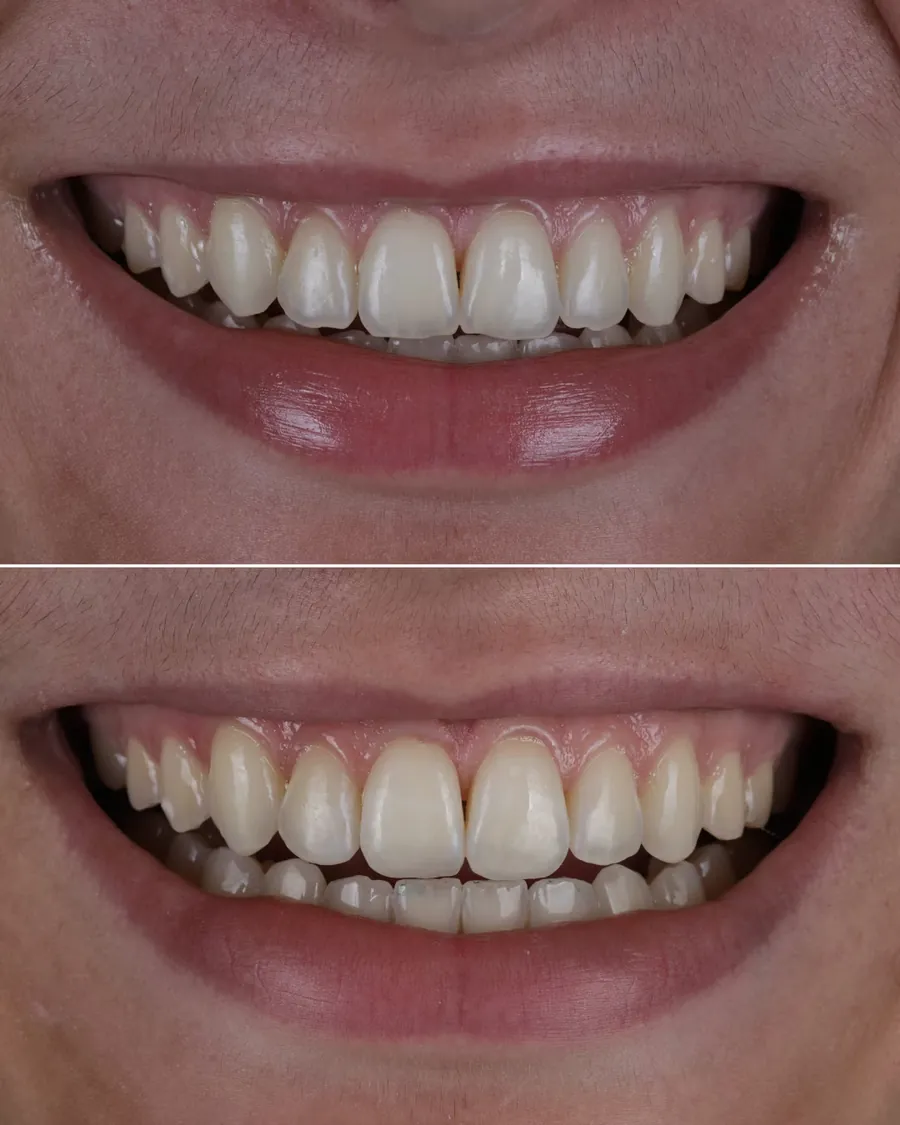
Shape defects
Teeth that are too small, peg-shaped, irregular or asymmetrical, affecting the balance of the smile. Biomimetic composite makes it possible to lengthen or reshape the tooth in a single appointment, without drilling.
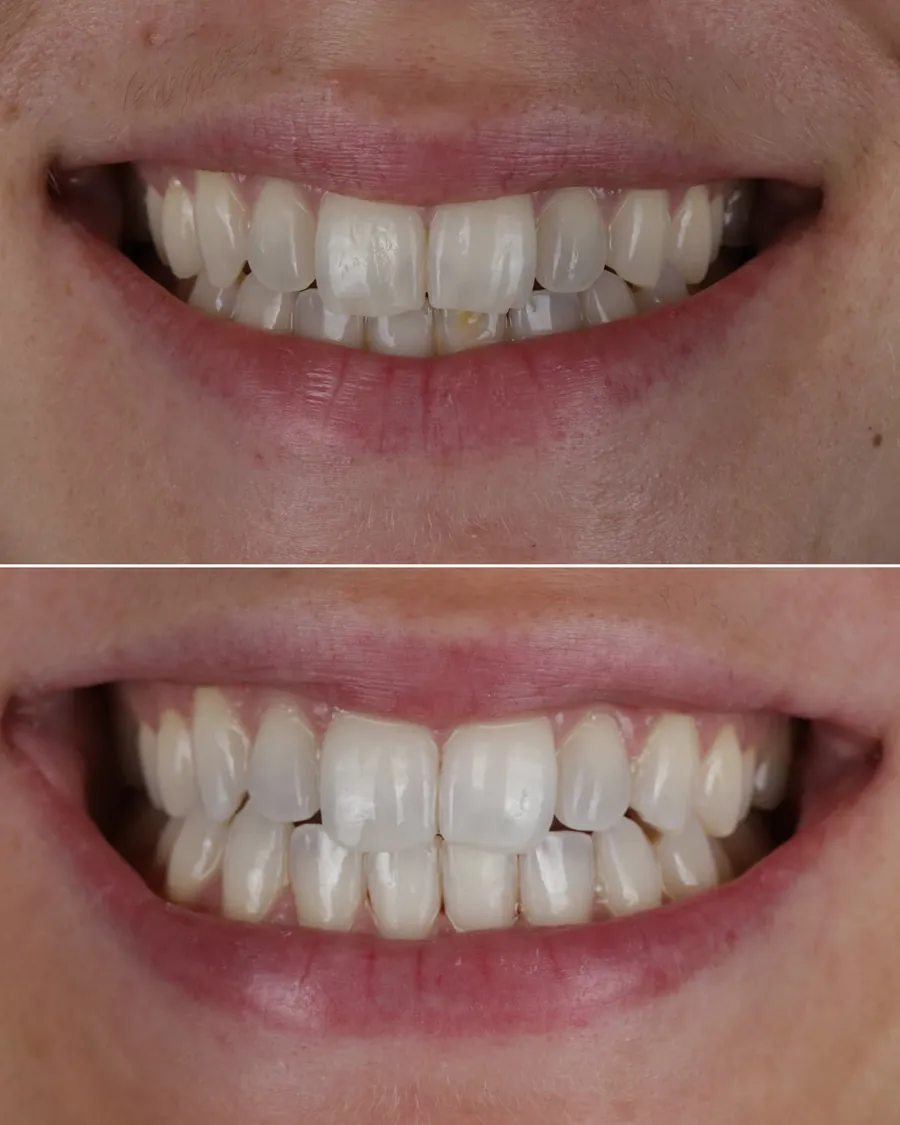
Localised discolouration
Localised variations in shade, or white spots that do not respond to conventional whitening. Layered composite masks this discolouration with a natural, translucent result.
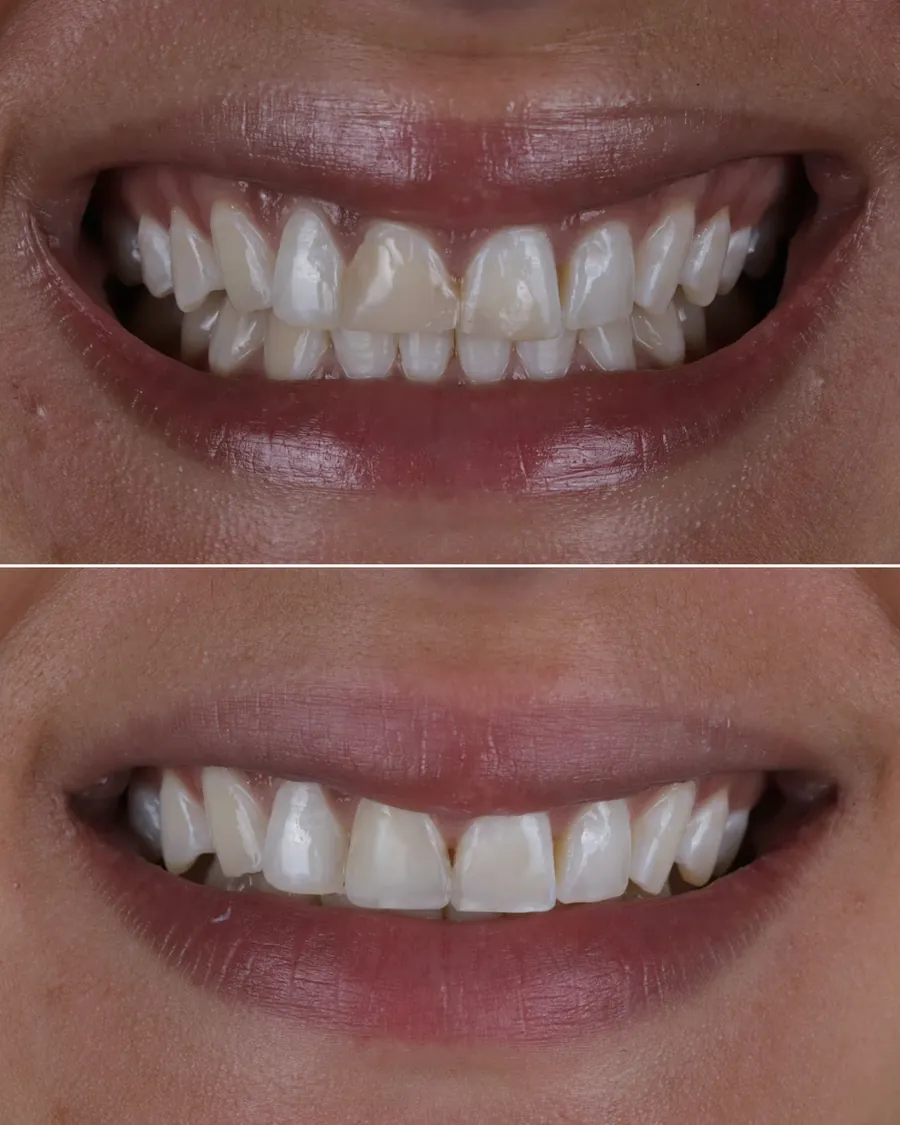
Old composite fillings
Old composite fillings or composite veneers that have deteriorated, yellowed or cracked, replaced with a layered restoration to regain a natural, lasting result, with a conservative approach to the tooth.
Treatment philosophyCorrecting what is missing, preserving what is there
Before any procedure, the tooth is observed and analysed: its shape, its lines, its shade, its translucency and its surface texture guide every decision. Treatment follows a precise protocol, in which each layer aims to reproduce the tooth's own characteristics, using carefully selected resins to recreate the look of a natural tooth that blends in with the rest of the smile.
Layered or injectedWhich technique for which indication?
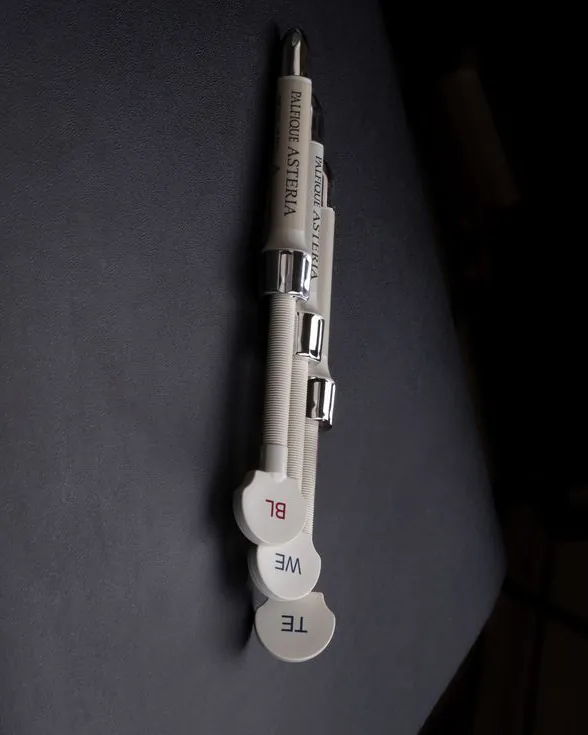
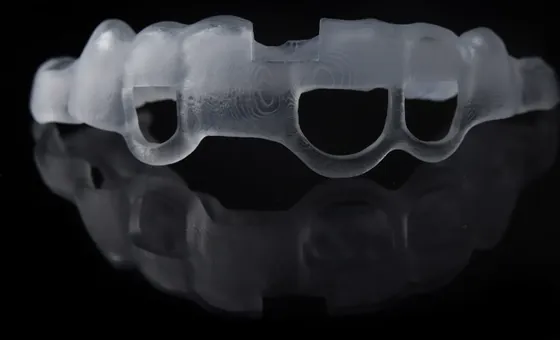
Two aesthetic composite techniques exist side by side in restorative dentistry today: direct layering, in which the composite is applied layer by layer with a brush to reproduce the natural nuances of the tooth, and Flowable Injection, in which a flowable composite is injected through a clear matrix made from a prior digital project. Far from being in opposition, these two approaches are complementary and meet distinct clinical indications.
Our practice in Levallois-Perret uses both techniques and chooses between them according to the clinical indication, the aesthetic goal and the patient's situation. Our guiding principle remains minimally invasive dentistry: preserving healthy tooth tissue as much as possible, whether for a single-tooth restoration or an aesthetic rehabilitation of several teeth. During the aesthetic consultation, Dr Bruno Abehassera carries out a complete analysis of the smile - tooth anatomy, lip dynamics, aesthetic project - to determine the most suitable technique. In some cases, layered composite and Flowable Injection can be combined with veneers or porcelain inlays-onlays for a comprehensive aesthetic rehabilitation.
← Swipe to compare →
| Criterion | Direct layering | Flowable Injection |
|---|---|---|
| Technique | Incremental application with a brush, layer by layer | Injection of a flowable composite through a clear mould |
| Number of layers | 2 to 3 layers (dentine, enamel, characterisations) | 1 layer (single shade) |
| Materials used at the practice | Layering composites in dentine and enamel shades | Universal injectable flowable composite |
| Preparation required | Interproximal matrices and a silicone palatal key made from the wax-up | Digital impression, aesthetic project, clear silicone injection mould |
| Preferred indication | Single front-tooth restoration, corner reconstruction, individual characterisations | Closing gaps, erosive wear on several teeth, aesthetic rehabilitation of several areas |
| Lifelike appearance | Nuanced internal characterisations (mamelons, halo, opalescence) | Even volumes, surface texture shaped by the mould |
| Treatment time | Longer in the chair, in 1 appointment | Quicker in the chair, after prior digital preparation |
Clinical casesExamples of treatments performed
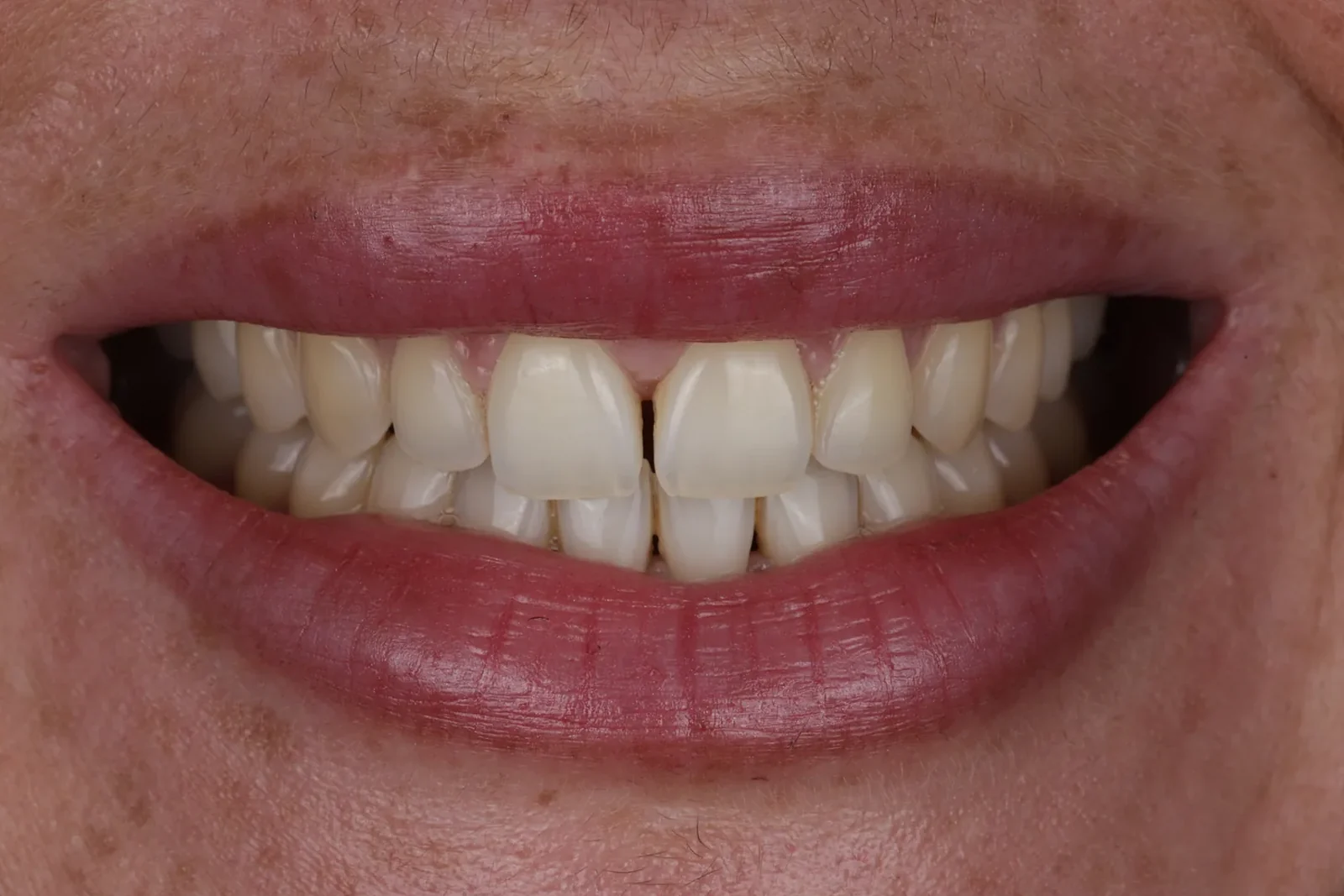
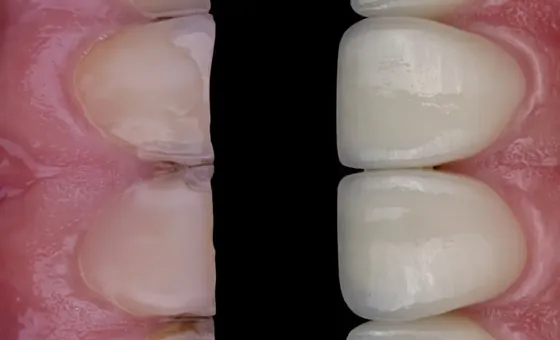
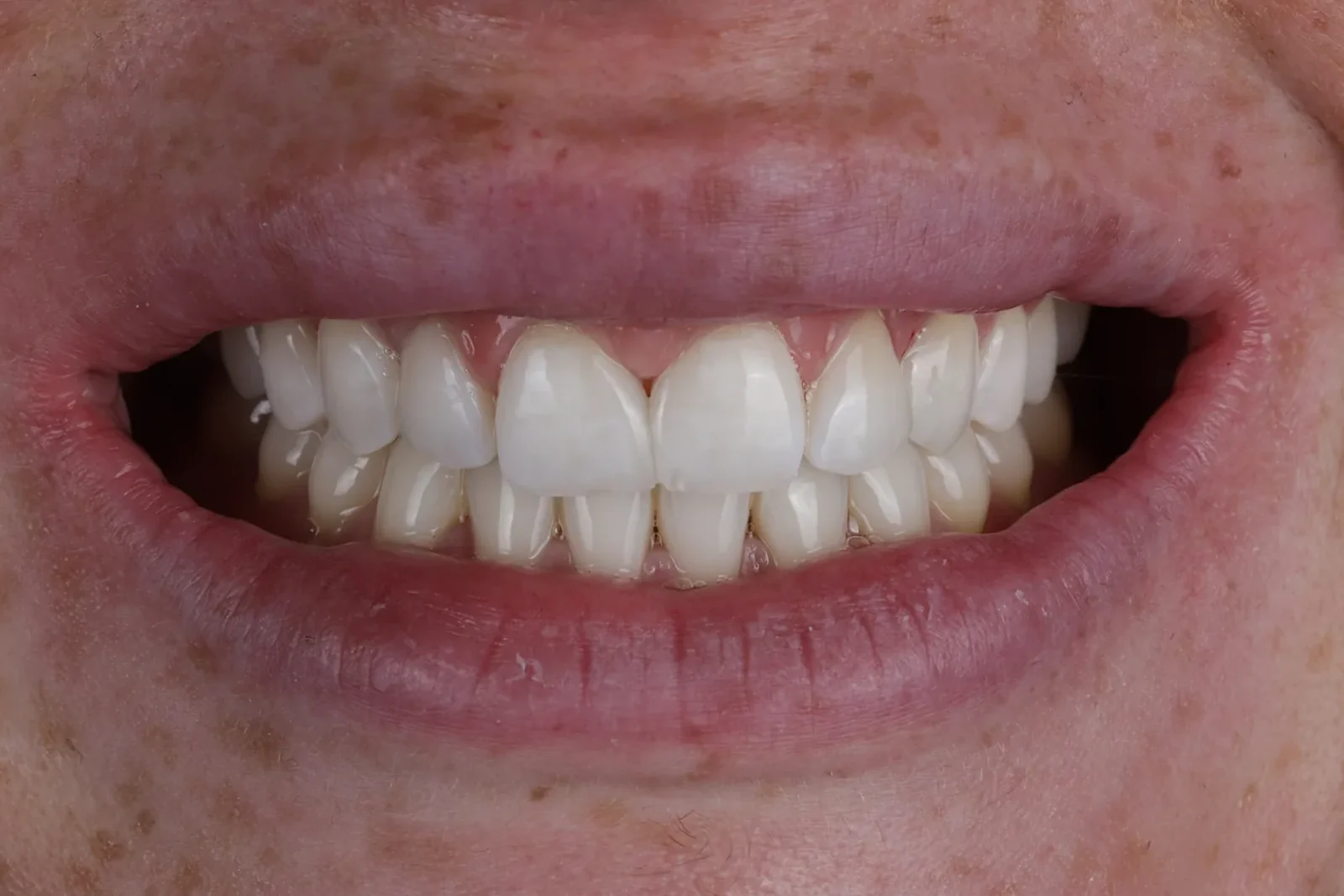 BeforeAfter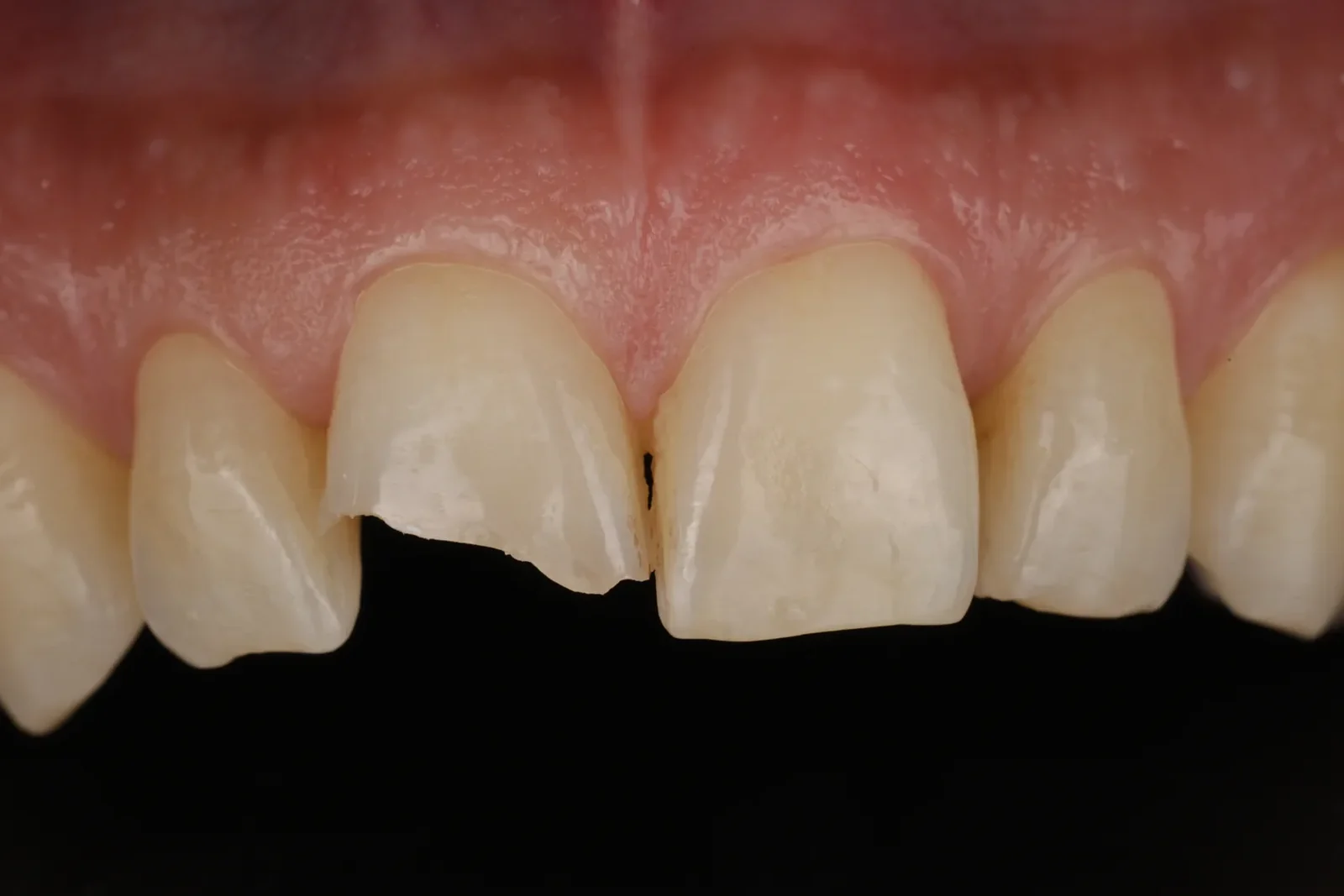
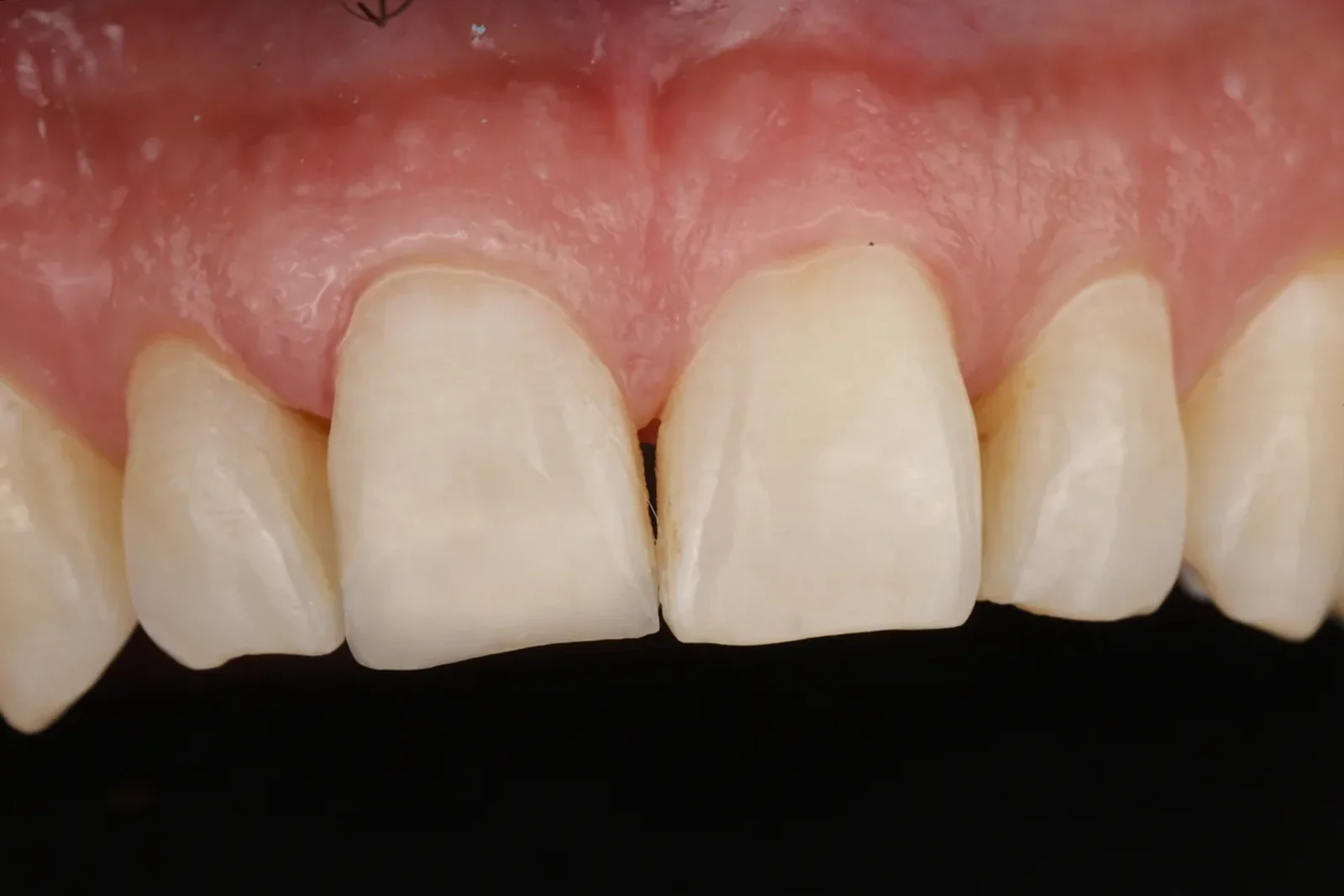 BeforeAfter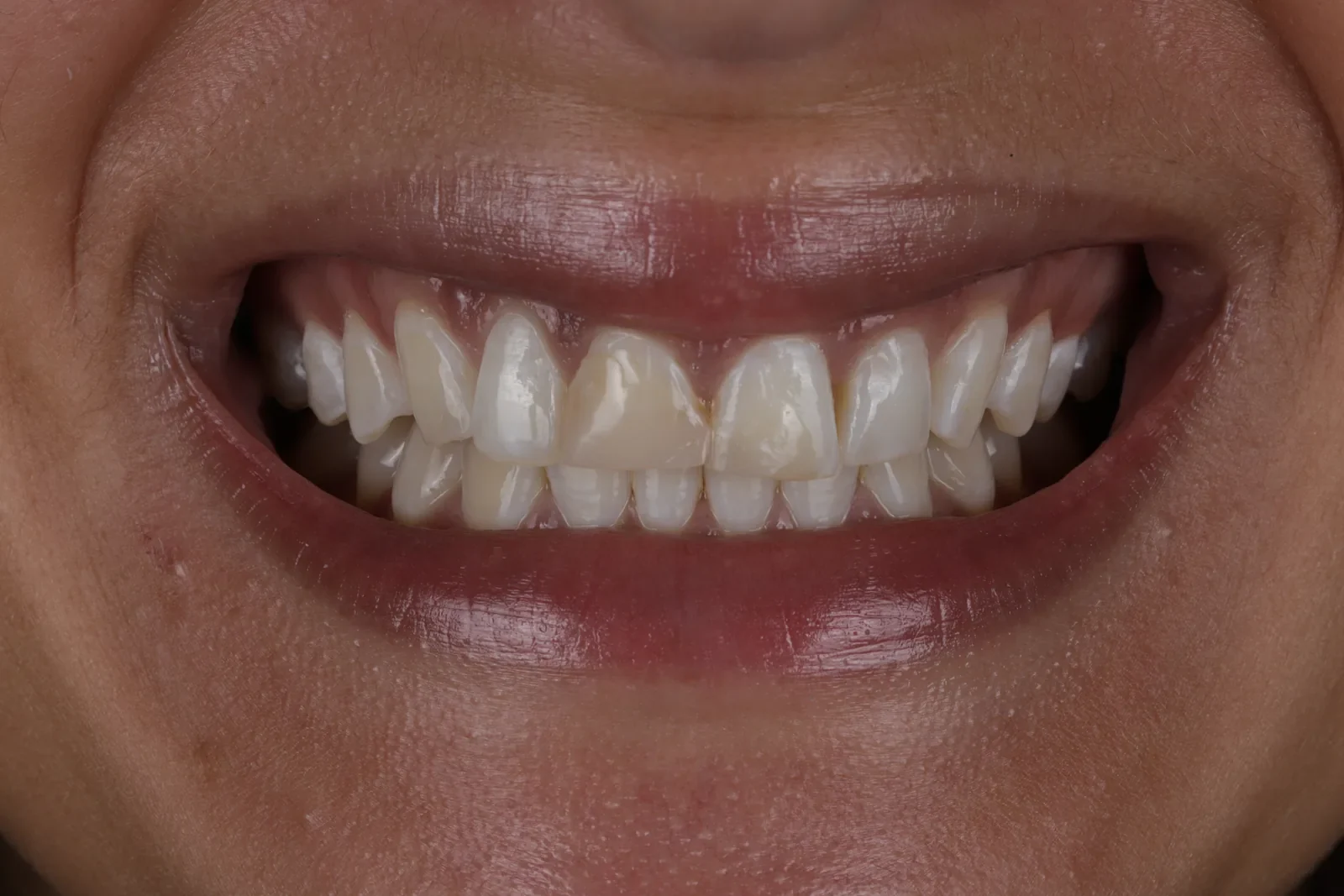
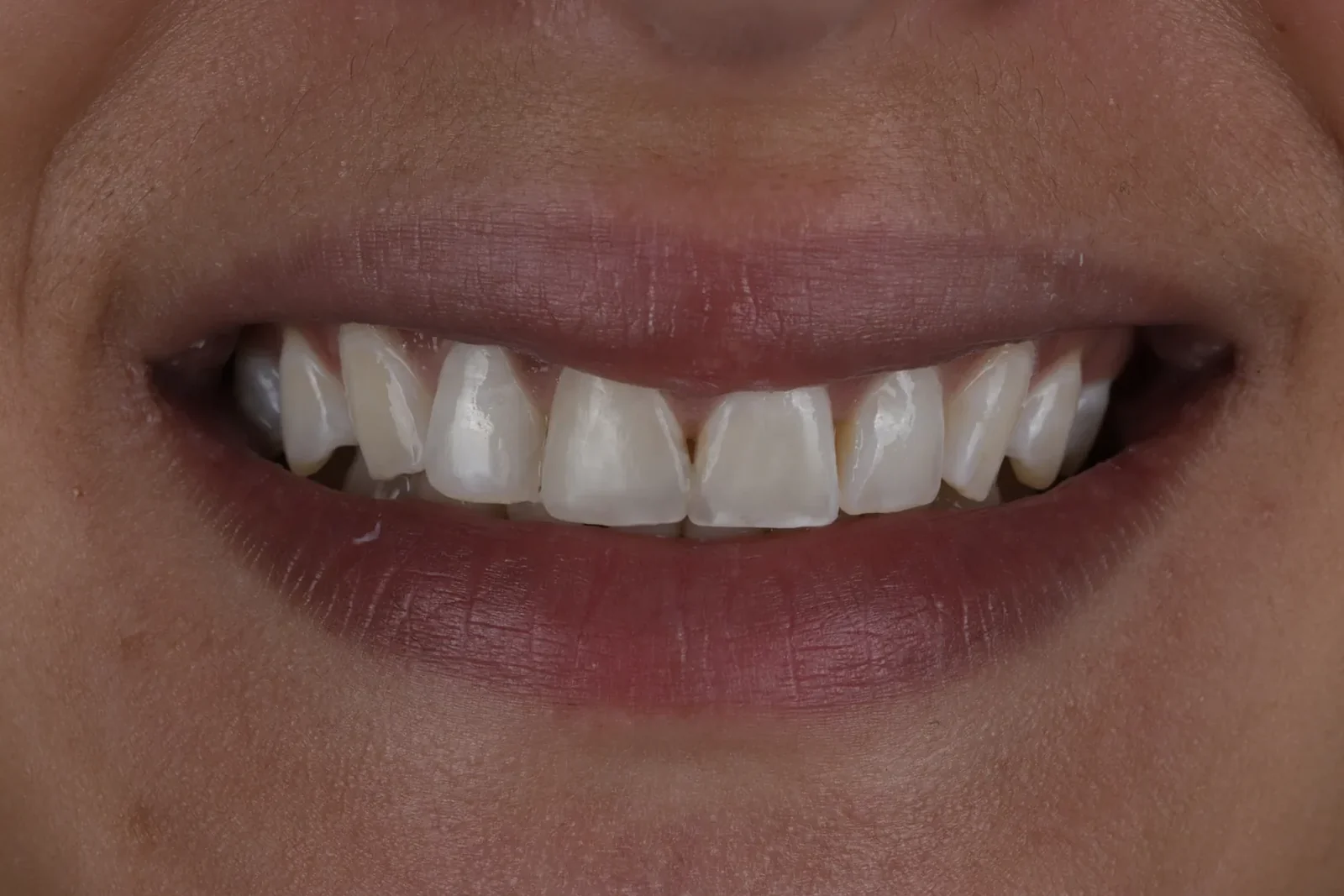 BeforeAfter
Cost and coverageUnderstanding the fees for composite bonding
At the practice in Levallois-Perret (92300), Dr Bruno Abehassera applies transparent pricing for layered composite bonding on the front teeth.
Composite is a procedure recognised by the national health insurance: French national health insurance (Sécurité sociale) covers a base rate set by the French official fee schedule (CCAM) when the treatment restores a damaged tooth (decay, fracture, pathological wear). The amount reimbursed varies according to the number of surfaces or corners of the tooth treated. The aesthetic side of the treatment - the time spent layering, the choice of biomimetic resins, the reproduction of natural translucency, high-gloss polishing - is charged as additional fees set by the practitioner (honoraires libres), within the framework of the agreement with the national health insurance. Some top-up health insurance plans (mutuelles) include a cosmetic dentistry allowance: check the conditions with your provider.
The fee for layered composite bonding depends on several factors: the position of the tooth, the number of surfaces treated, the complexity of the clinical case and the layering time devoted to the project. For patients hesitating between layered composite and a more durable porcelain solution, the page dedicated to porcelain veneers describes the prosthetic alternative.
| Service | Indicative fee |
|---|---|
| Layered composite — per tooth (front teeth) | €250 — €400* |
| Prior project — multi-tooth cases (planning, photographs, injection keys where needed) | from €350 |
*Additional fees set by the practitioner — a regulated CCAM fee, reimbursable by French national health insurance, is added on top, varying according to the number of surfaces or corners of the tooth treated.
For isolated cases (one or two teeth to restore), layered composite can be done in a single appointment without extensive prior planning. For multi-tooth cases or comprehensive aesthetic projects, however, a prior project is put in place: aesthetic analysis of the smile, calibrated clinical photographs and, where needed, injection keys to faithfully reproduce the planned shape. This planning phase determines how predictable the final result is and lets the patient see and adjust the project before treatment.
These amounts are given for information only. A detailed quote is provided at the initial consultation, stating the part covered by the national health insurance and the part made up of additional fees, and, where relevant, allowing you to send it to your top-up insurer for review.
A practice in Levallois-Perretclose to west Paris and the Hauts-de-Seine
Mon Cabinet Dentaire, where Dr Bruno Abehassera works, is located at 119 rue du Président Wilson, Levallois-Perret (92300), in the heart of the Hauts-de-Seine. Patients come from all over the Paris area for layered composite bonding using the direct technique, with an additive, biomimetic approach that respects natural enamel and dentine.
Many patients come to the practice from Neuilly-sur-Seine, the 17th arrondissement of Paris, the 16th arrondissement of Paris, Asnières, Clichy or Courbevoie. Being close makes it easier to reach the practice for a layered composite project carried out with the direct technique, which involves an initial consultation with photographs, then treatment in a single appointment in the chair; cases involving several teeth are planned with a project beforehand.
The practice is easy to reach from:
- Levallois-Perret (metro line 3, Pont de Levallois station)
- Neuilly-sur-Seine (5 to 10 minutes by car)
- Paris 16th and 17th (10 to 20 minutes)
- Asnières, Clichy, Courbevoie and La Défense (10 to 20 minutes)
Beyond the immediate area, some patients travel further for a biomimetic approach to layered composite. This approach favours adding material rather than removing healthy tissue. It also keeps the procedure reversible in the long term. The initial consultation covers several technical assessments. It includes the distinction between the direct technique and an indirect restoration made by a laboratory. It also includes analysing the indications according to the type of defect: shape, shade, tissue loss or gap closure. The choice of resins, made according to the natural translucency of the tooth, is also discussed.
Appointments for a consultation can be booked directly online via Doctolib or by phone on +33 1 42 67 05 04. Consultations can be held in English. The initial consultation is an opportunity to assess the indications precisely, discuss the layering strategy suited to your case and provide a detailed quote. No commitment is asked of you at this stage.
Frequently asked questionsWhat patients ask me most often
How is layered composite different from a "standard" composite?
Layered composite is built up in several successive layers of resins with different shades and translucencies, to reproduce the natural structure of the tooth: a more opaque deep dentine, a more translucent outer enamel, and characterisation areas (halo, biting edge, opalescent effects). A "standard" composite is placed as a single block, in a single shade, which is enough for reconstructions on back teeth that are not visible. Layering, which demands more clinical time and skill, is reserved for aesthetic situations where the result must blend discreetly with the rest of the smile.
When should layered composite be preferred to a porcelain veneer?
Layered composite is often preferred when the aim is to preserve as much tooth tissue as possible, to avoid preparing the enamel (drilling the tooth down), or to keep a solution that can be repaired and adjusted over time. It is particularly suited to localised corrections (one or two teeth), touch-ups of the biting edge, closing small gaps or restoring moderate wear. The porcelain veneer remains the option of choice for more complex situations or when very long-term colour stability is the priority. The choice between the two techniques is made case by case, at the consultation, after a full clinical analysis.
Does it damage the tooth or require drilling it down?
In most cases, no. Layered composite follows an additive approach: the resin is added onto the tooth, without invasive preparation. A light reshaping of the surface may be needed depending on the indication, but it remains superficial and limited to the enamel, unlike the preparation for a porcelain veneer. Preserving tissue in this way is one of the main strengths of the technique: the natural tooth stays largely intact under the restoration.
Can composite correct the shape or length of teeth, or small gaps between them?
Yes, these are common indications. Layered composite makes it possible to lengthen a biting edge, change the profile of a tooth, close a small gap between two teeth or even out localised asymmetries. The direct technique allows the result to be adjusted in real time, according to the smile and the proportions of the face. More comprehensive corrections (alignment, crowding, closing wide gaps), on the other hand, may call for orthodontic treatment first, which is discussed at the consultation.
Is it a suitable solution for worn or damaged teeth?
Yes, it is even one of the reference indications. Layered composite makes it possible to rebuild a worn tooth (bruxism, erosion, abrasion) or a damaged one (old decay, limited fracture, an old composite that has aged), restoring the tooth's height, shape and natural look. In cases of advanced bruxism (teeth grinding), composite can be part of a broader rehabilitation project including an analysis of the bite and, if necessary, protection with a night guard.
Does composite look natural?
With a well-mastered layering technique, yes. Superimposing layers of dentine, enamel and translucent material reproduces the optical properties of a living tooth: depth of shade, play of light, opalescence. High-gloss polishing in several stages completes the aesthetic integration. A well-executed layered composite looks very natural when smiling, even in direct light.
Is it a long-lasting solution?
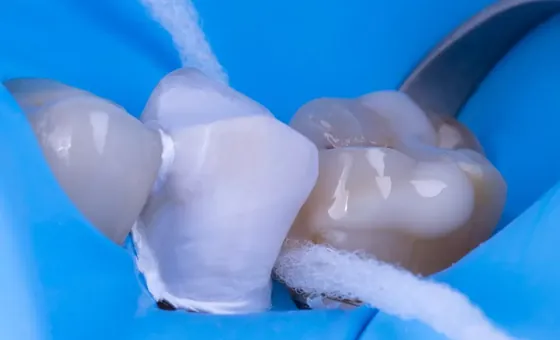
Yes, provided the right conditions are in place: professional-quality resins, placement under rubber-dam isolation, a balanced bite and thorough oral hygiene. The durability of layered composite also depends on the patient's habits (coffee, tea, tobacco, bruxism, diet) and on regular follow-up at the practice. Composites are by nature a little more prone to staining and wear than porcelain, but they have the advantage of being repairable without redoing everything, which extends their useful life.
How long does the appointment last?
Generally 1 to 2 hours per tooth, depending on the complexity of the case. Quality layering on a front tooth takes time: prior shade analysis, rubber-dam isolation, layer-by-layer modelling, progressive checking of the result, and final polishing in several stages. For multiple restorations (two or three teeth, for example), the appointment can be extended or spread over several visits, depending on clinical priorities and the patient's comfort.
Can composite yellow or stain over time?
The latest generation of composites offers much better colour stability than earlier generations, but they remain more prone than porcelain to surface staining (coffee, tea, red wine, tobacco). With careful initial polishing, good hygiene and regular scaling and polishing at the practice, the shade holds up well over time. In the event of surface staining, re-polishing at the practice is usually enough to restore the original shine, without having to redo the restoration.
Can layered composite be repaired or touched up without redoing everything?
Yes, it is even one of its major advantages. Unlike a porcelain veneer, which has to be removed and entirely remade if there is a problem, layered composite can be repaired locally, added to, adjusted or re-polished at the practice, in a single appointment. This reversibility and flexibility over time make it a particularly suitable solution for patients whose aesthetic expectations or clinical situation may change.
Written by Dr Bruno Abehassera, dental surgeon · Updated