
Gingivectomy & gum graftsRebalancing the smile between pink and white
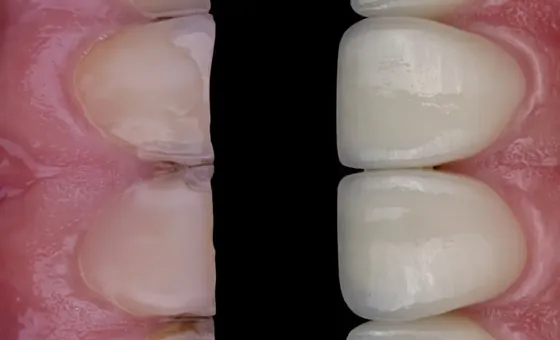
Gum corrections bring together the cosmetic techniques used to rebalance the position, thickness or height of the gum, restoring harmony between the pink (the gum) and the white (the teeth). They are intended in particular for patients with a gummy smile (too much gum showing when smiling), uneven gum levels, insufficient gum tissue or gum recession.
At the practice in Levallois-Perret (92300), Dr Bruno Abehassera offers two complementary approaches: a subtractive approach by gingivectomy, sometimes combined with surgical crown lengthening (osteotomy) when the bone around the tooth needs repositioning to expose the crown of the tooth lastingly; and an additive approach by gum grafting, indicated to strengthen or reposition the tissue when it is thin, receded or fragile.
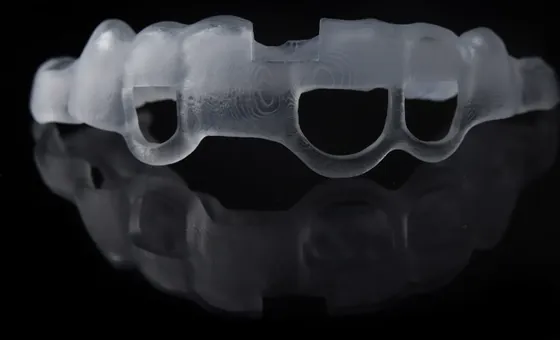
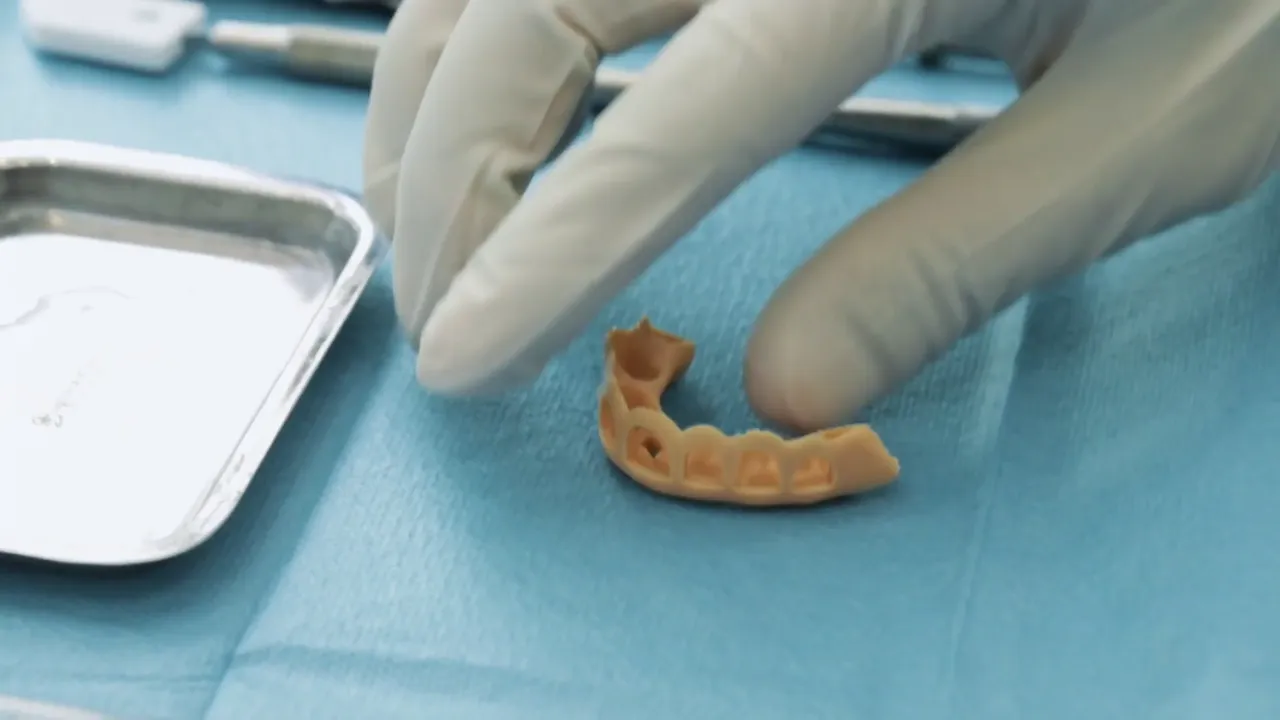
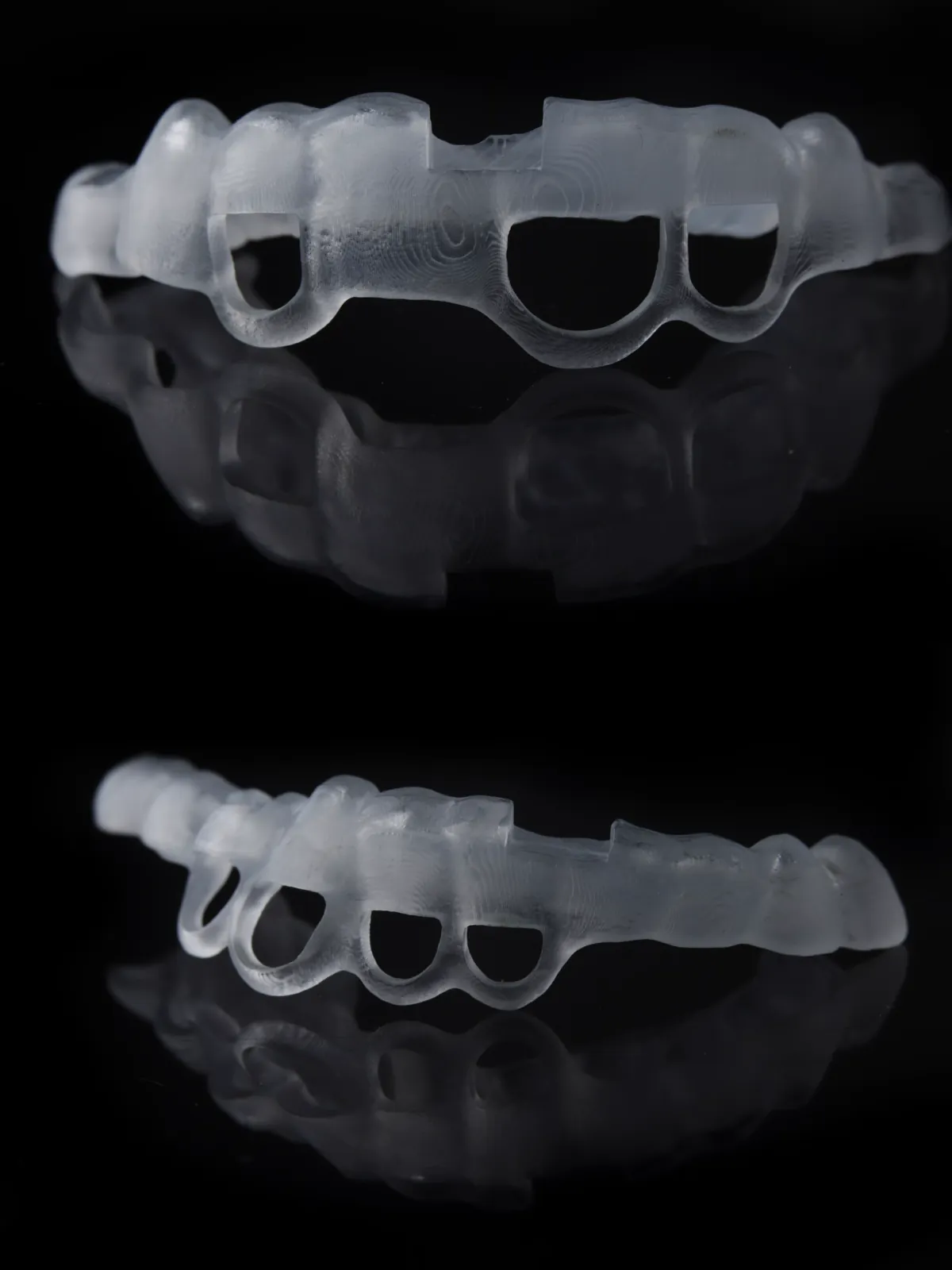
Each procedure is digitally planned from an analysis of the smile and its architecture, with a custom surgical guide in complex or multi-tooth cases - particularly where there is altered passive eruption - allowing a precise, reproducible procedure that fits the overall aesthetic project.
IndicationsWhen should the pink be corrected?
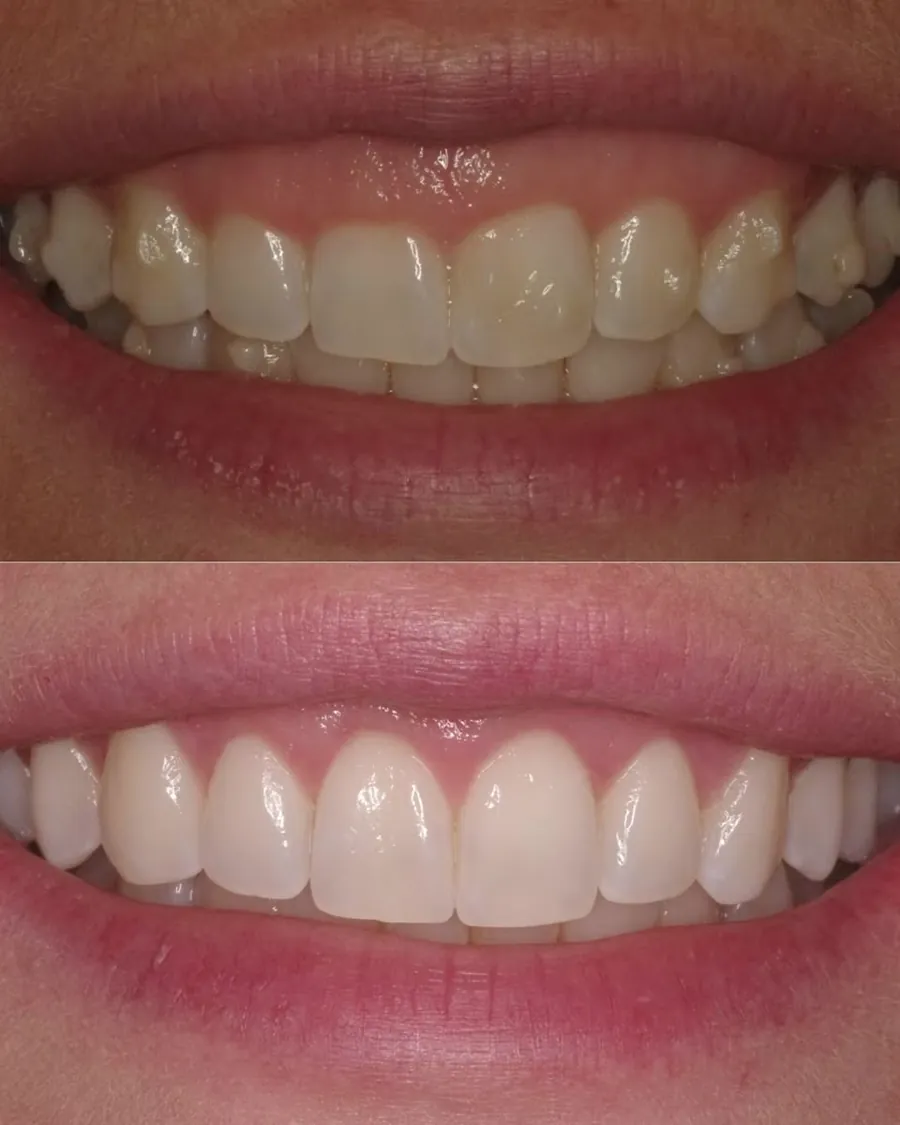
Gummy smile
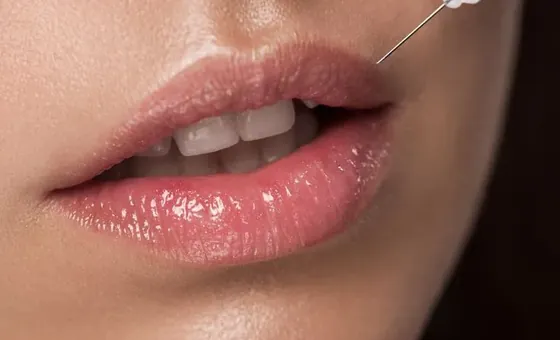
Too much gum showing when smiling (more than 3 mm), which can upset the balance between pink and white. Often linked to altered passive eruption or to too little visible crown height.
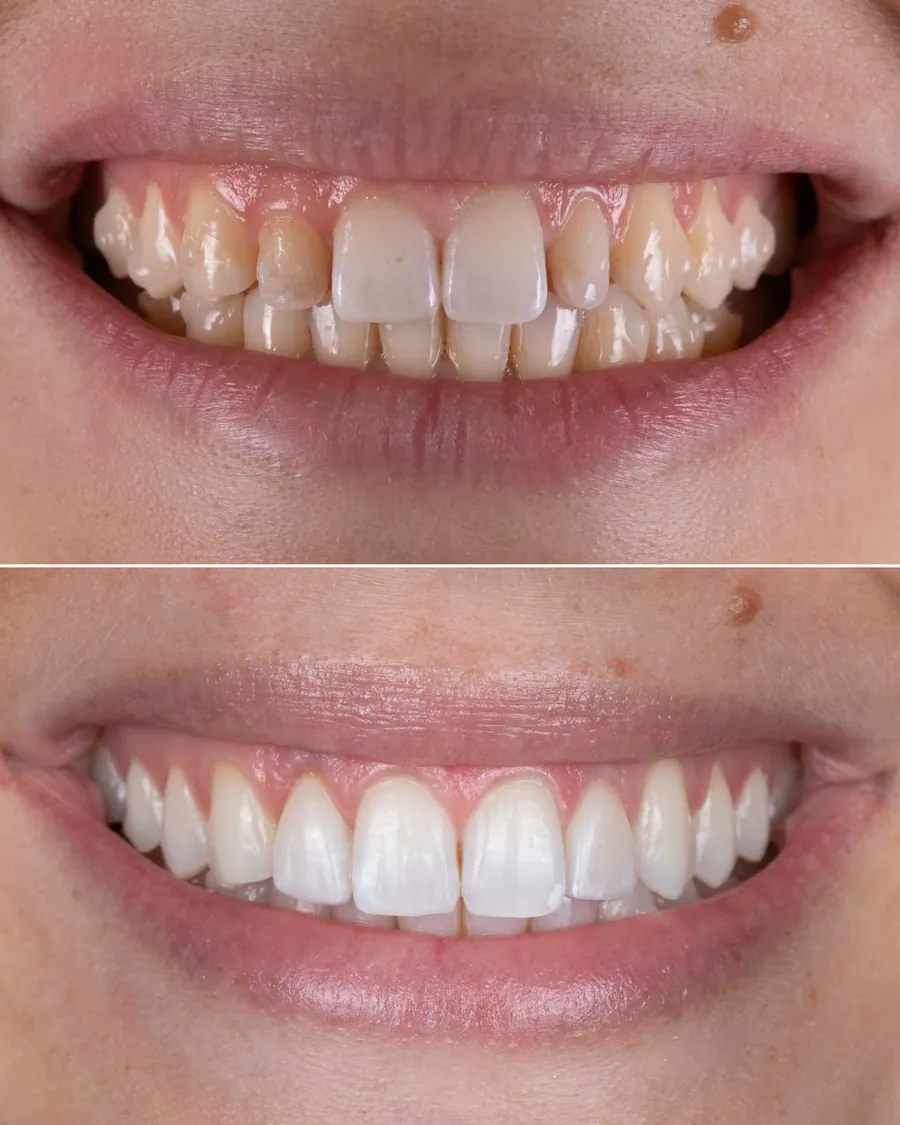
Uneven gum line
Irregular gum levels between neighbouring teeth, disrupting how the smile reads. Common after orthodontic treatment or when teeth are of different heights.
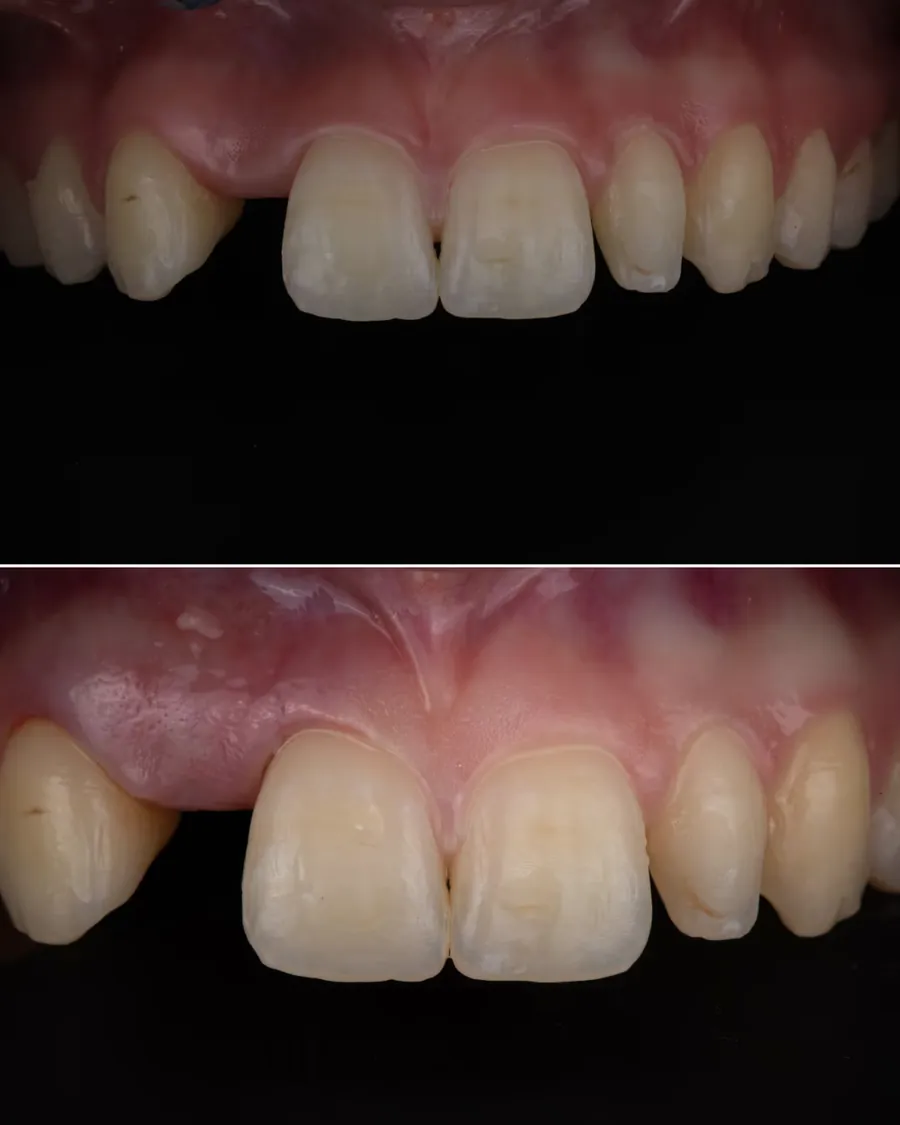
Insufficient gum tissue
Thin or low-volume gum tissue that needs strengthening, particularly before placing veneers or crowns, to help achieve a stable, natural-looking result over time.
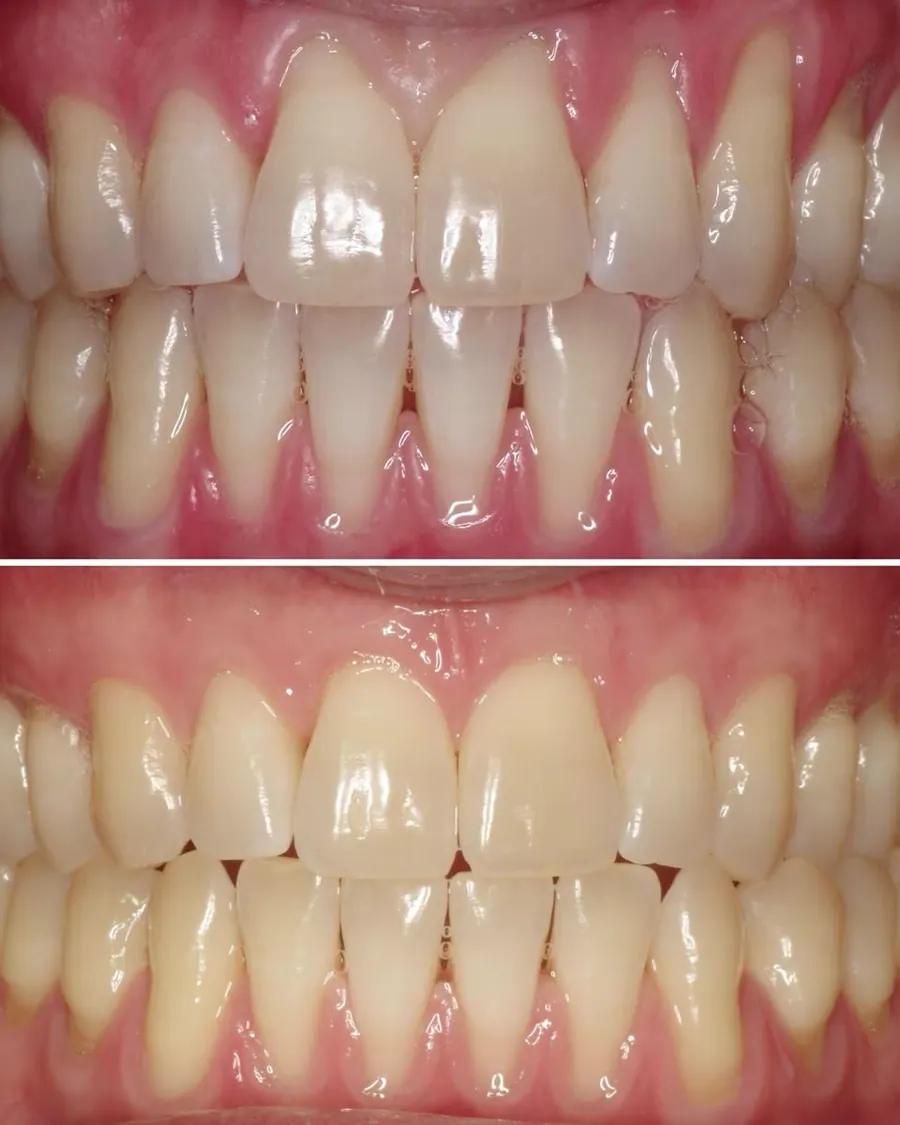
Gum recession
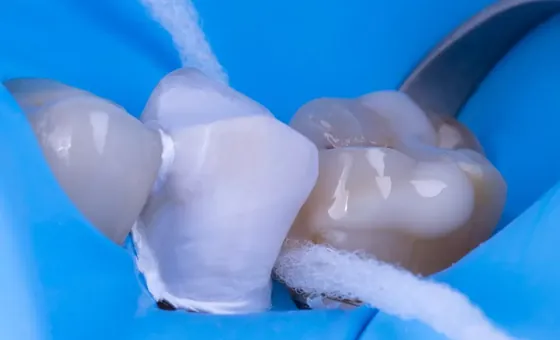
Localised shrinking of the gum that partly exposes the root, causing tooth sensitivity and an aesthetic concern. A classic indication for tunnel-technique gum grafting.
Treatment philosophyThe white cannot be considered without the pink
Gum corrections are never routine. They rest on a precise analysis of the smile, how it moves and its biological constraints.
Each indication is planned in advance from a digital aesthetic analysis of the smile. In complex cases, a custom surgical guide is used to define the contours, anticipate volumes and guide the procedure precisely.
The procedure can be additive (gum grafting, often using the tunnel technique) or subtractive (gingivectomy, sometimes combined with crown lengthening). It is carried out under microsurgery, with dedicated instruments and fine sutures, to respect the tissue and allow stable healing.
At the practice in Levallois-Perret, this approach favours measured, lasting procedures, in keeping with the overall aesthetic project and the natural balance of the smile.
Subtractive or additive approachWhich technique for my case?
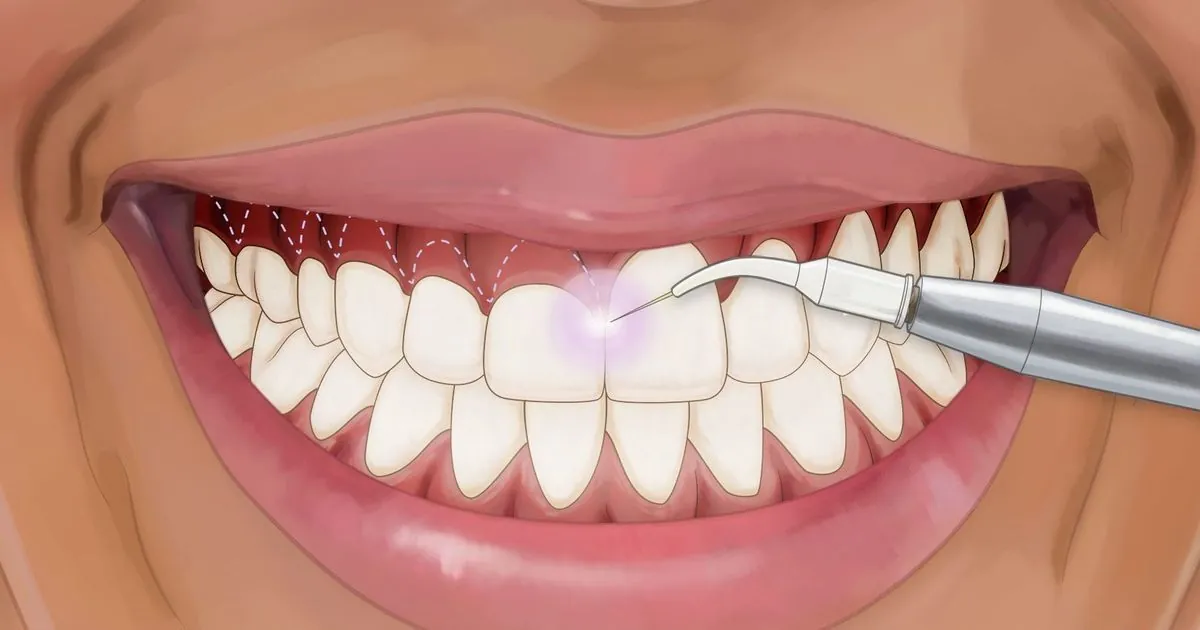
The choice between a subtractive approach (gingivectomy, crown lengthening) and an additive approach (gum grafting) depends on several clinical factors: the nature of the gum imbalance, the patient's periodontal biotype and the overall aesthetic goal. In some cases, the two approaches can be combined to optimise the result.
This table sets out the main features of the two approaches, but every case is unique. At the aesthetic consultation, Dr Bruno Abehassera carries out a full analysis of the smile - lip movement, smile line, crown heights, periodontal biotype - to decide on the most suitable strategy. In some full smile makeover projects, gingivectomy and grafting can be planned in sequence before placing veneers or composite bonding.
← Swipe to compare →
| Criterion | Subtractive approach | Additive approach |
|---|---|---|
| Surgical procedure | Gingivectomy ± crown lengthening (osteotomy) | Gum graft (tunnel technique preferred) |
| Main indication | Gummy smile, uneven gum line, altered passive eruption | Recession, thin biotype, insufficient tissue |
| Goal | Reduce or reshape the gum contours | Strengthen or reposition the tissue |
| Tissue harvested | None (reduction procedure) | The patient's own connective tissue from the palate |
| Length of procedure | 30 to 60 min depending on extent | 60 to 90 min depending on the number of sites |
| Recovery | Mild, 2 to 3 days of discomfort | Moderate, 7 to 10 days of follow-up |
| Wait before cosmetic restoration | 2 to 3 months (gum stabilisation) | 3 to 6 months (healing and maturation) |
Clinical casesExamples of treatments performed
Gum corrections are most often one step in a wider project: the smiles treated at the practice are shown in the gallery, among the veneer and smile makeover cases.
Cost and reimbursementTransparent pricing
At the practice in Levallois-Perret (92300), Dr Bruno Abehassera applies transparent pricing for cosmetic gum corrections.
Cosmetic gum corrections are cosmetic dental procedures. Purely cosmetic gingivectomy is not covered by French national health insurance (Sécurité sociale). Gum grafting and surgical crown lengthening have a code in the French official fee schedule (CCAM) (HBJA002, HBJA003), but are not reimbursed by French national health insurance when done for cosmetic reasons. Most top-up health insurance plans (mutuelles) offer periodontal treatment allowances, whose conditions you can check with your provider.
The fee for a gum correction depends on several factors: the type of approach (subtractive or additive), the number of teeth treated and whether a custom surgical guide is needed. Cases involving altered passive eruption or a multi-tooth aesthetic project require a digital project beforehand. This planning can be combined with composite bonding or porcelain veneers.
| Service | Indicative fee |
|---|---|
| Cosmetic gingivectomy — per tooth | ~ €100 |
| Gingivectomy + crown lengthening — depending on the number of teeth* | €800 — €1,200 |
| Gum graft — single tooth* | ~ €500 |
| Gum graft — 2 to 3 adjacent teeth* | €500 — €800 |
| Digital project beforehand — front teeth | ~ €350 |
| Gingivectomy surgical guide — complex cases or altered passive eruption | ~ €350 |
*Procedure with a CCAM code (HBJA002, HBJA003), not reimbursed by French national health insurance when done for cosmetic reasons. Partial cover under the periodontal allowance of the patient's top-up health insurance remains possible.
Every gum correction project begins with a thorough diagnostic assessment: clinical examination, calibrated clinical photographs, and analysis of lip movement and periodontal biotype. Precise measurement of the visible crown heights completes this assessment. This step determines how predictable the result will be. It makes it possible to decide between a subtractive approach, an additive approach or a combination of the two. No treatment is started without this prior diagnostic validation.
These amounts are given for information only. A detailed quote is provided at the initial aesthetic consultation, after a clinical examination and an assessment of your situation. Where relevant, this quote can be sent to your top-up insurer for review under the periodontal allowance. Appointments can be booked via Doctolib or by phone on +33 1 42 67 05 04.
A practice in Levallois-Perretclose to west Paris and the Hauts-de-Seine
Mon Cabinet Dentaire, where Dr Bruno Abehassera works, is located at 119 rue du Président Wilson, Levallois-Perret (92300), in the heart of the Hauts-de-Seine. It welcomes patients from all over the Paris area for cosmetic gum corrections performed under microsurgery, with an approach that respects the periodontal tissue and the balance of the smile.
Many patients come from Neuilly-sur-Seine, the 17th and 16th arrondissements of Paris, Asnières, Clichy or Courbevoie. Being close makes it easier to reach the practice for cosmetic gum surgery. This technique requires a diagnostic consultation beforehand, followed by a procedure at the practice and healing follow-up spread over several weeks.
The practice is easy to reach from:
- Levallois-Perret (metro line 3, Pont de Levallois station)
- Neuilly-sur-Seine (5 to 10 minutes by car)
- Paris 17th and 16th (10 to 20 minutes)
- Asnières, Clichy, Courbevoie and La Défense (10 to 20 minutes)
Beyond the immediate area, some patients travel for digitally guided gum surgery. This approach combines aesthetic analysis of the smile, 3D planning and a custom surgical guide, rather than a freehand procedure. The choice between a subtractive approach (gingivectomy, crown lengthening) and an additive approach (gum grafting) depends on the diagnosis. It is an integral part of the initial diagnostic consultation.
Consultations can be booked directly online via Doctolib or by phone on +33 1 42 67 05 04. Consultations can be held in English. The initial aesthetic consultation makes it possible to assess the indications precisely. It is also a chance to discuss the choice between gingivectomy, crown lengthening, gum grafting or inclusion in a veneers or composite bonding project. A detailed quote is then provided. No commitment is asked of you at this stage.
Frequently asked questionsWhat patients ask me most often
What do gum corrections involve?
Cosmetic gum corrections bring together several surgical techniques that aim to rebalance the position, thickness or height of the gum. They restore a natural harmony between the pink (the gum) and the white (the teeth). At the practice in Levallois-Perret, two complementary approaches are offered: a subtractive approach by gingivectomy (sometimes combined with crown lengthening) and an additive approach by gum grafting to strengthen or reposition the tissue.
What is a gingivectomy?
A gingivectomy is a surgical procedure that removes excess gum to reshape the gum contours. It is mainly indicated in two situations: a gummy smile (too much gum showing when smiling) or uneven gum levels between neighbouring teeth. The procedure is carried out under local anaesthesia, with microsurgical instruments. In complex or multi-tooth cases, a custom surgical guide is designed beforehand from the digital planning of the smile.
What does crown lengthening involve?
Surgical crown lengthening involves repositioning the bone around the tooth during a gingivectomy to expose the crown of the tooth lastingly. This technique is indicated in particular where there is altered passive eruption. In this situation, the gum and bone have covered too much of the tooth since the end of growth. Without this lowering of the bone, the gum would tend to return to its original position within a few months. Crown lengthening thus aims for a result that is stable over time and gives harmonious tooth proportions.
What does a gum graft involve?
A gum graft is a periodontal surgical procedure that involves taking a small piece of gum tissue, usually from the palate. This piece is then moved to a weakened area. It is indicated to treat gum recession, strengthen a thin periodontal biotype or prepare the ground before placing veneers or crowns. At the practice, the tunnel technique is preferred because it is minimally invasive and recovery is easier.
Why favour the tunnel technique?
The tunnel technique involves sliding the graft into a tunnel under the gum, without visible incisions or extensive lifting of the tissue. This minimally invasive approach has several advantages: faster healing, a more comfortable recovery and a more predictable aesthetic result at the gum margin. It is particularly indicated for treating multiple recessions in the front of the mouth, where aesthetics are central.
Where is the tissue for a gum graft taken from?
The graft tissue is taken from the palate. This preferred donor site offers optimal quality and thickness of keratinised mucosa. The tissue is taken in a minimally invasive way, under local anaesthesia, with microsurgical instruments and fine sutures. The donor site usually heals in two to three weeks, with no visible after-effects. A protective palatal plate may be provided to make recovery more comfortable.
Is recovery painful?
Recovery after a gum correction is generally moderate. For a gingivectomy, discomfort is limited to 2 to 3 days and is managed with standard painkillers. For a gum graft, follow-up extends over 7 to 10 days, with discomfort mainly from the donor site on the palate. Suitable pain relief and specific hygiene instructions (antiseptic mouthwashes, lukewarm food) are always provided. Severe pain is generally not expected with these protocols.
How long must healing take before cosmetic restorations?
Healing times vary with the type of procedure. For a gingivectomy alone, we wait 2 to 3 months to make sure the gum is stable before placing veneers or composites. For crown lengthening or a gum graft, the wait extends to 3 to 6 months to allow the tissue to mature fully. This wait is essential to help the result stay stable in the long term and to preserve the quality of the gum margin in contact with the restorations.
Is it purely cosmetic, or medical too?
Gum corrections have a dual dimension. Aesthetically, they rebalance the smile by harmonising the pink and the white. Medically, they can treat periodontal conditions such as recession (which exposes the roots and leads to tooth sensitivity) or stabilise situations of biological risk. Some indications therefore involve combined care, where the aesthetic goal goes hand in hand with a functional and preventive purpose.
How much do gum corrections cost at the practice?
At the practice in Levallois-Perret, the fee ranges are as follows. Cosmetic gingivectomy costs about €100 per tooth. Gingivectomy combined with crown lengthening costs between €800 and €1,200 depending on the number of teeth. A gum graft costs between €500 and €800 depending on the extent. A digital project beforehand costs about €350. These are cosmetic dental procedures not reimbursed by French national health insurance. Partial cover under the periodontal allowance of your top-up health insurance remains possible. A detailed quote is always provided at the consultation.
How long does the result of a gum correction last?
When the surgery is properly planned, the result of a gum correction is generally lasting and stable over time. For a gingivectomy combined with crown lengthening, lowering the bone limits the risk of the gum returning to its original position. For a gum graft, the transferred tissue integrates durably and limits the risk of new recession at the treated site. Thorough oral hygiene and regular periodontal follow-up remain essential to preserve the result in the long term.
Can a gum correction be part of a veneer or composite project?
Yes. In many cases, gum correction is an essential first step in a full smile makeover. A gingivectomy can even out gum heights before porcelain veneers are placed. A gum graft can strengthen a thin biotype before a crown or composite bonding is placed. This sequential planning is defined during the aesthetic analysis of the smile carried out at the consultation, and built into the overall treatment plan.
Written by Dr Bruno Abehassera, dental surgeon · Updated