
Inlays and onlaysWhat are they?
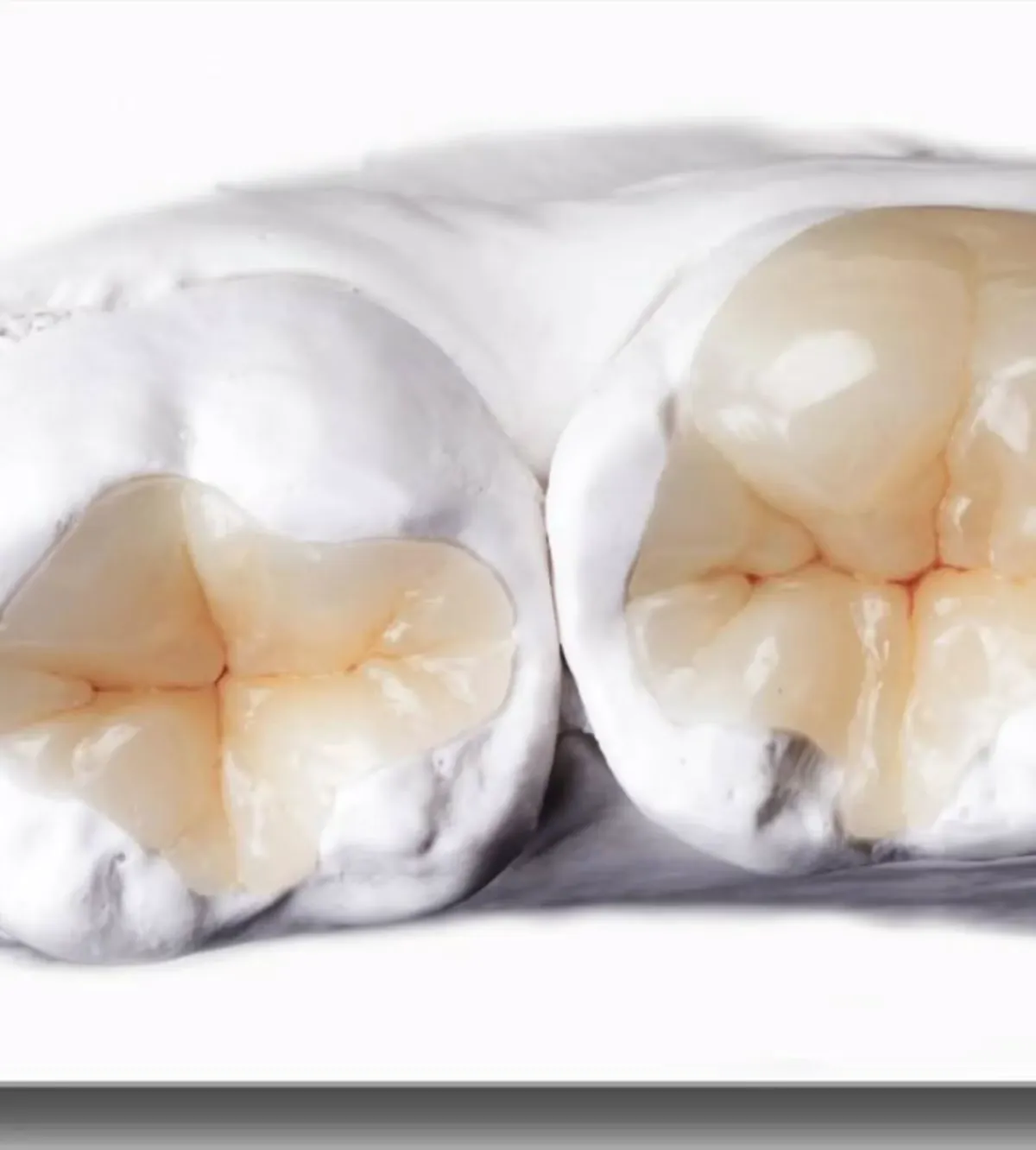
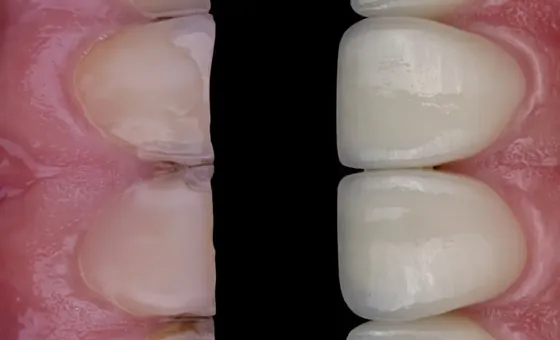
Inlays, onlays and overlays are custom-made partial porcelain restorations. They make it possible to repair a weakened tooth after extensive decay, a fracture or localised wear, while preserving the healthy tooth structure.
At the practice in Levallois-Perret (92300), Dr Bruno Abehassera favours these indirect restorations over a crown whenever the tooth can still be saved. Made in the laboratory from precise impressions, these porcelain restorations offer a precise fit, excellent mechanical strength and a natural-looking result. They are part of a biomimetic approach to dentistry that respects the tooth's anatomy and the forces of the bite.
Treatment usually takes two appointments: preparation of the tooth and impressions, then adhesive bonding of the final restoration. A correctly indicated and bonded inlay or onlay has a long lifespan, longer than that of a direct composite filling.
IndicationsWhen should you consider inlays or onlays?
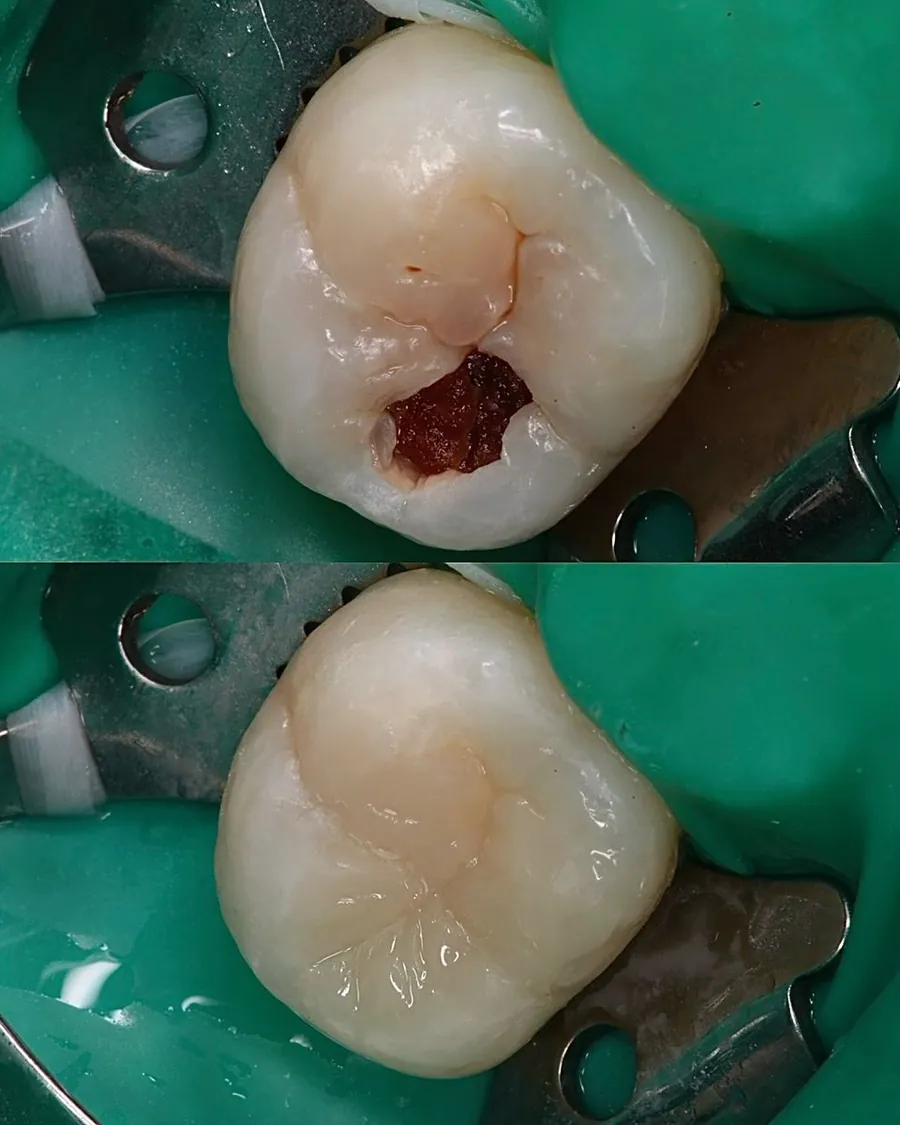
Extensive decay
Large cavities beyond what a direct composite filling can handle. An indirect porcelain restoration allows a precise, durable reconstruction while preserving as much healthy tooth tissue as possible.
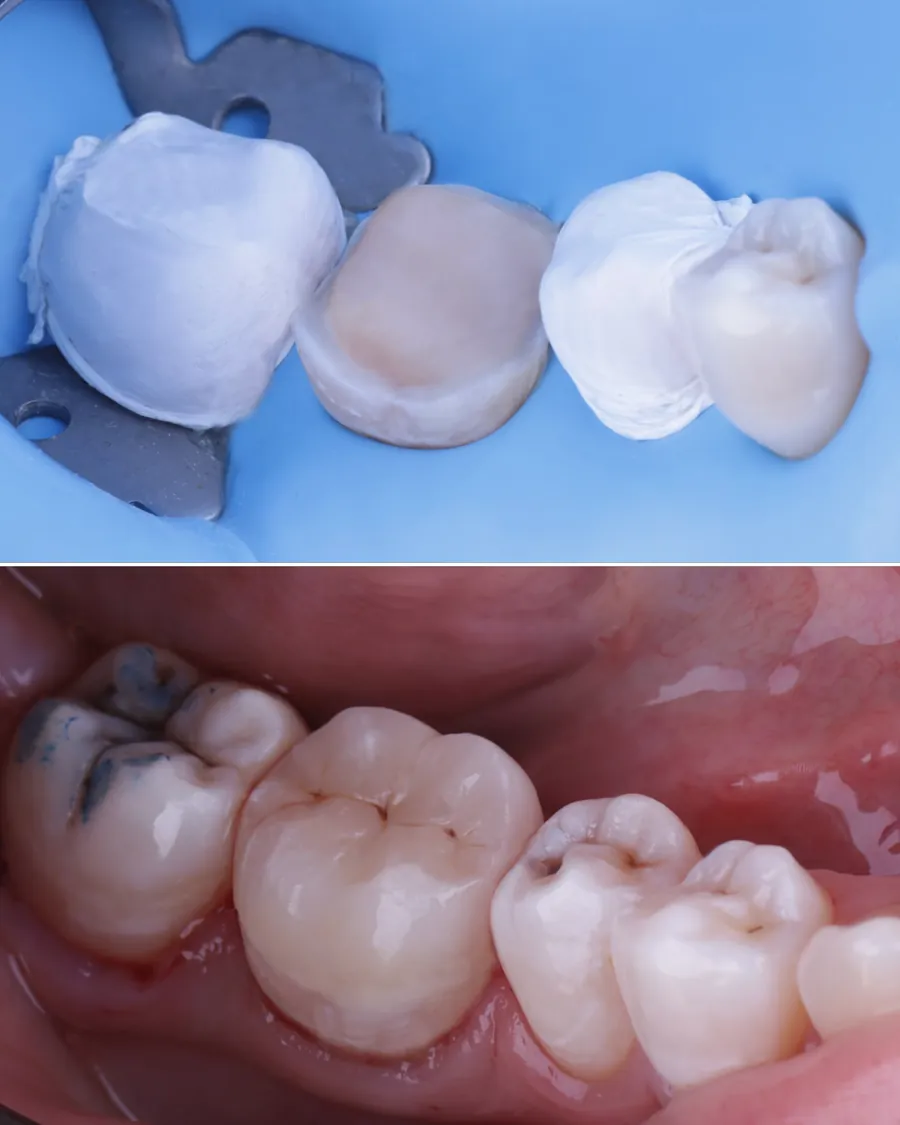
Root-treated teeth
Root-treated (non-vital) teeth weakened by tissue loss, whose cusps are at risk of fracture. An overlay or a veneerlay protects the tooth by covering the areas under mechanical stress.
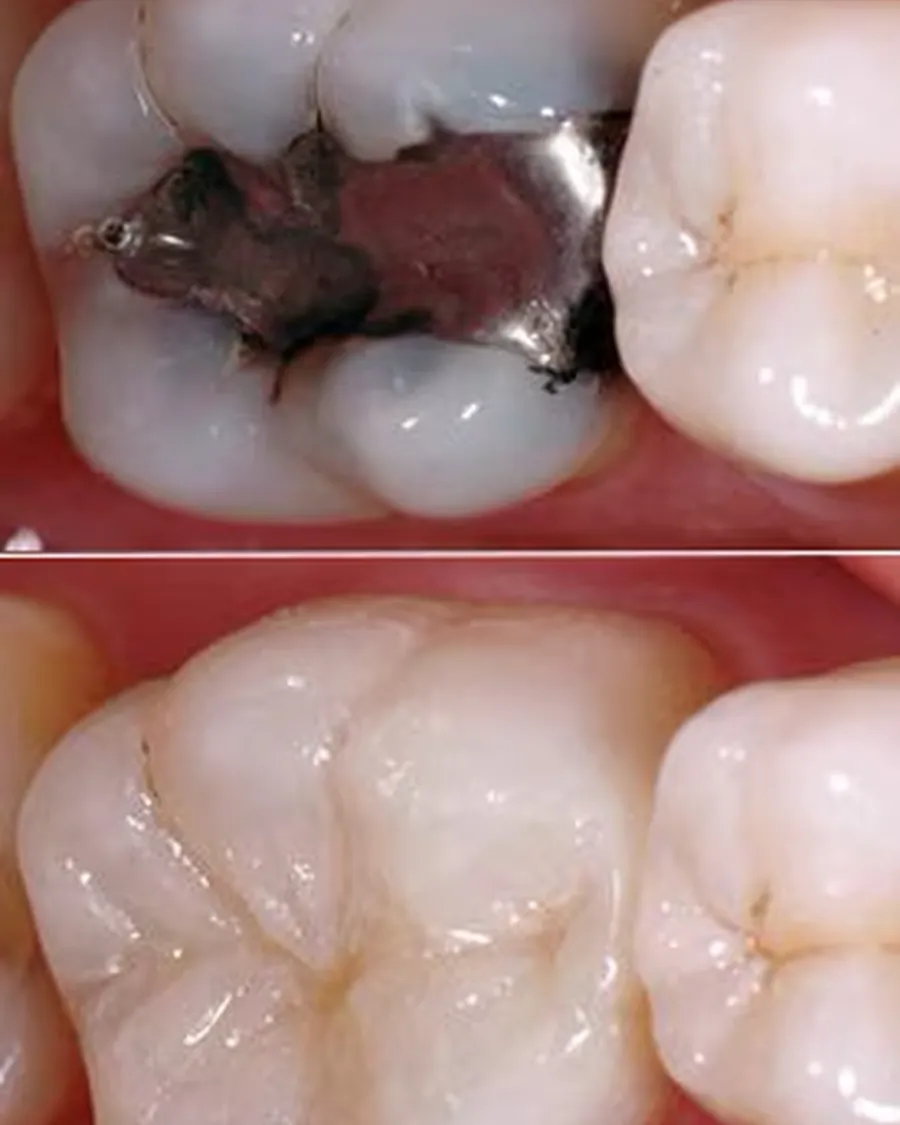
Old fillings
Failing composite fillings or worn amalgam fillings to be replaced with a pressed porcelain restoration. This option offers better stability over time and high biocompatibility.
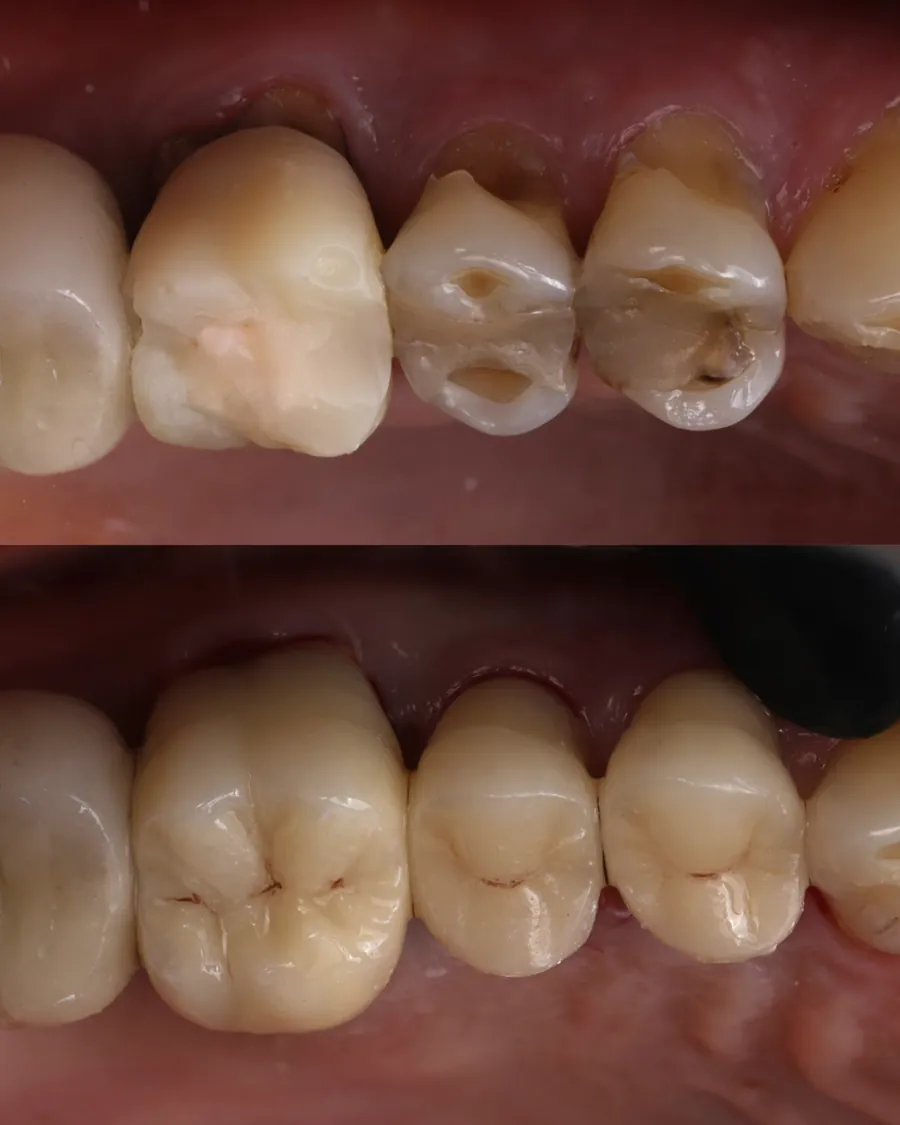
Tooth wear
Wear of the biting surfaces caused by attrition, erosion or bruxism (teeth grinding), changing the chewing surfaces. A porcelain onlay restores function and volume with a conservative approach to the tooth.
Treatment philosophyGiving the tooth back its natural properties
Indirect bonded restorations aim to restore the mechanical and aesthetic behaviour of the tooth, with a biomimetic approach that respects the remaining tissue.
The precision of indirect work, combined with the strength of bonding, aims for restorations that are robust, well sealed and durable, precisely integrated with the tooth.
The materials used, porcelain in particular, offer high biocompatibility and optical properties close to those of natural tissue, for a functional and aesthetic integration that tends to stay stable over time.
Comparing restorationsComposite, inlay, onlay or crown: understanding the differences
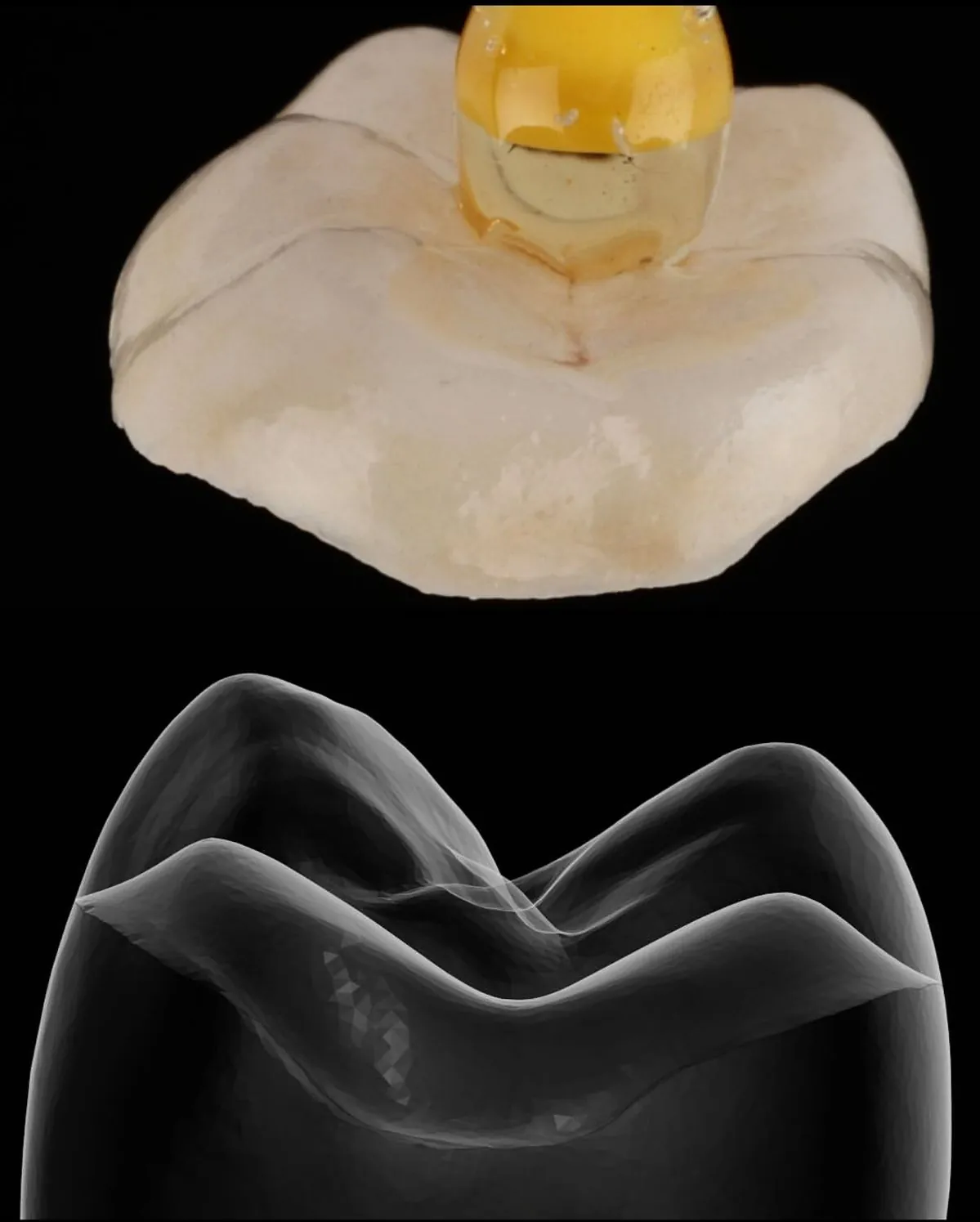
Several options exist to restore a tooth damaged by decay, a fracture or wear. The choice depends on how much tissue has been lost, where the tooth is and the mechanical forces it bears. At Dr Bruno Abehassera's practice in Levallois-Perret, the least invasive option compatible with the clinical situation is always favoured. The table below gives an overview of the four main restoration options, from the direct composite filling to the full crown.
This comparison is for guidance only. Every clinical situation is unique and must be assessed at a consultation through direct examination, X-rays and an analysis of the bite. Moving from composite to inlay, onlay or crown depends on precise criteria: the amount of healthy tissue remaining, the vitality of the tooth and the expected chewing load. Dr Bruno Abehassera favours the most conservative approach possible, in line with the biomimetic dentistry practised at the practice in Levallois-Perret.
← Swipe to compare →
| Criterion | Composite | Porcelain inlay | Porcelain onlay | Porcelain crown |
|---|---|---|---|---|
| Technique | Direct (in the chair) | Indirect (laboratory) | Indirect (laboratory) | Indirect (laboratory) |
| Extent of the restoration | Localised cavity | Internal cavity, between the cusps | Covers 1 or more cusps | Covers the whole tooth |
| Tissue preservation | Maximum | Very high | High | Low |
| Typical indication | Moderate decay, localised correction | Large cavity, failing old composite filling | Cusp fracture, extensive tissue loss | Badly damaged tooth, weakened root-treated tooth |
| Preparation required | Minimally invasive | Minimally invasive | Moderate | Extensive |
| Material used at the practice | Layered composite or injectable flowable composite | Pressed porcelain (lithium disilicate) | Pressed porcelain (lithium disilicate) | Pressed porcelain or all-ceramic |
| Length of treatment | 1 appointment | 2 appointments | 2 appointments | 2 to 3 appointments |
| Fee arrangement | Reimbursable base fee + additional fees | Reimbursable base fee + additional fees | Reimbursable base fee + additional fees | Reimbursable base fee + additional fees |
Clinical casesExamples of treatments performed
Cases of inlays, onlays and overlays carried out at the practice will be presented here soon.
Cost and reimbursementUnderstanding how porcelain inlays and onlays are priced
At the practice in Levallois-Perret (92300), Dr Bruno Abehassera applies transparent pricing for porcelain inlays, onlays and overlays.
Porcelain inlays and onlays are procedures listed in the national fee schedule. Part of the cost can be covered by French national health insurance (Sécurité sociale) when the restoration is part of the treatment of a damaged tooth: a large cavity, a cusp fracture or pathological wear. The aesthetic and technical side of the treatment is subject to fees agreed directly with the patient (entente directe), within the applicable regulatory framework. Some top-up health insurance plans (mutuelles) offer suitable allowances: check the conditions with your provider.
The fee for a porcelain inlay or onlay reflects several technical parameters: the complexity of the clinical case (simple inlay, onlay, overlay or veneerlay), the time spent on minimally invasive preparation under rubber-dam isolation, the adhesive bonding protocol carried out to strict standards, the porcelain material selected for its mechanical and optical properties, and the work of the French dental ceramist. This last aspect is described on the French craftsmanship page, and the practice's technology on the technologies page.
| Service | Indicative fee |
|---|---|
| Porcelain inlay-onlay | €750* |
| Porcelain overlay — simple case | €850* |
| Porcelain overlay — full-mouth rehabilitation | €850 — €1,000* |
| Porcelain veneerlay | €950 — €1,200* |
*Fees agreed directly with the patient (entente directe) — a fee from the French official fee schedule (CCAM), reimbursable by French national health insurance, is added when the restoration is part of the treatment of a damaged tooth.
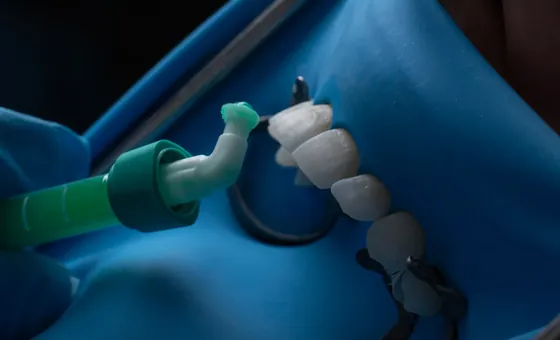
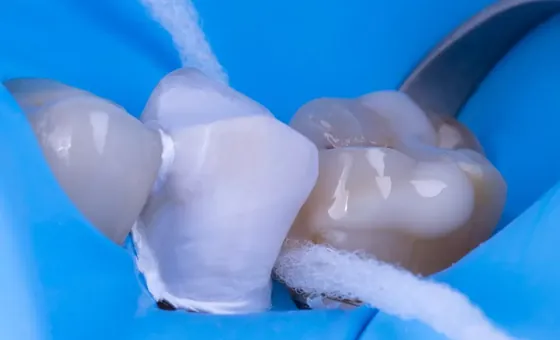
Every inlay, onlay or overlay treatment starts with a thorough clinical assessment: examination of the tooth, analysis of the size of the remaining cavity, calibrated clinical photographs and choice of the appropriate protocol. The initial consultation makes it possible to decide between a direct technique (composite) and an indirect technique (inlay, onlay, overlay or veneerlay), depending on the extent of the damage and the mechanical forces involved. Working under rubber-dam isolation helps the quality of the adhesive bonding and the longevity of the restoration.
These amounts are given for information only. A detailed quote is provided at the initial consultation, showing the part covered by the national fee schedule and the part agreed directly with the patient, and allowing you, where relevant, to send it to your top-up insurer for review.
A practice in Levallois-Perretclose to west Paris and the Hauts-de-Seine
Mon Cabinet Dentaire, where Dr Bruno Abehassera works, is located at 119 rue du Président Wilson, Levallois-Perret (92300), in the heart of the Hauts-de-Seine. Patients come from all over the Paris area for porcelain inlays and onlays made with an indirect adhesive technique, with a biomimetic approach that respects the natural enamel and dentine.
Many patients come from Neuilly-sur-Seine, the 17th and 16th arrondissements of Paris, Asnières, Clichy or Courbevoie. Being close makes it easier to follow an inlay or onlay project, which involves an initial consultation, then two appointments: preparing the tooth and taking the impression, then bonding the restoration.
The practice is easy to reach from:
- Levallois-Perret (metro line 3, Pont de Levallois station)
- Neuilly-sur-Seine (5 to 10 minutes by car)
- Paris 17th and 16th (10 to 20 minutes)
- Asnières, Clichy, Courbevoie and La Défense (10 to 20 minutes)
Some patients also travel further for a minimally invasive porcelain approach. This approach favours a precise fit on the prepared tooth rather than removing healthy tissue all around it, as with a conventional crown. Choosing between an inlay, an onlay and an overlay depends on how much tissue needs to be covered and is an integral part of the initial consultation.
Appointments for a consultation can be booked online via Doctolib or by phone on +33 1 42 67 05 04. Consultations can be held in English. The initial consultation makes it possible to assess the indications precisely, discuss the choice between composite, inlay, onlay or crown, and provide a detailed quote. No commitment is required at this stage.
Frequently asked questionsWhat patients ask me most often
What is the difference between an inlay, an onlay and an overlay?
Inlays, onlays and overlays are three types of partial porcelain restorations, which differ in how much of the tooth surface they cover. An inlay fills an internal cavity between the cusps of the tooth, without touching their tips. An onlay covers one or more cusps as well as the internal cavity, which reinforces the weakened tooth. An overlay covers the entire biting surface, including all the cusps, without encircling the tooth like a crown. The choice between these three options depends on the amount of healthy tissue remaining and the mechanical forces on the tooth to be restored.
Why choose a porcelain inlay or onlay rather than a composite filling?
The choice between a direct composite filling and a porcelain inlay or onlay depends on how much tissue has been lost and on the area to be restored. Layered composite is well suited to moderate decay and localised cosmetic corrections, in a single appointment in the chair. However, when the tissue loss exceeds 30 to 40% of the crown of the tooth, a porcelain inlay or onlay offers better mechanical strength, better colour stability over time and a more natural look thanks to pressed porcelain. This indirect restoration, made in the laboratory from a precise impression, also allows a fit accurate to the millimetre between the cusps.
Why choose an inlay or onlay rather than a crown?
A porcelain inlay or onlay is a conservative alternative to a crown when the tooth can still be preserved. Whereas a crown requires the tooth to be prepared all the way around, an inlay or onlay preserves as much healthy tooth tissue as possible by covering only the damaged areas. This approach is part of a biomimetic dentistry that respects the natural anatomy. At Dr Bruno Abehassera's practice in Levallois-Perret, an inlay or onlay is always favoured whenever the clinical conditions allow, with the reversibility and long-term function of the treated tooth in mind.
Are pressed porcelain inlays and onlays strong?
Yes, inlays and onlays in pressed porcelain (lithium disilicate) are very strong indirect restorations. This material has a flexural strength of between 360 and 400 MPa, which makes it well suited to the forces on the back teeth. Once bonded following a strict adhesive protocol, the inlay or onlay forms a single unit with the tooth, able to withstand significant chewing forces. Strength also depends on the quality of the tooth preparation and the skill of the dental ceramist.
Does an inlay or onlay look natural?
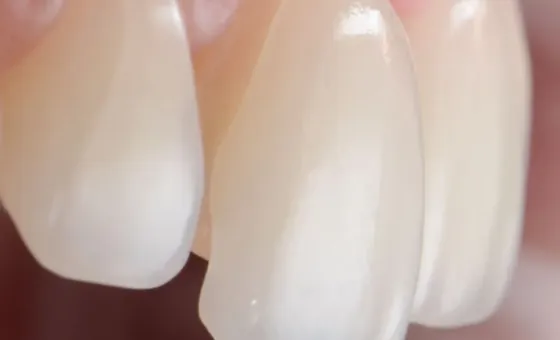
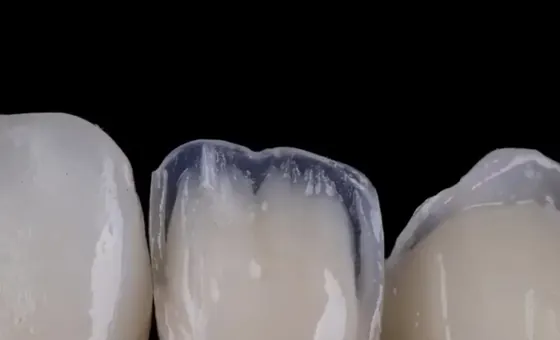
A porcelain inlay or onlay looks very close to a natural tooth. Pressed porcelain has optical properties (translucency, opalescence, fluorescence) that closely mimic tooth enamel. The dental ceramist's work is to reproduce the exact shade of the neighbouring tooth, as well as the characteristics specific to the patient's smile: shade transitions near the gum, surface effects, and incisal mamelons for the front teeth. Cases carried out at the practice can be seen on the Before & After page dedicated to inlays, onlays and overlays.
How long does a porcelain inlay or onlay last?
A correctly indicated and bonded porcelain inlay or onlay has a long lifespan, generally longer than that of a direct composite filling. Its longevity depends on several factors: the quality of the adhesive bonding, the patient's oral hygiene, whether or not there is uncontrolled bruxism, and attending regular check-ups. A yearly visit to the practice makes it possible to check that the bond is intact, that there is no recurrent decay at the margins and whether the biting contacts show any wear. No restoration lasts forever, but a porcelain inlay or onlay remains a very durable option among conservative restorations.
Is inlay or onlay treatment painful?
No, inlay or onlay treatment is not painful when carried out in good clinical conditions. The tooth is prepared under local anaesthesia, so the procedure is usually painless or nearly painless. Between the first and second appointments, a temporary restoration is placed to protect the tooth and allow comfortable chewing. The final porcelain inlay or onlay is usually placed at the second appointment without further anaesthesia. Some temporary sensitivity may appear in the days after bonding, but it fades quickly and usually needs no particular treatment.
How many appointments are needed for an inlay or onlay?
A porcelain inlay or onlay usually requires two appointments, one to two weeks apart. The first appointment includes the clinical examination, the minimally invasive preparation of the tooth, a digital or conventional impression, and the placement of a temporary restoration. The impression is then sent to the dental ceramist, who makes the custom inlay or onlay in pressed porcelain. The second appointment, about two weeks later, includes the try-in, a check of the fit at the margins, then the final adhesive bonding under rubber-dam isolation. The placement appointment lasts on average 30 minutes to 1 hour.
Why not simply place a crown when the tooth has had root canal treatment?
A root-treated tooth does not always need a full crown. When the tissue loss remains moderate and the remaining walls are sufficient, a porcelain onlay or overlay is enough to protect the tooth against fractures, while preserving as much healthy tissue as possible. This approach avoids the invasive all-round preparation required for a crown, which can further weaken a root already weakened by root canal treatment. The choice between an onlay, an overlay and a crown is made after a precise analysis of the remaining damage, the quality of the root anchorage and the expected forces of the bite.
How do I look after a porcelain inlay or onlay day to day?
A porcelain inlay or onlay is cared for exactly like a natural tooth. Thorough brushing twice a day, together with daily use of dental floss or interdental brushes at the contact points between teeth, is enough to keep the bond intact and prevent recurrent decay at the margins. A yearly check-up at the practice makes it possible to check for any leakage, the condition of the bond and any wear of the biting contacts. If bruxism is confirmed, wearing a custom-made night guard is recommended to protect the inlay or onlay from grinding forces.
Can an inlay or onlay be repaired or removed if necessary?
Unlike a full crown, a porcelain inlay or onlay preserves most of the tooth tissue, which allows some flexibility in treatment if a complication arises. If a fracture at the margin or recurrent decay occurs at the edge of the inlay or onlay, it is usually possible to remove the restoration and replace it with a new custom inlay or onlay, without having to prepare the tooth for a crown. Pressed porcelain, however, cannot be repaired directly in the mouth: it must be replaced entirely in the event of a significant fracture. This relative reversibility is one of the great advantages of an inlay or onlay over a traditional crown.
Written by Dr Bruno Abehassera, dental surgeon · Updated