
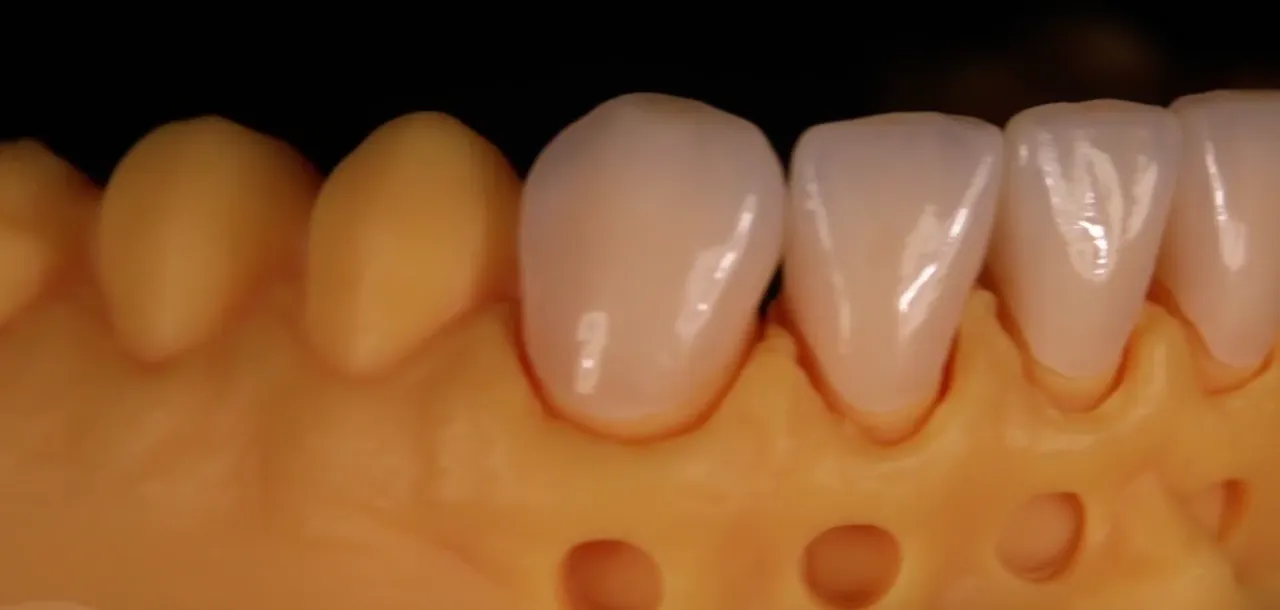
Porcelain veneersWhat are they?
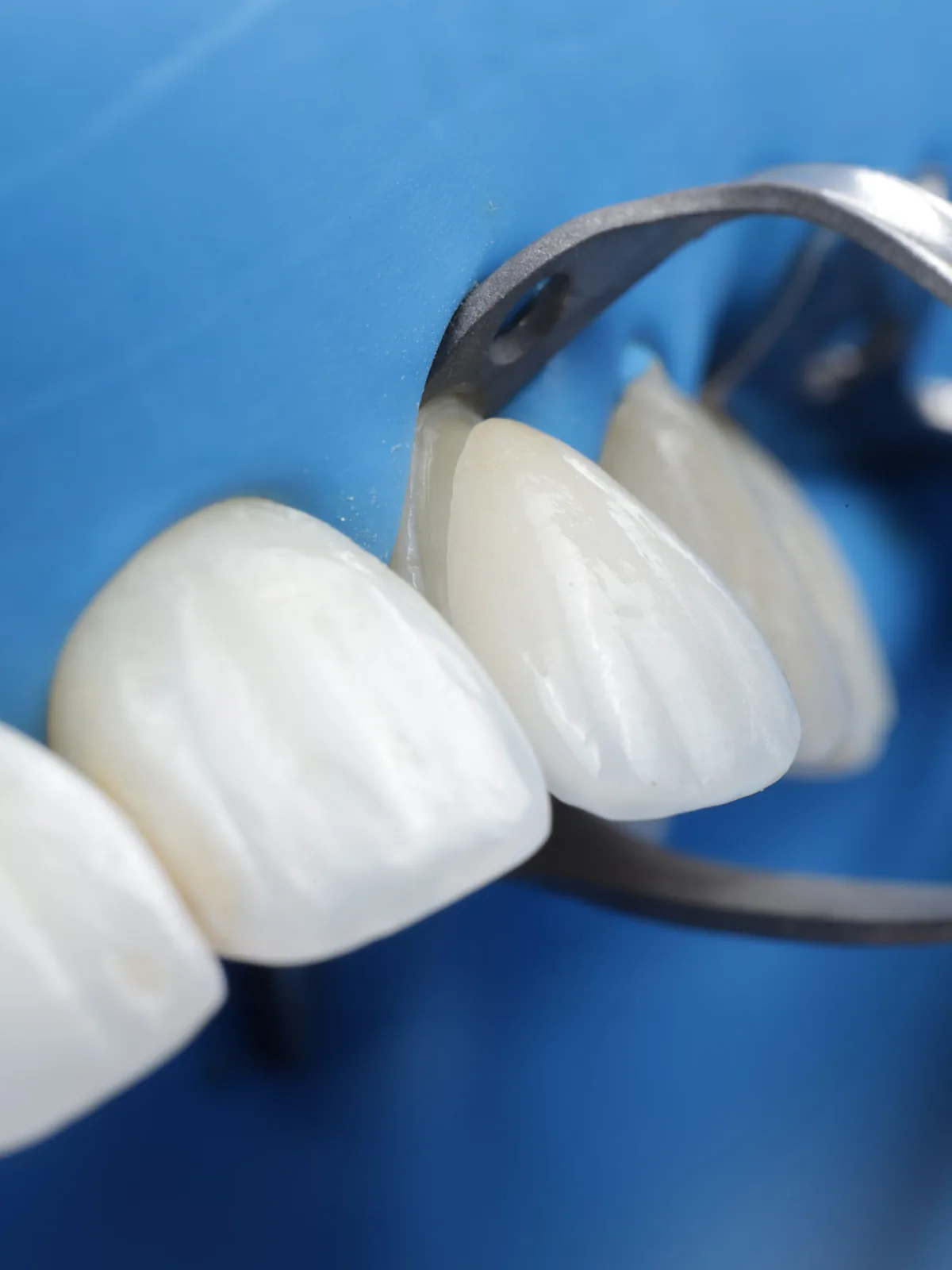
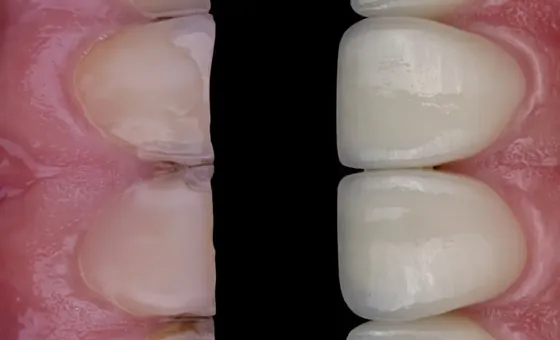
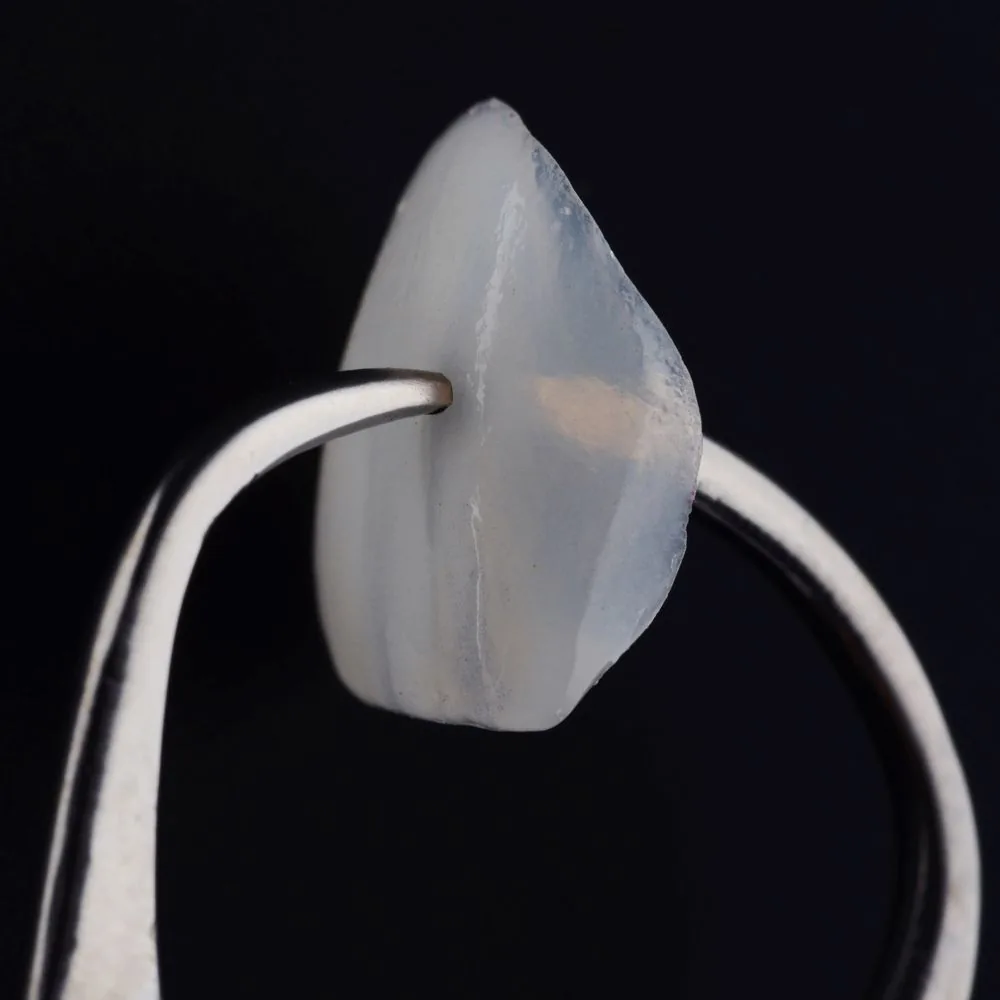
Porcelain veneers are ultra-thin restorations (about 0.5 mm) bonded to the visible surface of the teeth to correct their shade, shape or proportions. Dr Bruno Abehassera places them at his practice in Levallois-Perret (92300), just outside Paris, with a conservative approach that puts maximum enamel preservation and a seamless, natural-looking result first.
Treatment follows three main stages: an aesthetic and functional analysis with a preview of the result (mock-up), minimal preparation guided by the project, then adhesive bonding following a strict protocol. It usually takes 2 to 4 appointments over 4 to 8 weeks, depending on the number of veneers and the complexity of the case.
Each treatment is custom-made with a French dental laboratory, with high standards for natural looks, function and longevity. A well-placed porcelain veneer lasts on average 15 to 20 years.
IndicationsWhen should you consider veneers?
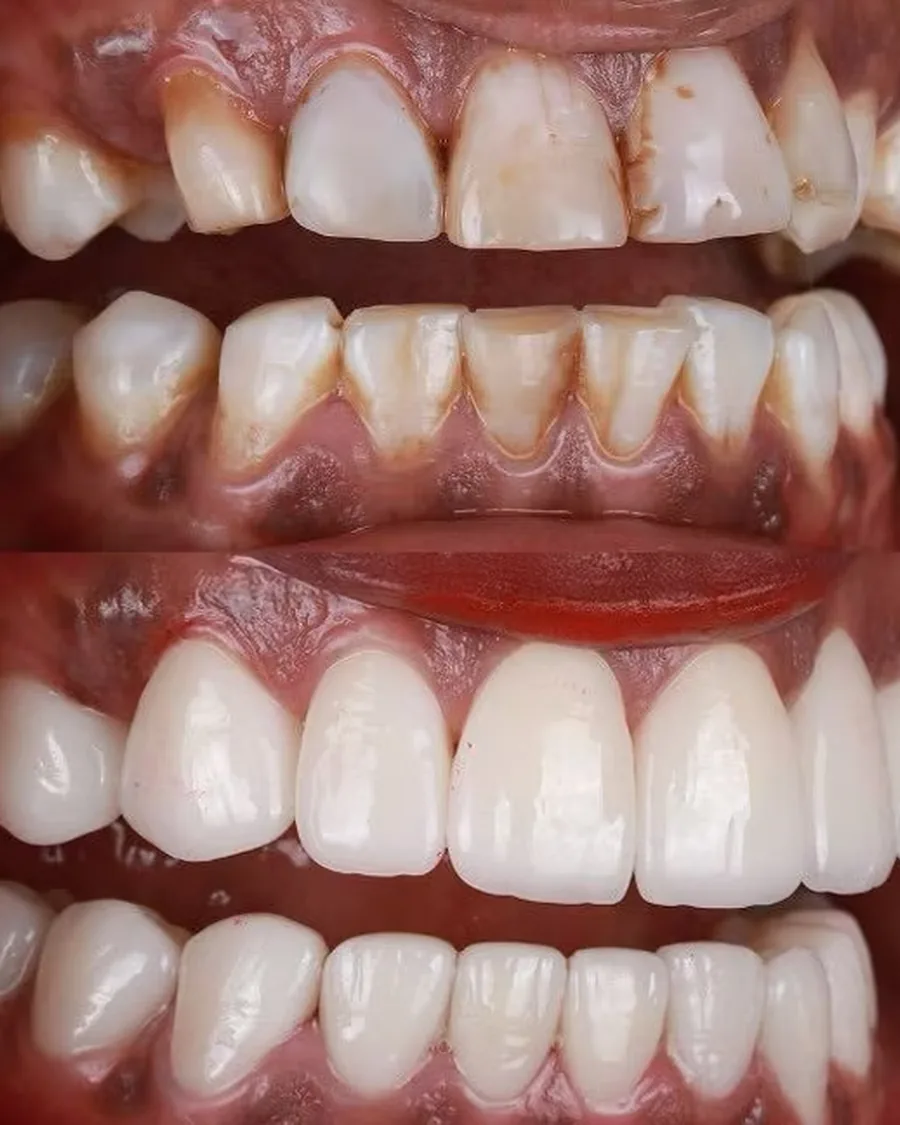
Severe discolouration
When the colour of the teeth cannot be lastingly corrected by whitening. A classic indication for fluorosis, tetracycline staining, a non-vital (root-treated) tooth or stubborn discolouration.
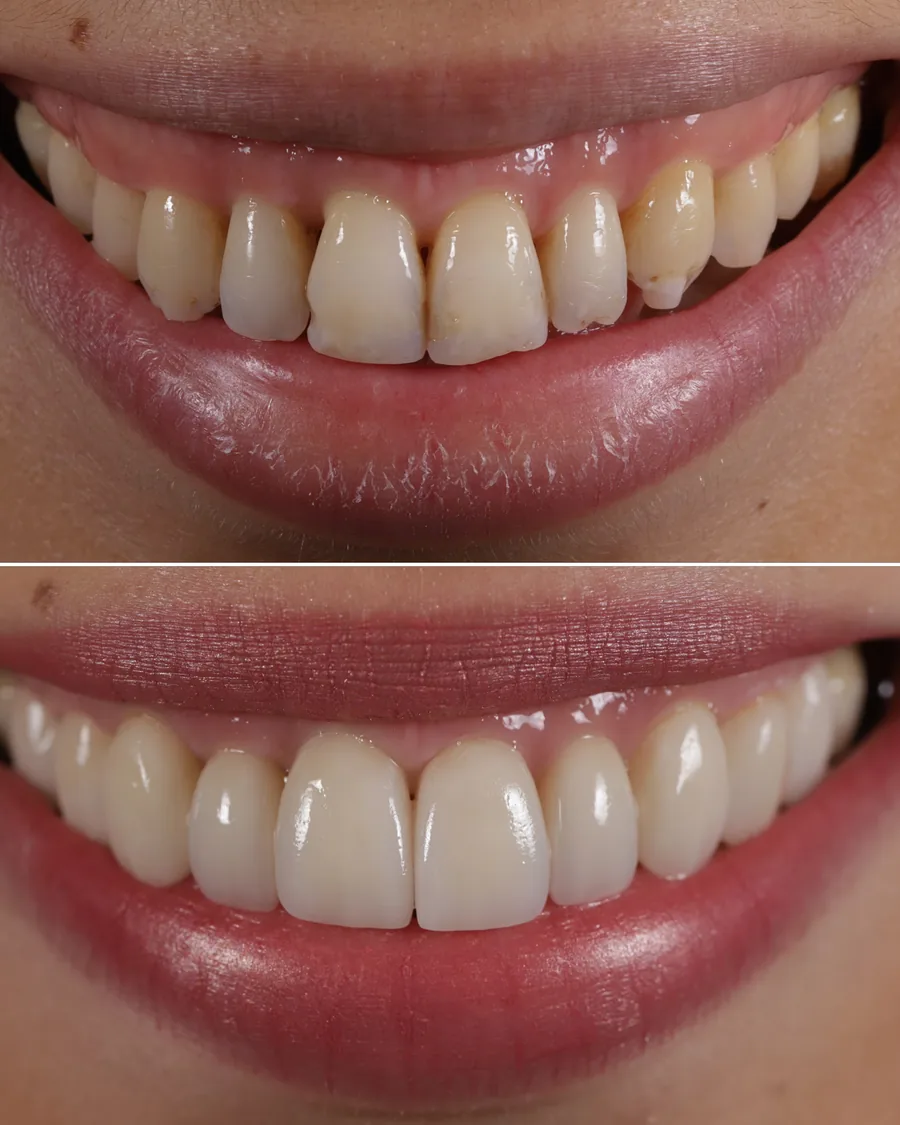
Shape defects
To correct black triangles, asymmetry, peg-shaped teeth or teeth whose shape unbalances the smile. Porcelain veneers restore harmonious proportions while keeping the tooth as intact as possible.
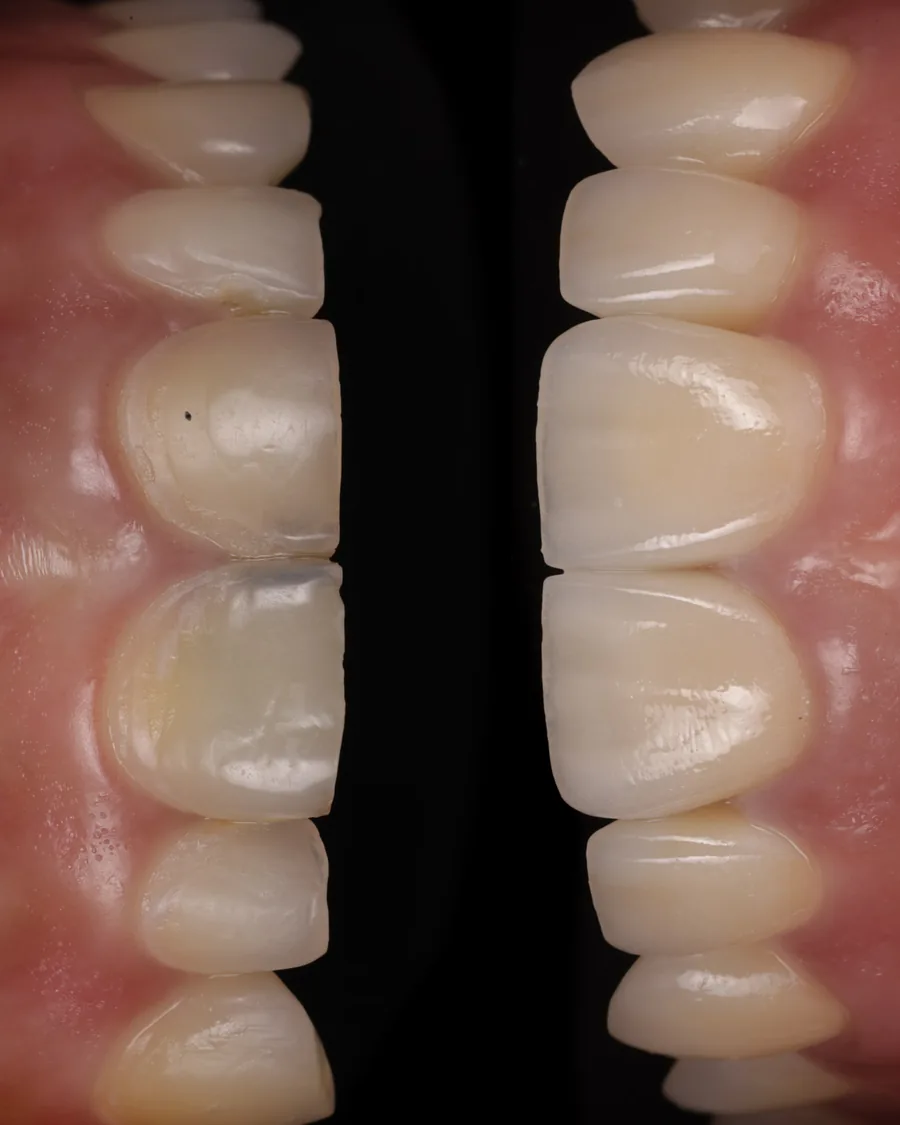
Tooth wear
When progressive wear from erosion, attrition or bruxism (teeth grinding) has changed the length or shape of the teeth. Veneers restore the edges and volume.
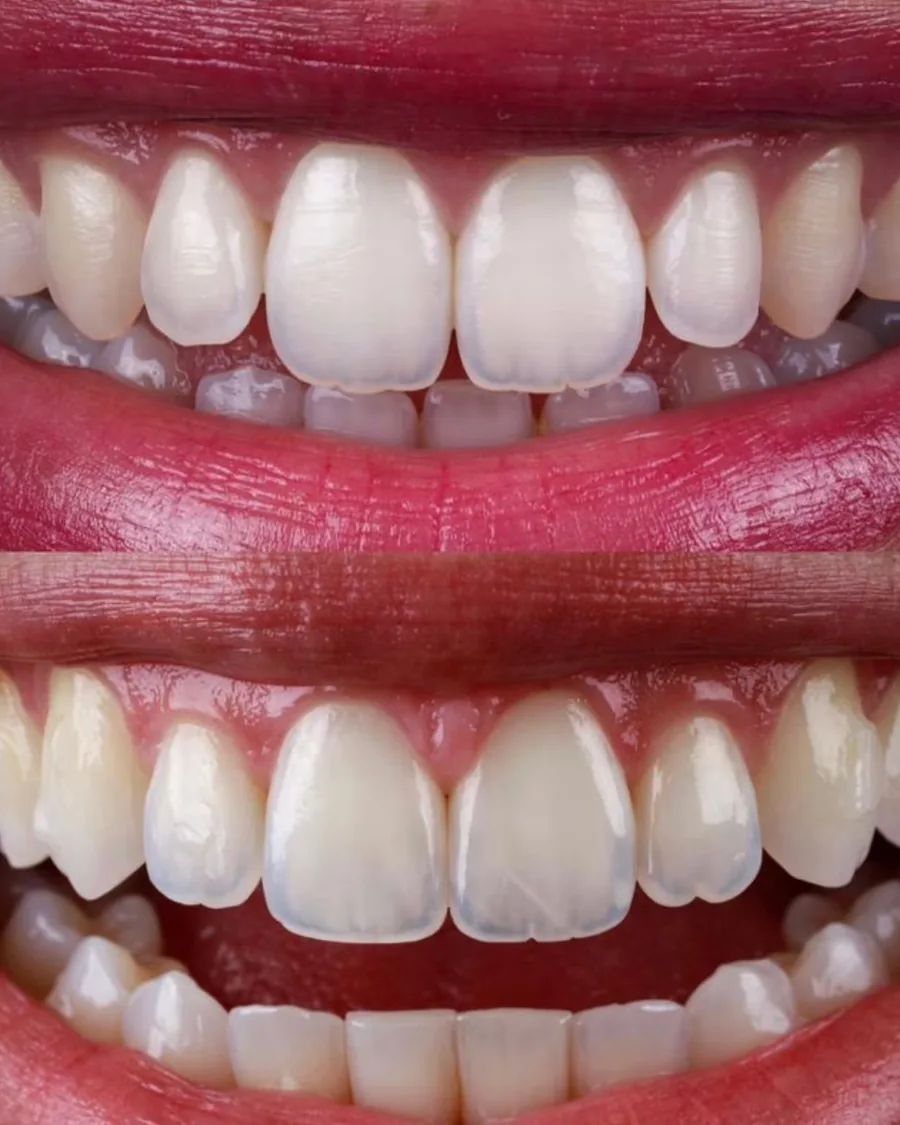
Mild misalignment
To visually correct small alignment issues, close gaps between teeth or compensate for a minor misalignment. An alternative to orthodontic treatment in selected cases.
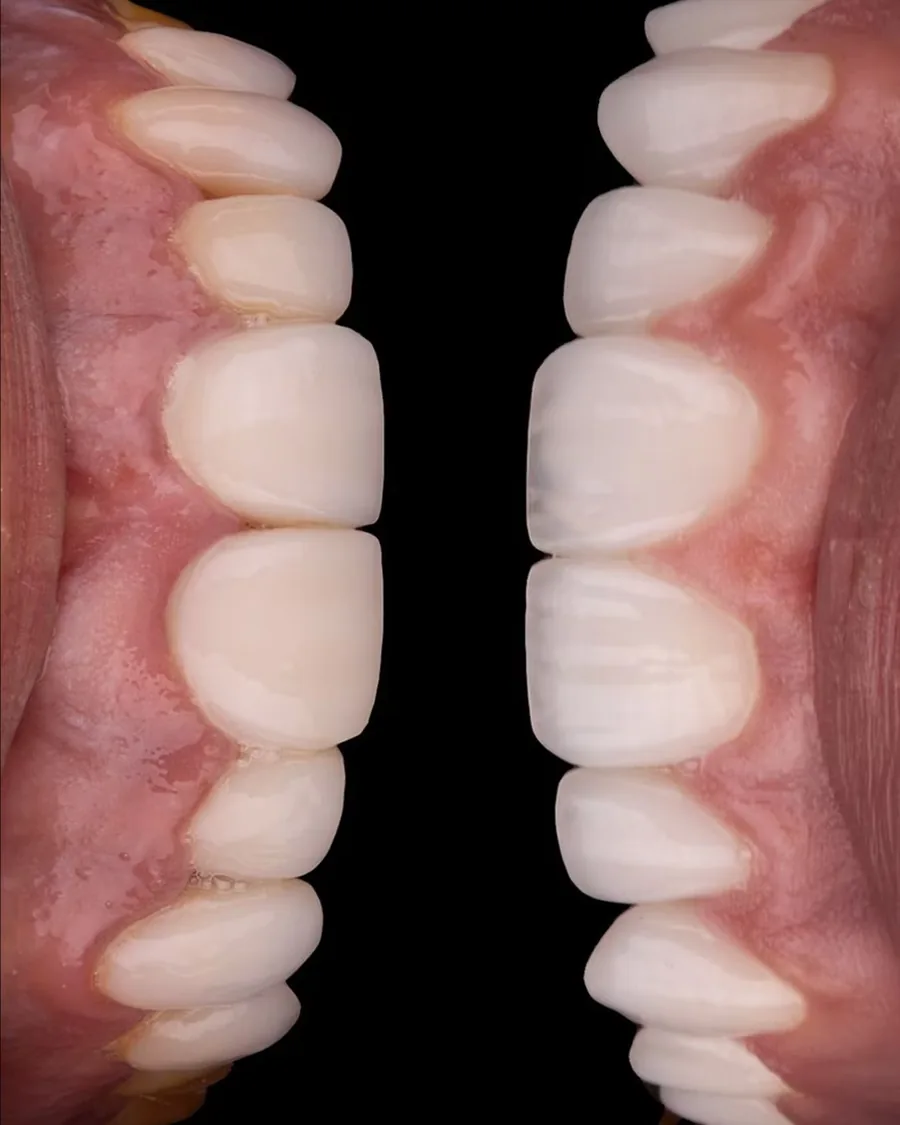
Old composite fillings
To replace composite fillings or composite veneers that have yellowed, cracked or discoloured. Porcelain veneers stay stable over time, with a precisely controlled shade.
Treatment philosophyA conservative, carefully planned approach
Placing porcelain veneers is never just a cosmetic gesture. It is part of a comprehensive, functional and strictly protocol-driven approach, in which every decision is made before any clinical step.
The smile is analysed as a whole: teeth, gums, lips and bite. This planning phase defines exactly what needs correcting, while identifying the tissue that must be preserved.
Tooth preparation is deliberately minimal and guided by the aesthetic project. The aim is to keep as much enamel as possible, for better adhesion, a more natural behaviour of the tooth and longer-lasting veneers.
Bonding follows a precise, controlled sequence, which is decisive for the look, the function and the stability of the result over time. This rigour aims for a natural, durable result that stays true to a conservative approach.
Porcelain or compositeWhich material should you choose?
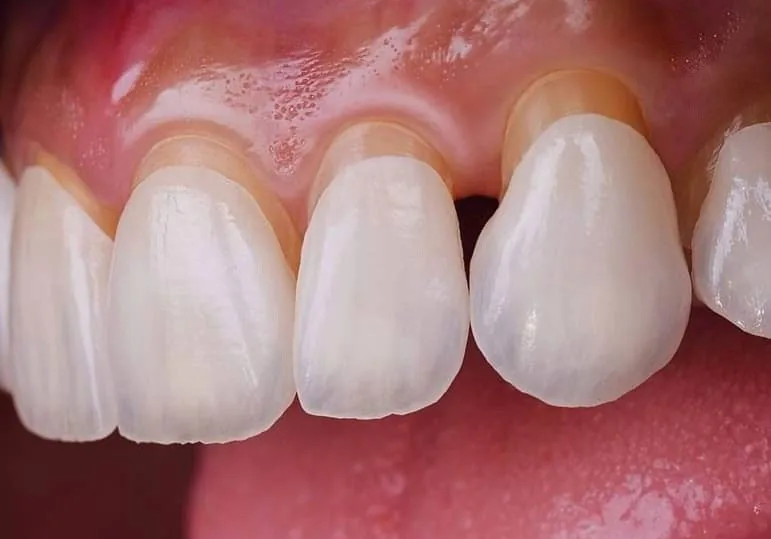
The material depends on your clinical situation, your aesthetic goal and your plans for the years ahead. Two options are offered at the practice:
- The porcelain veneer (feldspathic porcelain or lithium disilicate, depending on the indication) remains the reference for a full smile makeover or demanding cases. It offers greater translucency and stain resistance, and a lifespan of 15 to 20 years. It requires 2 to 3 appointments and handcrafted laboratory work.
- The composite veneer, sculpted directly in the chair in one or two appointments, suits one-off reconstructions on one or two teeth, or a transitional step within a larger project. Made directly at the practice, it has a shorter lifespan (5 to 10 years) and needs more care with staining foods and drinks (coffee, tea, red wine, tobacco).
The choice is always made after a complete analysis: photographs, an aesthetic project and a preview mock-up. Each material has its own indications, and the choice depends on the diagnosis, the patient's goals and the longevity expected.
← Swipe to compare →
| Criterion | Porcelain veneers | Layered composite |
|---|---|---|
| Material | Pressed or layered porcelain (lithium disilicate, feldspathic) | Light-cured composite resin |
| How it is made | Indirect (dental laboratory) | Direct (in the chair) or indirect |
| Number of appointments | 2 to 4 | 1 possible |
| Thickness | 0.3 to 0.7 mm | 0.3 to 1 mm depending on technique |
| Tooth preparation | Minimal to moderate depending on the case | Often none |
| Reversibility | Low to moderate | High with an additive technique |
| Colour stability | Very stable over time | May change (diet, tobacco) |
| Wear resistance | High | Moderate |
| Average lifespan | 15 to 20 years | 5 to 8 years |
| Repair | The veneer is replaced | Can be touched up directly |
| Aesthetics | Natural translucency, highly lifelike | Very good result, depends on the dentist |
| Best suited for | Extensive cases, high aesthetic expectations | Small corrections, additive approach, controlled budget |
Clinical casesExamples of treatments performed
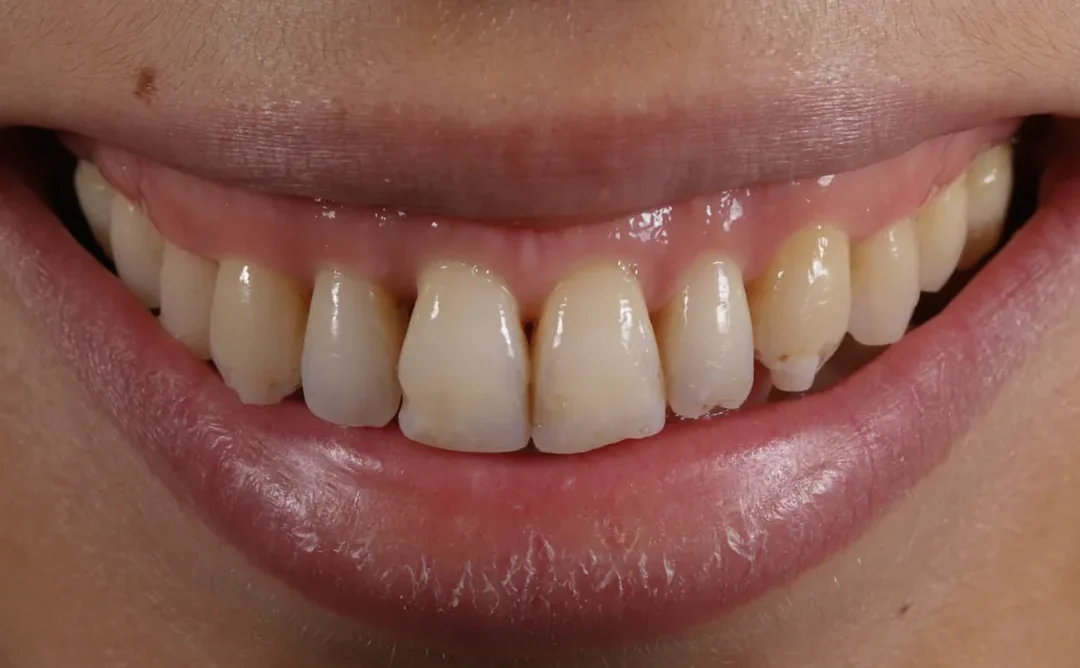
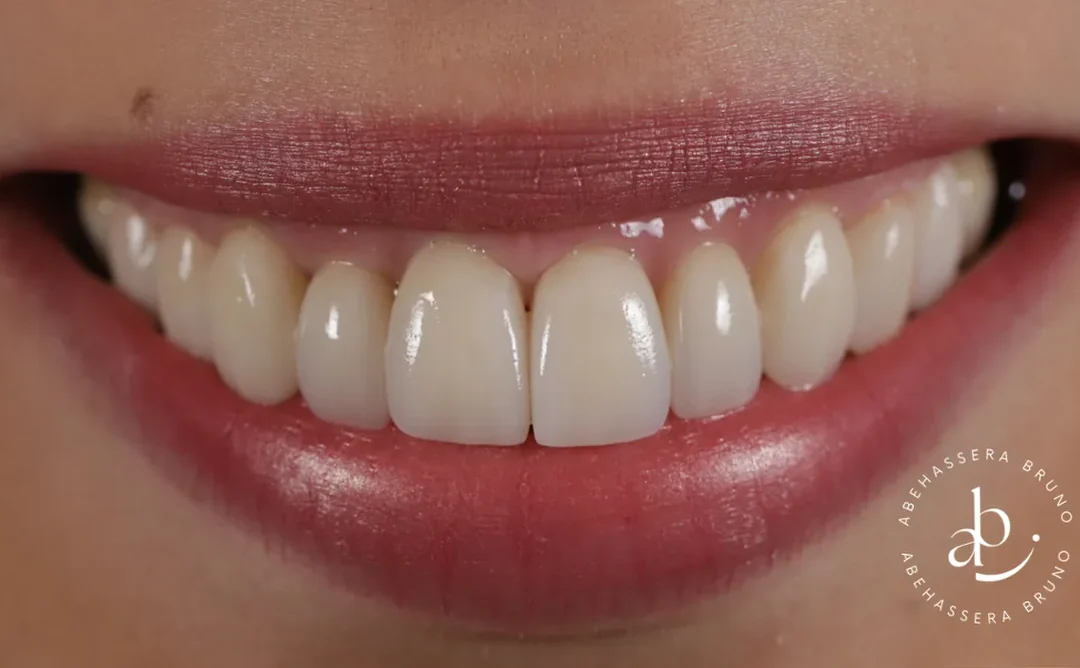 BeforeAfter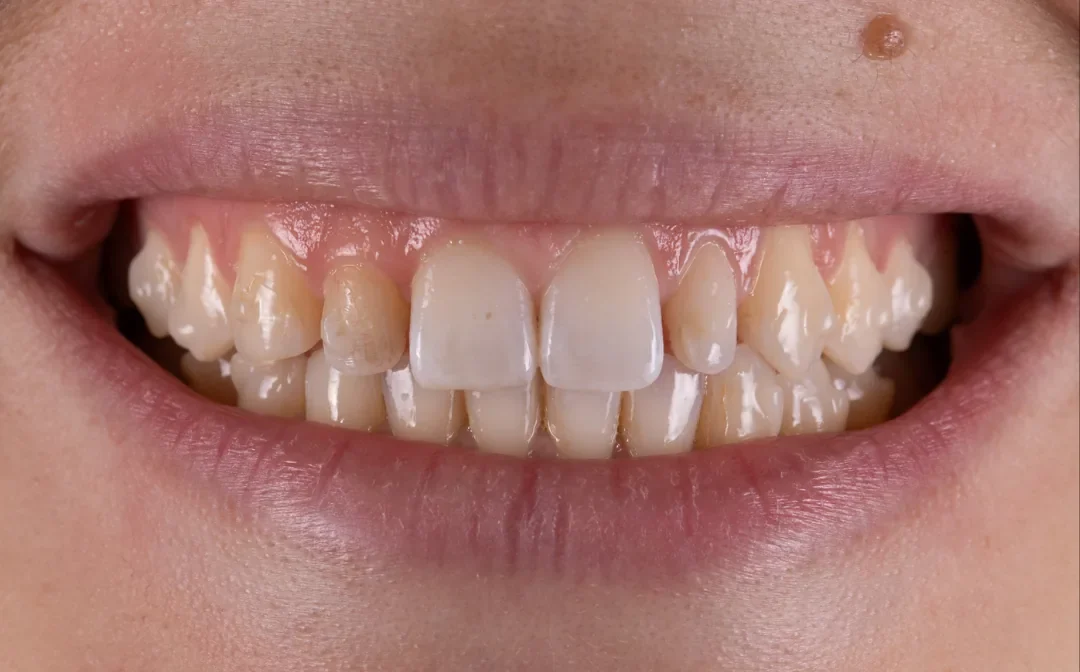
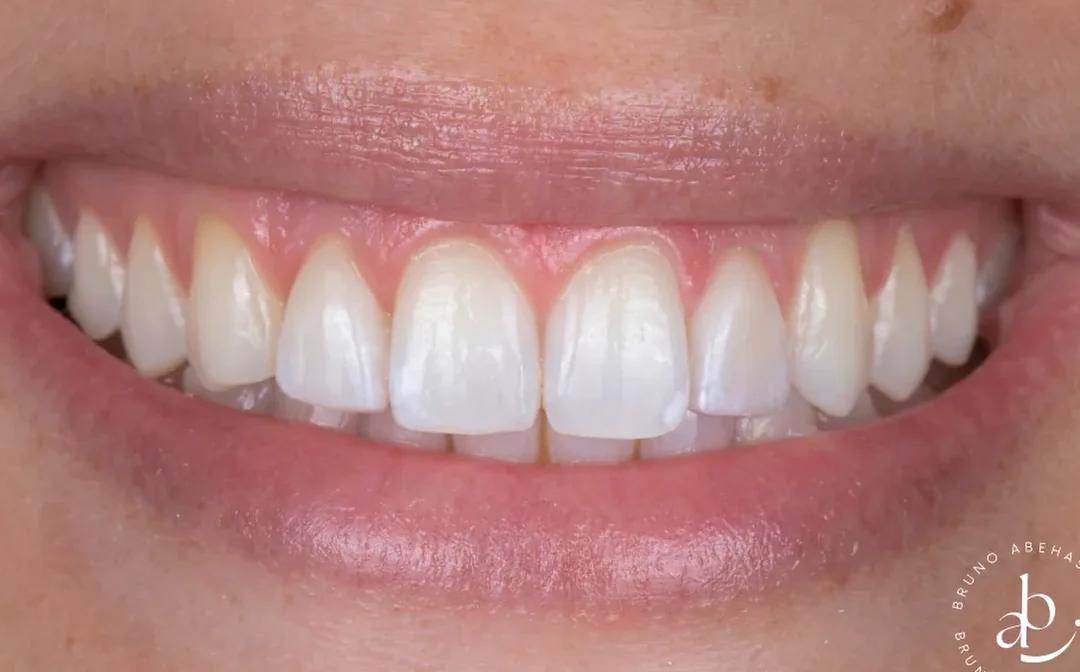 BeforeAfter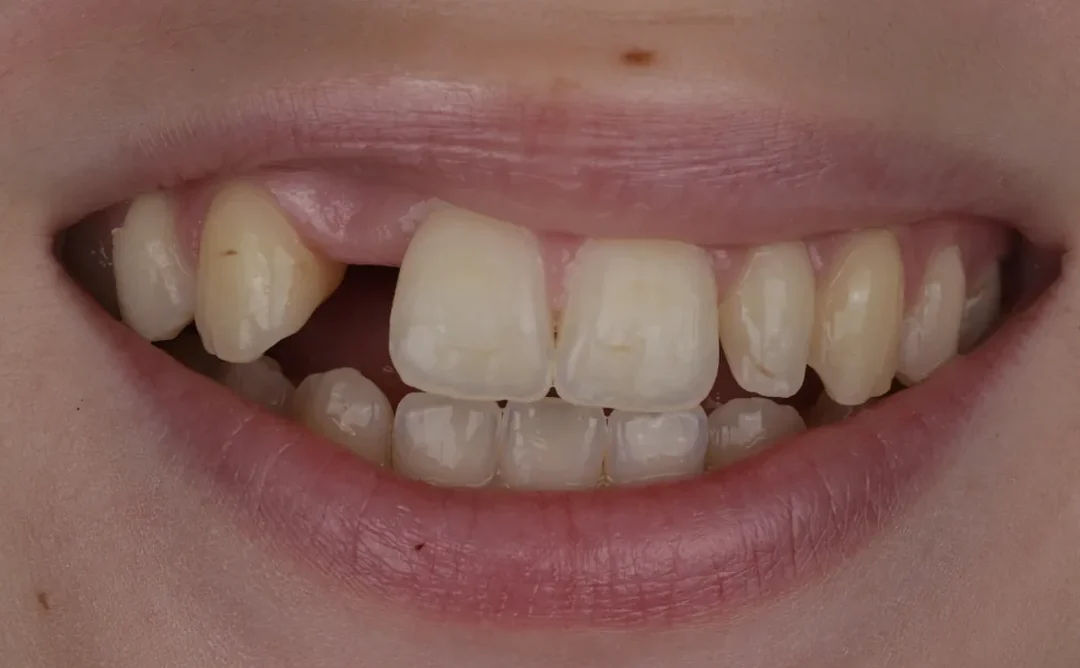
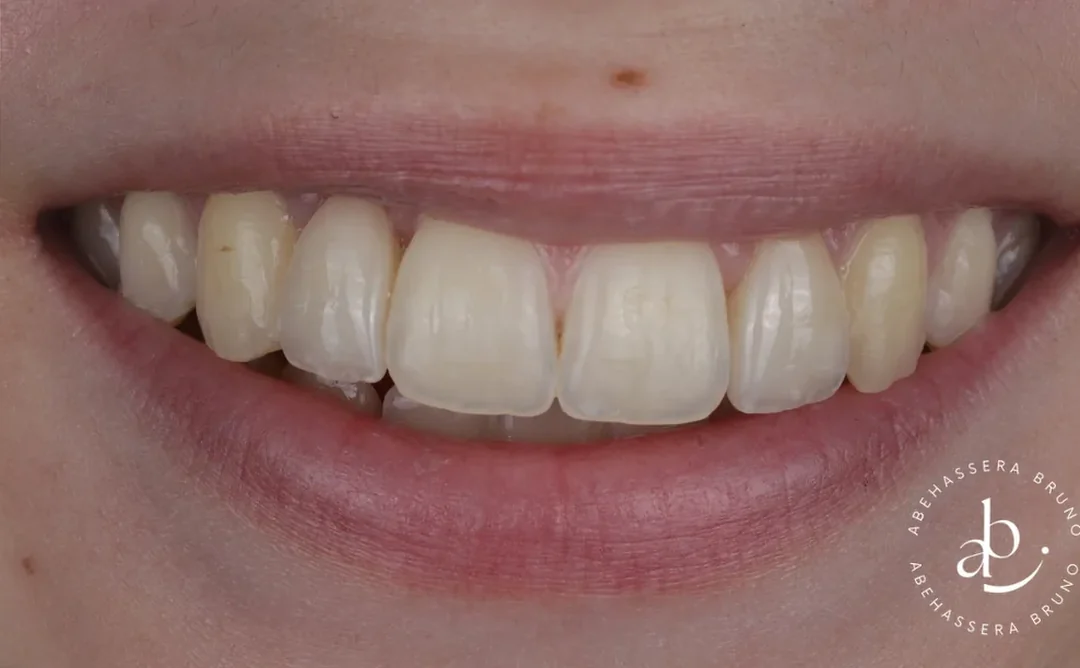 BeforeAfter
How much do veneers cost?(and are they reimbursed?)
At the practice in Levallois-Perret (92300), Dr Bruno Abehassera applies transparent pricing for porcelain veneers.
Because veneers are considered a cosmetic dental procedure, they are not covered by French national health insurance (Sécurité sociale). Some top-up health insurance plans (mutuelles) include a cosmetic dentistry allowance: check the conditions with your provider.
The price of a veneer depends on several factors: the material chosen, the number of teeth treated, the complexity of the case, the planning time devoted to the project (mock-up, photographs, try-ins) and the dental laboratory involved.
| Service | Indicative fee |
|---|---|
| Lithium disilicate porcelain veneer (per tooth) | €1,000 — €1,200 |
| Feldspathic porcelain veneer (per tooth) | €1,200 — €1,400 |
| Digital smile project beforehand — 6 veneers | ~ €600 |
| Digital smile project beforehand — full-mouth rehabilitation | ~ €1,200 |
Every veneer treatment starts with a digital smile project, a systematic and essential step at the practice. This planning phase, which includes the aesthetic analysis of the smile, digital Smile Design and a mock-up approved by the patient, makes the final result predictable. No treatment begins without this approval: it protects patients by letting them see and adjust the project before anything is done to their teeth.
These amounts are given for information only. A detailed written quote is provided at the first consultation, specifying the material, the number of appointments and, where relevant, allowing you to send it to your insurer for review.
A practice in Levallois-Perreton the western edge of Paris
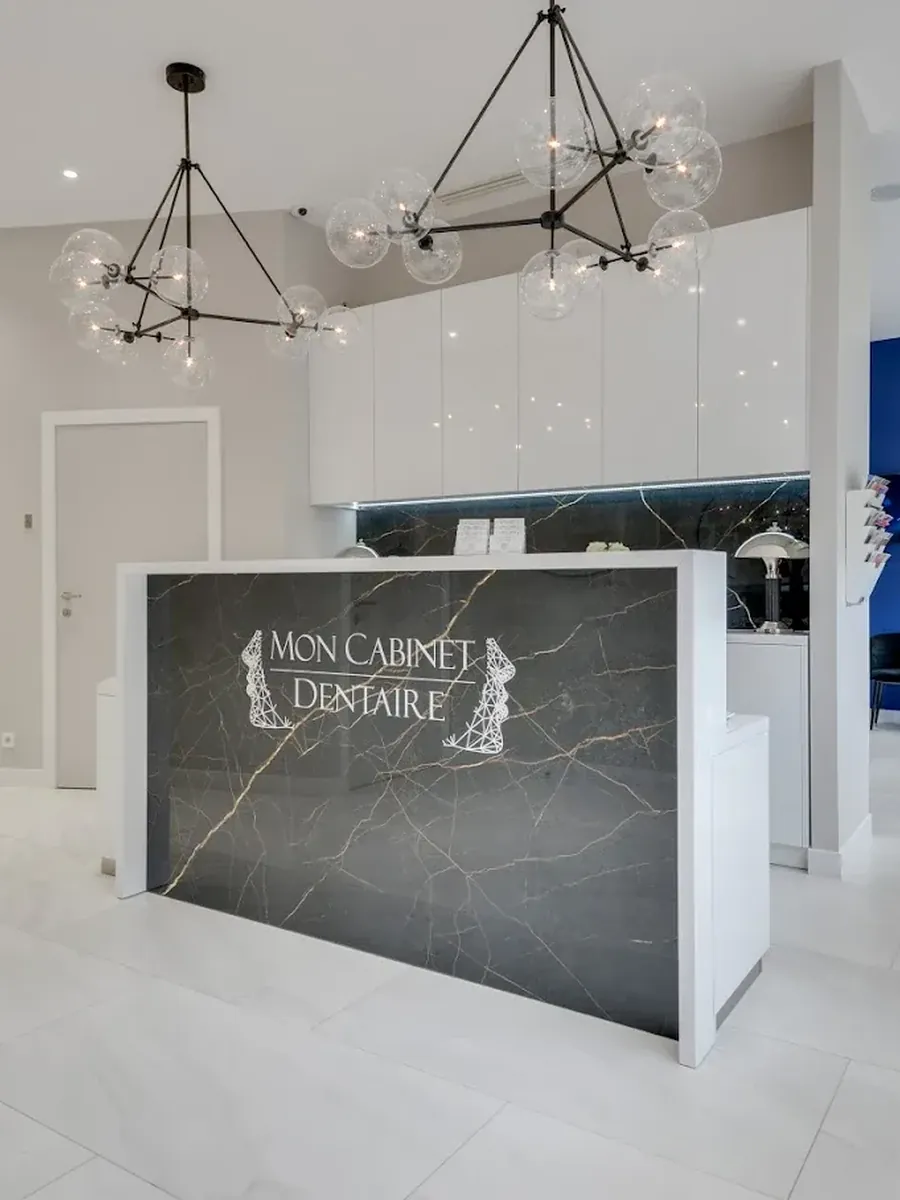
Mon Cabinet Dentaire, where Dr Bruno Abehassera practises, is located at 119 rue du Président Wilson, Levallois-Perret (92300), in the Hauts-de-Seine, just outside Paris. Patients come from all over the Paris area for porcelain or composite veneers, with a conservative and personalised approach to the smile.
Many patients come from Neuilly-sur-Seine, the 17th and 16th arrondissements of Paris, Asnières, Clichy or Courbevoie. Being close makes it easier to follow a veneer project, which involves several appointments over time: an initial consultation with photographs, a mock-up preview, impressions, a try-in and final placement.
The practice is easy to reach from:
- Levallois-Perret (metro line 3, Pont de Levallois station)
- Neuilly-sur-Seine (5 to 10 minutes by car)
- Paris 17th and 16th (10 to 20 minutes)
- Asnières, Clichy, Courbevoie and La Défense (10 to 20 minutes)
Some patients also travel further for a conservative approach to veneers, one that saves tooth tissue and previews the result before any commitment. Choosing between porcelain and composite veneers, analysing the bite and planning the smile digitally are all part of the initial consultation.
Appointments for an aesthetic consultation can be booked online via Doctolib or by phone on +33 1 42 67 05 04. Consultations can be held in English. They include a full clinical examination, photographs of your smile, a discussion of your expectations and, where relevant, a mock-up preview before any commitment.
Frequently asked questionsWhat patients ask me most often
Do teeth have to be filed down for veneers?
Most often yes, but only very slightly. A porcelain veneer is about 0.5 mm thick, roughly the thickness of a contact lens. To add this thin layer of porcelain without creating an unsightly bulge, a minimal enamel preparation is usually needed. In some situations (teeth set back, gaps between teeth, existing tissue loss), this preparation can be very limited or even unnecessary: these are known as ultra-thin or "no-prep" veneers. At Dr Bruno Abehassera's practice, the aim is always to favour the most conservative approach possible for each patient.
How long do veneers last?
Veneers are designed to be durable restorations. According to the scientific literature, porcelain veneers last on average 15 to 20 years, while composite veneers last around 5 to 10 years, with the advantage of being easier to repair. Longevity depends on several factors: the quality of the initial bonding, a balanced bite, no uncontrolled bruxism, and thorough oral hygiene. Regular check-ups at the practice make it possible to anticipate any wear or debonding and to act early if needed.
Is the treatment painful?
The procedure is carried out under local anaesthesia, which keeps you comfortable throughout the appointment. Because the enamel preparation is superficial, after-effects are usually very limited: slight sensitivity may be felt for a few days while the tooth adapts to the temporary or final veneers. At Dr Bruno Abehassera's practice in Levallois-Perret, the whole protocol is designed to minimise discomfort, from the first consultation to the final bonding.
Are veneers fragile?
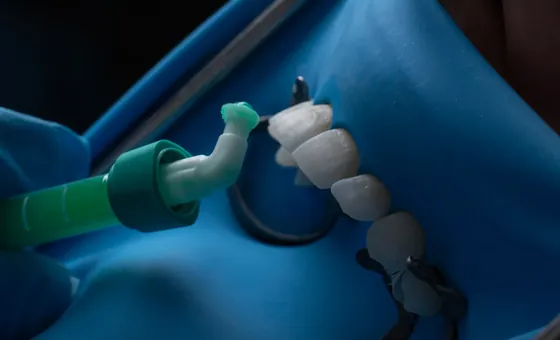
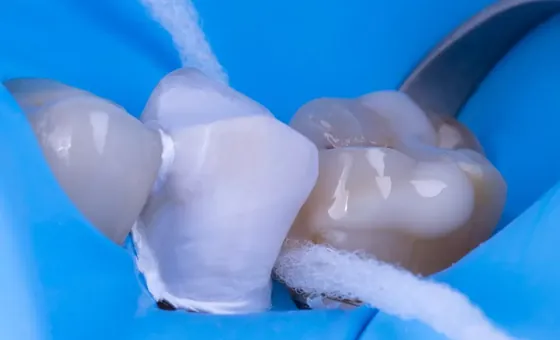
No. The porcelain used for veneers (most often layered feldspathic porcelain or lithium disilicate) is highly resistant to chewing forces. Once bonded following a strict adhesive protocol under rubber-dam isolation, veneers behave as an integral part of the tooth. Their strength is high, provided you avoid certain risky habits: do not clench your teeth outside of chewing, do not bite hard objects (pens, ice cubes, nails), and wear a protective night guard if nocturnal bruxism has been diagnosed.
How does the treatment work?
Veneer treatment follows several successive steps over a few weeks:
- Aesthetic and functional analysis: photographs, impressions, analysis of the bite and the smile
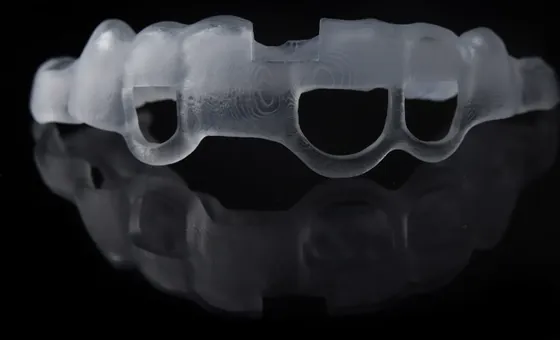
- Preview of the result (mock-up or digital wax-up), so the patient can see their future smile before any commitment
- Minimal preparation of the teeth if needed, then optical or conventional impressions
- Temporary veneers while the dental laboratory makes the final ones
- Try-in and final bonding under rubber-dam isolation, with a check of the final bite
Each step is essential to aim for a natural, stable and lasting result. At the practice in Levallois-Perret, Dr Bruno Abehassera works step by step, with the patient's approval systematically obtained before moving on to the next stage.
When are veneers preferable to other cosmetic treatments?
The choice between veneers, teeth whitening, layered composite or orthodontic treatment depends on each patient's aesthetic goals and clinical situation. Veneers are particularly suited when you want to change the shape, length or colour of the teeth in a lasting way, on teeth that are structurally sound but unattractive (uneven colour, irregular shapes, slight crowding, wide gaps). For moderate discolouration on well-aligned teeth, whitening may be enough. For localised, repairable corrections, layered composite offers a more conservative alternative. At the practice, each initial consultation is an opportunity to analyse the situation precisely and discuss the most appropriate solution together, always favouring the least invasive approach possible.
Do veneers really look natural?
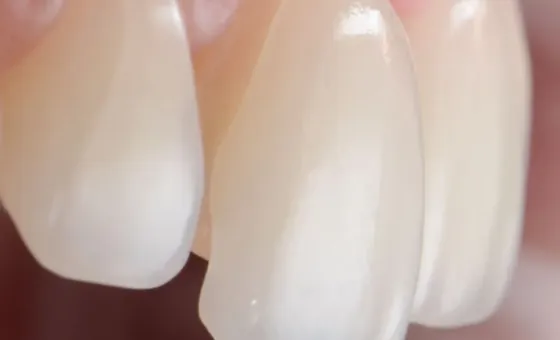
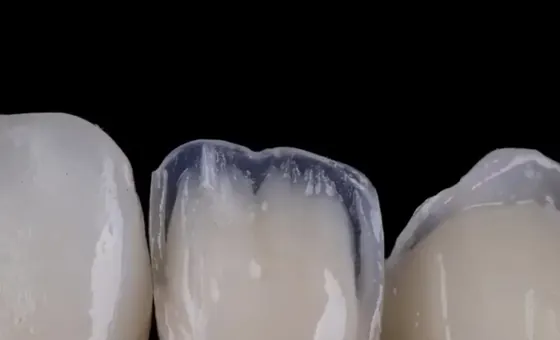
Yes, when the work follows the standards of modern cosmetic dentistry. A natural-looking veneer depends on several factors: the initial photographic analysis of the smile, respect for tooth proportions, close collaboration with an experienced ceramist, and the quality of the final bonding. The ceramist reproduces the optical characteristics of a living tooth: depth of shade, translucent areas along the biting edge, opalescence, surface micro-texture and fluorescence in natural light. At Dr Bruno Abehassera's practice in Levallois-Perret, the work is done in partnership with a Paris dental laboratory dedicated to front-teeth aesthetics, for a very natural-looking result.
Do veneers need special care?
No special care is needed. Veneers are cared for like natural teeth: brushing twice a day with a soft toothbrush, daily flossing or interdental brushes, and regular scaling and polishing at the practice (usually every 6 to 12 months). Thorough oral hygiene and regular check-ups significantly extend the life of veneers. For patients with bruxism, wearing a protective night guard is strongly recommended to protect the veneers over time.
Are veneers suitable for everyone?
No, veneers are not indicated in every case. Each situation is assessed as a whole at the initial consultation: dental condition, bite, gum health and the patient's aesthetic expectations. Relative contraindications include severe uncontrolled bruxism, insufficient oral hygiene, extensive tooth damage (where a crown may be more appropriate), or unrealistic expectations. At Dr Bruno Abehassera's practice, the most conservative option is always favoured: if whitening or layered composite can be enough, they will be offered first. Veneers are only recommended when they are genuinely the most appropriate solution.
How much do veneers cost?
The cost of veneers depends on several clinical factors: the number of veneers, the material chosen (porcelain or composite), the complexity of the case, the clinical time required, and the dental laboratory's fees. As a cosmetic procedure, veneers are not covered by French national health insurance, and most top-up insurance plans do not reimburse them. At Dr Bruno Abehassera's practice in Levallois-Perret, each treatment is given a personalised quote at the consultation, after a full analysis of the smile and a discussion of the aesthetic project. The ranges shown above are indicative: the exact amount is set in a personalised quote after a clinical examination, as each situation calls for a tailored protocol.
What are the drawbacks of veneers?
Like any prosthetic restoration, veneers have limits worth knowing before committing. They usually involve an enamel preparation that is minimal but, in most cases, irreversible. Their lifespan is limited (15 to 20 years for porcelain, 5 to 10 years for composite, according to published data), and they can fracture with uncontrolled bruxism or parafunctional habits (biting hard objects, nails). The cost also needs to be planned for, as the procedure is not covered by French national health insurance. Finally, veneers only treat the visible surface of the tooth and do not correct gum problems or underlying decay. These limits do not rule out treatment, but they justify a thorough consultation beforehand to confirm the indication.
What is the difference between a veneer and a crown?
A veneer is a thin shell of porcelain (about 0.5 mm) bonded to the visible surface of the tooth, used for cosmetic corrections on structurally sound teeth (colour, shape, mild misalignment). A crown, by contrast, covers the entire tooth (front, back, biting and side surfaces) and is needed when the tooth is badly damaged, non-vital, fractured or has had root canal treatment. Preparation is minimal for a veneer (limited to the enamel) and more invasive for a crown (preparation all around the tooth, into the dentine). The choice between the two depends on the clinical diagnosis made at the consultation: visual examination, X-rays and pulp vitality tests. With a conservative approach, a veneer is favoured whenever the clinical conditions allow. At Dr Bruno Abehassera's practice in Levallois-Perret, this choice is always discussed with the patient, with a quote and the alternatives.
Written by Dr Bruno Abehassera, dental surgeon · Updated